
24 August 2026
Ebola crisis: The Salvation Army’s response
Hayley Still
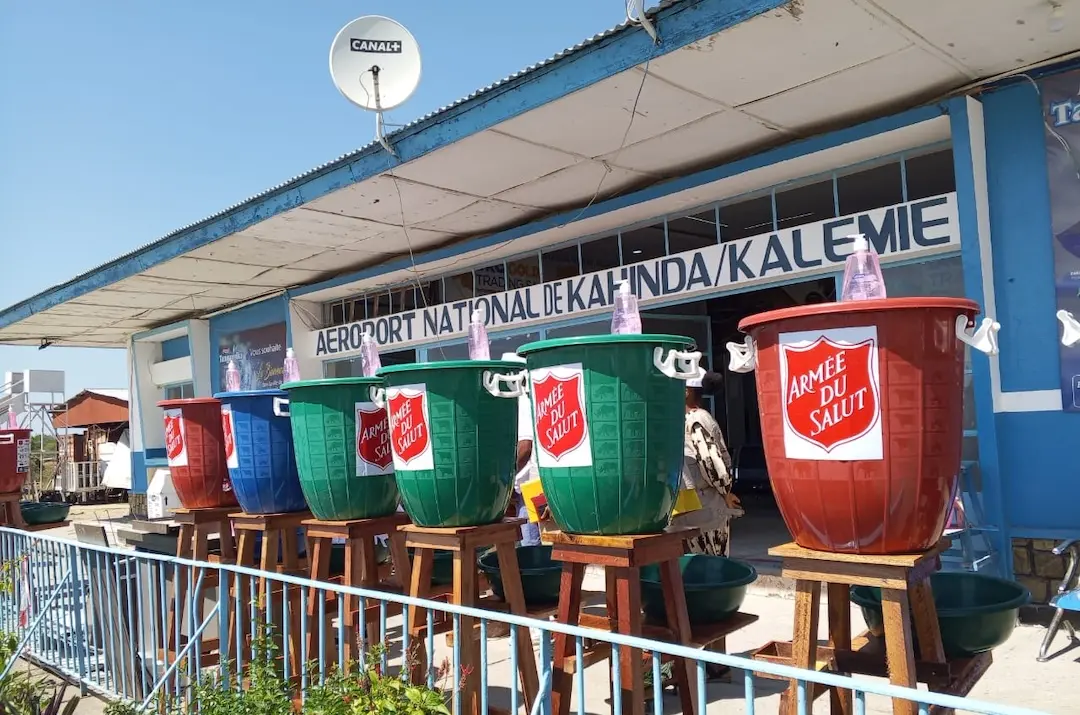
Hayley Still explains how The Salvation Army is helping people following the outbreak of ebola in May 2026.
On 15 May 2026, an Ebola outbreak was declared in the Democratic Republic of the Congo (DRC), with cases also reported in neighbouring Uganda.
What is ebola?
Ebola is a rare but serious illness. It has an average fatality rate of about 50 per cent. The symptoms can include fever, fatigue, muscle pain, headaches and sore throat, followed by vomiting, diarrhoea and symptoms of impaired kidney and liver functions. Infection can be transmitted through direct contact with body fluids of someone who is sick or has died from ebola. Although people cannot transmit ebola before they have symptoms, they remain infectious as long as the virus is in their blood. This means that care workers and health workers can be infected while treating patients, which makes control precautions very important.
Ebola outbreak in the DRC
According to World Health Organization data as of 22 August 2026, there have been 5,514 confirmed cases, 2,642 confirmed deaths and 1,200 recoveries in the DRC. In Uganda, as of 21 July 2026, there have been 20 confirmed cases, 2 confirmed deaths and 18 recoveries. This is now the fastest-growing Ebola outbreak on record, with the United Nations Office for the Coordination of Humanitarian Affairs (UN OCHA) estimating that one person is dying from the disease every 30 minutes.
This is the 17th ebola outbreak in the DRC and is caused by the Bundibugyo strain of the virus. There is currently no fully approved vaccine or specific treatment, which makes efforts to contain the outbreak more challenging and complex.
While the province of Ituri remains the epicentre, attention is also turning to areas at increased risk of transmission, including Kalemie. Kalemie is a key entry point to Bukavu – a major urban centre and hub for national trade – which makes it particularly vulnerable. Its high population density, significant movement of people and busy public spaces – such as schools, churches, health facilities and transport hubs – increase the risk of rapid spread of the virus. In this context, prevention and preparedness are critical.
The Salvation Army’s response
The UK and Ireland Territory, through the International Projects Office, has contributed funding to a rapid response project in the DRC that focuses on prevention, hygiene promotion and protecting communities and healthcare providers. In addition, four further ebola response projects are under way in the DRC and one is under way in Uganda.
In the neighbouring Congo (Brazzaville), The Salvation Army is supporting awareness-raising and preventative measures amid a cholera outbreak, while also helping communities guard against the potential threat of ebola.
Community sensitisation sits at the heart of this response. By helping people understand what ebola is, how it spreads and how to protect themselves and others, the chances of containing the outbreak are significantly strengthened. Officers and volunteers are engaging directly with local communities to share clear, practical guidance on prevention.
Alongside awareness-raising, practical measures are being implemented. Chlorine is being distributed at corps, schools and key public locations to support regular handwashing, one of the most effective ways to reduce transmission. These simple but vital actions can help save lives, particularly in areas where access to healthcare may be limited.
The Salvation Army’s response is strengthened by its local presence and established networks. In Kalemie, five corps are mobilising volunteers who are ready to support affected communities. Corps leaders are providing not only spiritual care, but also emotional and social support at a time of fear and uncertainty. In addition, The Salvation Army’s territorial emergency and development team brings valuable technical expertise, while its medical services provide up-to-date information to guide the response.
Working with the United Nations
Coordination remains essential. The Salvation Army is working closely with other partners and is actively participating in coordination meetings led by the UN OCHA, which oversees the wider humanitarian response.
In line with its mission, The Salvation Army continues to stand alongside vulnerable communities, offering practical support, sharing hope and playing a vital role in responding to this devastating outbreak.
How can I pray for the ebola crisis?
Please join us in praying for:
- Those who are unwell, that they may know healing and recovery.
- Progress in vaccines and treatments, that medical breakthroughs may come swiftly.
- Salvation Army personnel and partners as they serve with compassion and care.
- Communities living in fear and uncertainty, that they would experience God’s comfort, peace and hope.
Discover more
Connecting Salvationists around the world so that we can learn from and support one another.
Salvationist hears how corps have been raising funds for the Helping-Hand Appeal.
Following International Development Week, Major Kerry Coke reflects on the Army’s international work tackling injustice.