
20 October 2026
‘My service at Aberfan was a ministry of tears’
Claire Brine interviews the Rev Irving Penberthy
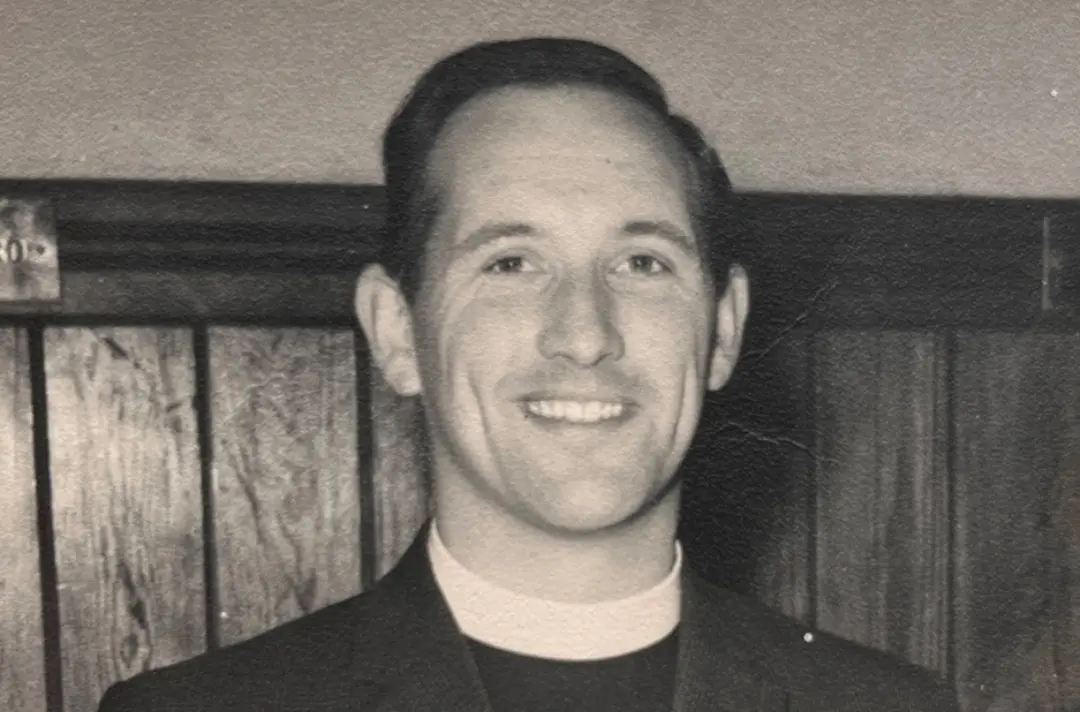
Sixty years ago, a coal spoil tip slid down a mountainside in the Welsh mining village of Aberfan, engulfing all in its path – including Pantglas Junior School. The Rev Irving Penberthy, who was a Methodist minister in the village at the time, speaks with War Cry's Clare Brine about losing dozens of children from his Sunday school, and recalls how he and others tried to support bereaved parents through the tragedy.
It was the last day of term. The school holidays were just hours away. And the children at Pantglas Junior School in the mining village of Aberfan were beginning their morning lessons.
Then the unthinkable happened.
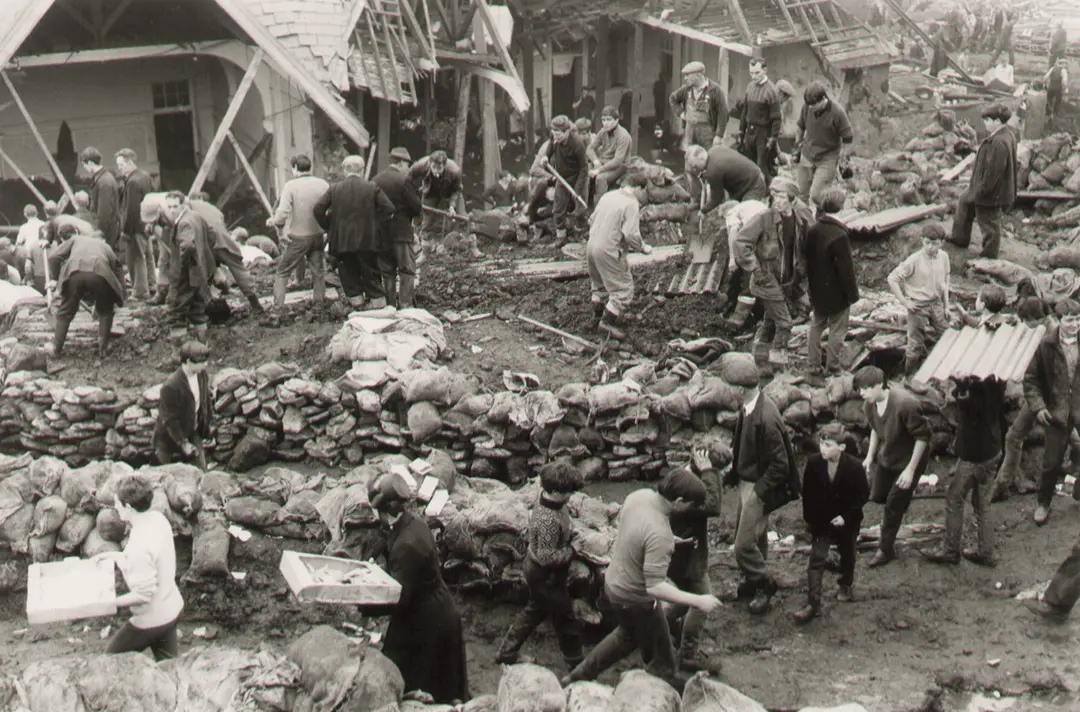
On 21 October 1966, after days of heavy rainfall, a coal spoil tip positioned above the village toppled down the mountainside, engulfing everything in its path. There was no time to flee. Within minutes, the black avalanche of slurry had buried the primary school and a row of neighbouring houses, killing 116 children and 28 adults.
The disaster shook the community to its core. Mothers sobbed in the street. Fathers dug frantically at the site with shovels, trying to reach their kids. Children who’d lost brothers, sisters and friends were traumatised. Sixty years later, the village continues to mourn.
‘It’s something you never forget,’ says the Rev Irving Penberthy, a 95-year-old retired Methodist minister, who at the time of the tragedy ran a Sunday school in the village. ‘What happened at Aberfan is still quite fresh in my mind – especially when I see children.’
In 1966, Irving and his young family were living in Merthyr Tydfil, and he was responsible for running three churches, including the Zion Methodist Chapel in Aberfan. Its Sunday school usually welcomed dozens of children from the Pantglas school.
‘A lot of the children from the school used to come to us because we were an English-speaking chapel,’ he explains. ‘Every Monday evening, at 6 o’clock, the chapel would be full of children coming to our club, called Sunshine Corner. We sang choruses and played games. Everyone used to sing heartily.
‘Aberfan was a typical Welsh community. People lived in terraced houses which had no front gardens. I remember neighbours sitting outside their front doors, having put chairs on the pavement, and they would chat to one another across the street. There was a very friendly atmosphere.’
On the morning of the disaster, Irving was travelling to Pontypridd. He recalls the thick mist in the air.
‘As I was driving, I noticed one or two emergency vehicles passing me,’ he says. ‘I didn’t take much notice, because where there’s a mine, there are often accidents. I carried on with my journey, going past the junction for Aberfan, and then an inner voice seemed to say to me: “You must turn back.”
‘I carried on driving, but I couldn’t get away from this strong thought, which was telling me to turn around. I didn’t know why I had to go back. But I obeyed.’
In later years, Irving came to believe that the inner voice had belonged to God. He had no idea of the horrors it was leading him to.
‘The police wouldn’t let anyone drive into Aberfan, so I had to leave my van at Merthyr Vale and walk into the village,’ he recalls. ‘When I got there, it was a place of chaos. The tip had come down over the school. The men were digging, falling over each other. The women were standing in the street, looking bewildered. I decided to mix with the people in the street, because there were so many men digging that they didn’t need me.
‘You just couldn’t take it all in. We’d never seen a disaster like it. My role as a minister was to be with those who were wandering around in sorrow. Women would say to me: “My child is in the school.” So of course we would say a prayer together: “Have mercy, God. Bless those who are digging. Give them strength.”
‘We didn’t really know what to say. We all hoped the children would be rescued. We stood together and waited.’
While Irving was supporting anxious parents as they awaited news of their children, The Salvation Army was also on site and ready to help. First to arrive at the scene of the disaster was Major Derrik Tribble. When he heard that the Bethania Chapel down the road from the school had been designated as a mortuary, he went there immediately to offer assistance. Over the hours that followed, he oversaw the washing of countless children’s bodies that had been blackened by the coal sludge.
In a War Cry interview published in 2001, Derrik recalled: ‘We had no hot water to wash the bodies, so I went around the streets and commandeered boilers to heat the water. The bodies were in a terrible, terrible state.’
Outside, The Salvation Army was busy helping in other ways. An article published in the War Cry on 29 October 1966 describes how its volunteers took ‘much- needed food and other comforts to “front-line” diggers high up on the mountain of debris’. Others, including Captain Dorothy Graham, joined a line of people who, for hours, stood passing buckets of sludge away from the disaster site.
‘I can remember The Salvation Army being on duty,’ says Irving. ‘The volunteers set up a food station in an old shop in Aberfan and served tea, coffee and soup. I know that I went in there for a cup of coffee.’
While men with shovels worked to recover bodies, Irving went to the chapel, where he offered pastoral support.
‘A farm on the mountainside was the first place to be engulfed,’ he remembers. ‘A dear, elderly lady was swallowed up and she was the first to be brought into the mortuary. When I saw her body, I knew that the parents of the schoolchildren were in for a traumatic time.’
Once the children’s bodies had been carefully washed and placed on the chapel’s pews, parents were summoned to identify them. Derrik recalled in the War Cry: ‘A colleague and I let two sets of parents go in at a time. He monitored
one side and I took the other. When faced with a body, parents usually thought it was their boy or girl but quite often it was not and they had to have a second look. That was harrowing.’
Known by many families in the village, Irving offered to accompany a number of bereaved parents as they entered the chapel to find their children.
‘I remember going in with one father who was a foreman at the Hoover factory, where I was a chaplain,’ he says. ‘It was the middle of the night, and we walked around the chapel, lifting the blankets on these little bodies as we looked for his son. Eventually, he found him and burst into tears. I burst into tears with him.
‘Looking back, I always called my work at the Aberfan disaster a ministry of tears. I cried with parents and held their hands. We were numb. We didn’t know what else to do.’
As he comforted his bereaved parishioners, Irving clung on tightly to his faith in God. He found himself reflecting on a story in the Bible, in which Jesus wept at the death of his friend Lazarus. It reminded Irving that God cared about the suffering community of Aberfan.
‘My faith kept me going,’ Irving says. ‘I felt an inner strength. I can’t really explain it now, because when I look back, I think to myself: “How did I manage?” All I can say is that I was given strength for the task.
‘After the disaster, which happened on a Friday, I led a service at church on the Sunday. We called it a faith recovery service. But we didn’t sing any hymns. We just couldn’t.’
Six days after the tragedy, thousands of people turned up in Aberfan to attend a mass funeral at Bryntaf Cemetery. Grief was tangible as coffins were lowered into a pair of long, parallel graves. The Salvation Army band played. The next day, 28 October, was Irving’s 36th birthday – but he didn’t celebrate.
‘After the disaster, all the clergy came together to pray,’ he says. ‘We made a list of the bereaved families and then we divided out the names and went to visit them.
‘I remember going to visit the family of Sandra, a little girl who had been part of my Sunday school. I had a colleague helping me, Dr Maldwyn Edwards, who was the equivalent of a bishop. When we got to the house, Sandra’s mother was very distressed because Sandra hadn’t been baptised and the family was Roman Catholic.
‘I remember Dr Edwards asking for a photograph of Sandra, so the mother produced one. He also asked for a glass of water. Then he said a prayer and sprinkled water over the photo. The mother’s face brightened up.
‘She was comforted and I’ve never forgotten it.’
While a number of grieving families took strength from their faith and prayers, some questioned why a loving God would allow such a tragedy to happen. Many parents, too, were overcome with anger – especially when the Aberfan Disaster Tribunal found the National Coal Board entirely to blame for the deaths of their children.
‘What happened at Aberfan was human failure,’ says Irving. ‘People had complained about the spoil tip, because it would slip occasionally. The colliery’s response was that the waste would never go very far and it certainly wouldn’t reach the school.
‘Though some people want to blame God for the tragedy, I think it’s difficult. Humans are free agents. We don’t always realise what that implies.’
In the days, weeks and months after the disaster, Irving continued to run Sunshine Corner, trying to bring comfort to the children who had lost friends or siblings. He kept on visiting people who had been bereaved. Donations poured into his church from across the UK, as people wanted to offer their condolences and financial support to the village.
‘I held on to my faith and was comforted by it,’ he says. ‘God was in charge – and that’s what faith is about. “Thy will be done,” we pray. So I think we have to trust God, whatever. Even when we don’t understand why certain things happen. We believe that one day we will understand.’
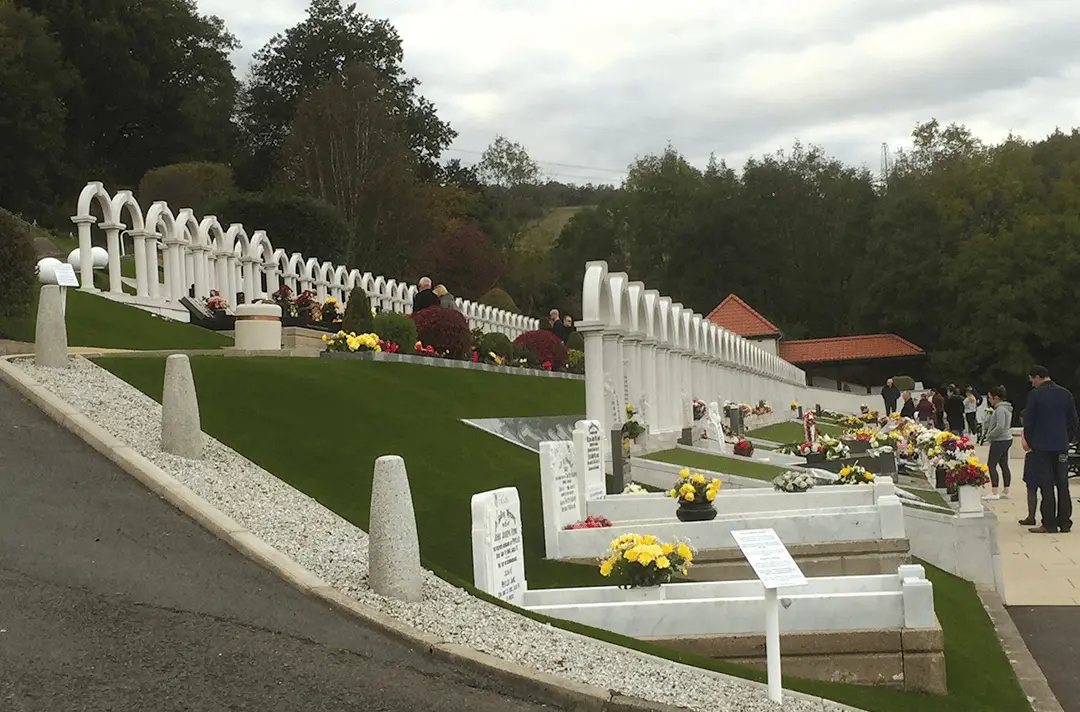
As the UK marks the 60th anniversary of the disaster, Irving reflects on the children he knew who have ‘gone to Heaven’. All these years later, the sense of loss remains strong.
‘I remember somebody once saying to me: “Aren’t you glad you didn’t live in Aberfan, otherwise your own children might have died in the tragedy?” My reply was: “I was a father in God to more than 40 children in that school, and I miss them all.”
‘I’ll never forget what happened that day. When I talk about it, the tears still well up. But as I remember the disaster, I also remember the comfort that God gave.’
Written by
Claire Brine
Staff Writer, War Cry
Discover more

Discover who Christians understand God is and explore the meaning of the Trinity – Father, Son and Holy Spirit.

Learn more about prayer, how to pray and what it means to start a conversation with God.

A weekly magazine, the War Cry is packed with interviews and features on culture and faith, plus recipes, puzzles and more...