
17 January 2026
Seeking unity within the worldwide Christian community
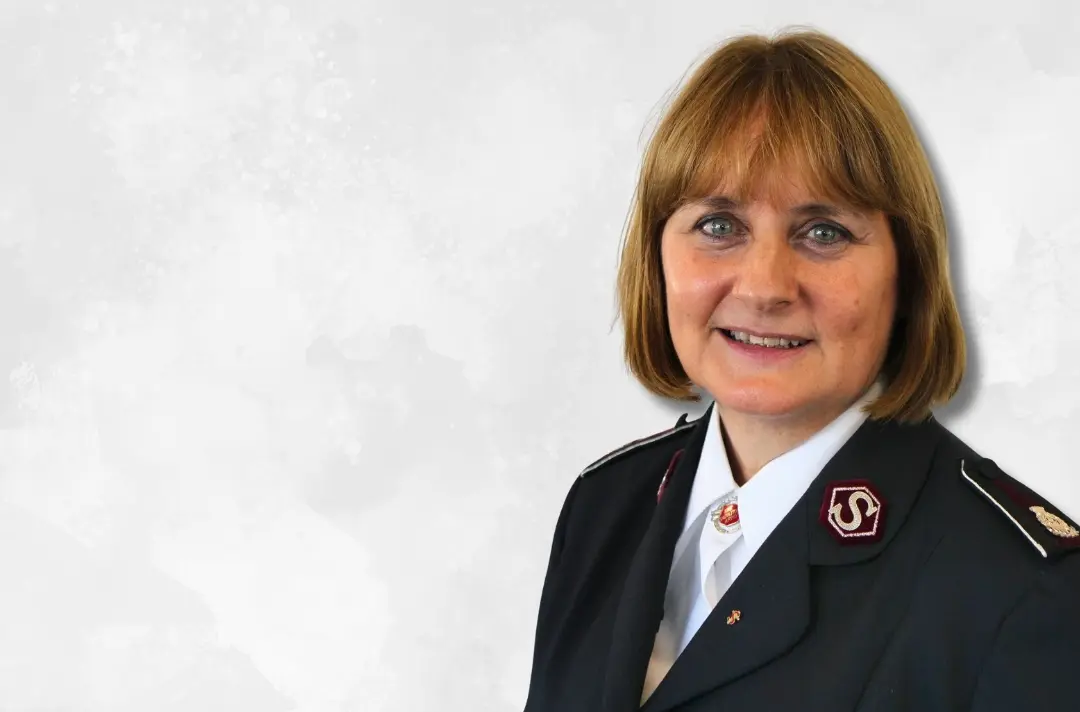
Secretary for International Ecumenical Relations Commissioner Jane Paone shares how Christian traditions across the world share and learn from each other.
What does ecumenism look like at an international level?
I represent the General in different international groups.
The Conference of Secretaries of Christian World Communions brings together all the general secretaries of the different traditions. We share once a year about challenges and joys for the Church. Then we pray for one another. It’s a very precious moment.
I’m also on the Central Committee of the World Council of Churches. The Salvation Army used to be a member of the council. We chose not to be in the 1970s, but we’re always represented with adviser status, so we’re in contact with what’s happening globally. Everybody is very respectful, and there’s a lovely atmosphere.
There’s also the Global Christian Forum. This is a lovely meeting for people to share faith experiences or how the Lord has been working through our traditions. There are no theological documents to be studied; it’s just your testimony.
We’re also part of the World Evangelical Alliance and the Lausanne Movement.
I also have strong links with European Ecumenical Officer Commissioner Vibeke Krommenhoek (IHQ), the General’s representative to the Vatican Lieut-Colonel Andrew Morgan (Italy and Greece Territory) and Territorial Ecumenical Officer Major Paul Robinson (UK and Ireland Territory).
Is your work impacted by the ecumenical work people do locally? And vice versa?
If there wasn’t anything happening at a local level, my job would be in vain. There always has to be a flowing up and down to have any impact.
For example, we’re having informal conversations with the Catholic Church at my level. That might not be felt at a local level, but it’s important because it sends a message that the General agrees that we should open up and learn from one another.
I was speaking to someone in South America, where the Catholic Church has a dominant position. They were saying that they didn’t want anything to do with anybody from the Catholic Church. But their leader pointed out that these informal conversations are happening. That made the person think: if this is happening at that level, then we can do it at this level!
It doesn’t make any sense to do what I do globally unless it’s happening on the territorial, divisional and local levels. I’m really grateful to all the people who are doing that.
You recently attended the World Conference on Faith and Order. What was your biggest takeaway?
There were lots of very high-level theological papers presented about visible unity, but then it had to be contextualised. How can we walk together in our contexts? How can we show that we’re visibly united? We don’t all agree, but I think that’s the beauty of it. Like the diversity of nature, I don’t think the Lord wants us to be the same. He wants us to be different.
It was also eye-opening to see how many Churches are being openly persecuted, especially in the Middle East.
In your opinion, what could we learn from other denominations?
I love the way the Orthodox Church explains theology through images. I’m also challenged by the speed and generosity other traditions have of sharing theological documents. The Army has many members who have studied theology, but I’m not sure we make the resources they provide available, not only within the Army, but also outside it, and I think that’s a great shame.
In your experience, how do other traditions see The Salvation Army?
The Salvation Army has respect because of our service. We’re known for putting our faith into action. There are also always the big questions about baptism and the sacraments. People are often unaware of our understanding of them and are a little bit sceptical. But I haven’t experienced any antagonism: people have a curiosity towards why we do or don’t do certain things. So much grace and respect are shown!
- Explore international ecumenism at salvationarmy.org/ecumenism or find out more about the World Council of Churches at oikoumene.org.
Discover more
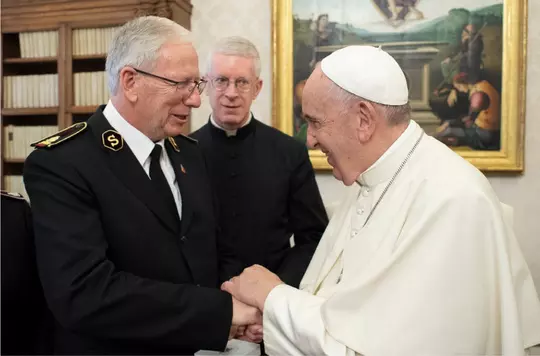
Supporting and developing the ecumenical and interfaith work of The Salvation Army.
Divisional Ecumenical Officer Captain Tracy Collis (Lancashire) reflects on a visit to a Romanian Orthodox church.
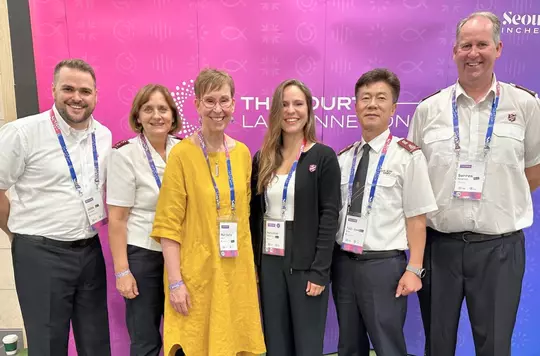
Captain John Clifton reflects on attending the 2024 Lausanne Congress.
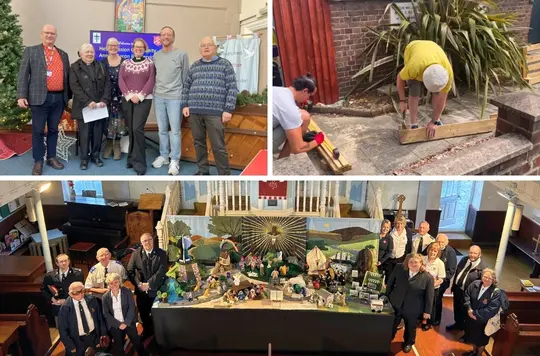
Salvationist asks people around the territory how they’re getting involved in local ecumenical matters.