
20 December 2025
John 1: Love shows up
Captain Shelley Ward
Captain Shelley Ward encourages us to share God's love where it's needed most.
Key texts
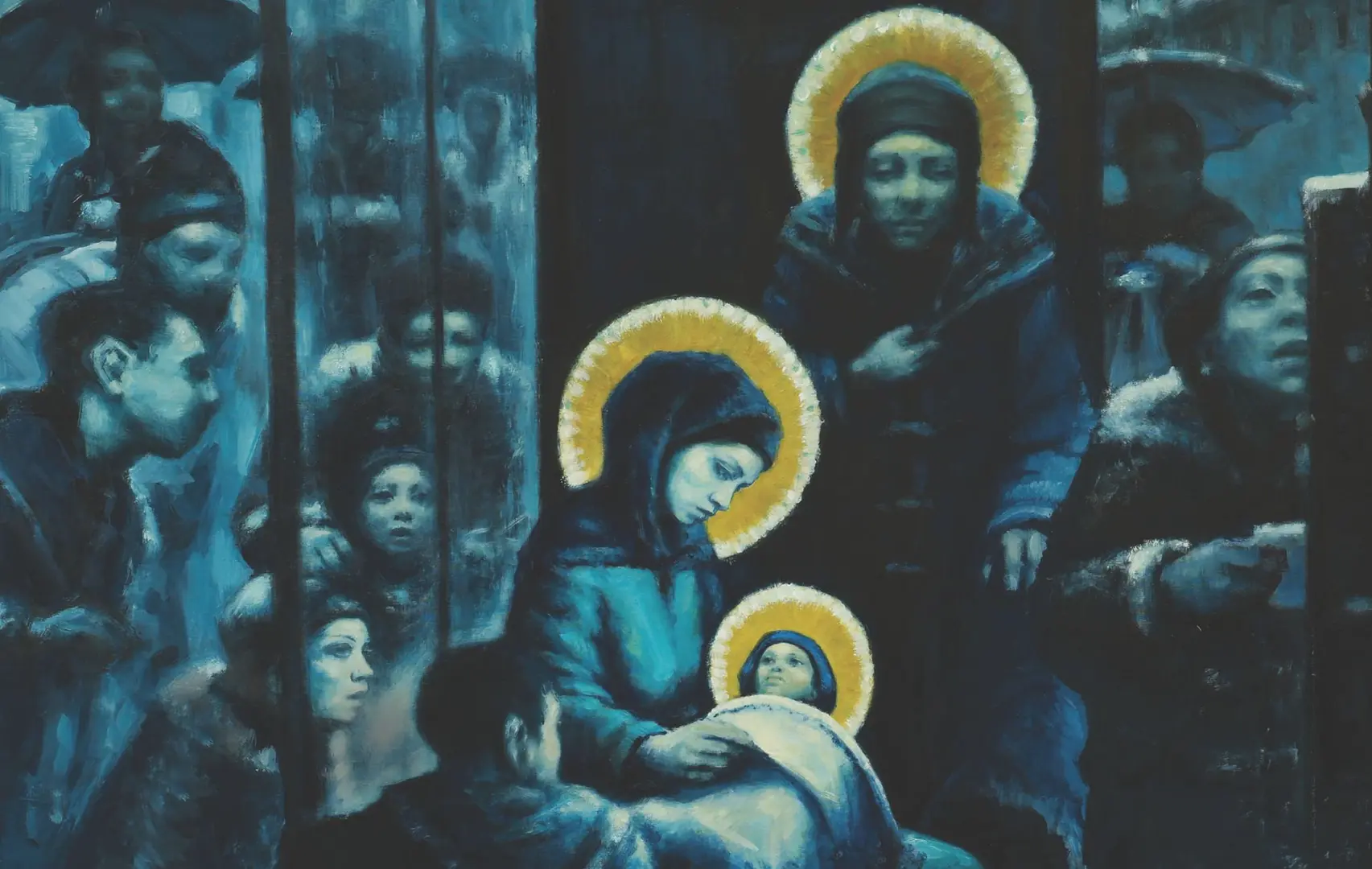
One of the things I love about Christmas is seeing how artists have depicted the Nativity scene in different times and cultures. A number of years ago, the Churches Advertising Network used a painting by Andrew Gadd in their campaign (pictured above). It shows Mary, Joseph and baby Jesus sitting at a bus stop on a busy high street. The image was placed at bus stops around the UK to make people stop and reflect. It’s not a heart-warming picture of the Nativity. In fact, it’s quite uncomfortable. It’s raining, Joseph looks freezing and passers-by are peering at them through the window. Other people ignore them, eager to catch their bus.
When I think about the iconic words of John in our study passage – ‘the Word became flesh and made his dwelling among us’ (v4) – this is the image that comes to my mind. The helpful paraphrase in The Message is: ‘The Word became flesh and blood, and moved into the neighbourhood’ (v14).
Pause and reflect
- Is there a picture, poem or song that helps you reach the heart of what Christmas means?
John gives us a kind of poem rather than a picture. In the opening verses of his Gospel, he invites us to step back and look at the Christmas story from the perspective of eternity. We read: ‘In the beginning was the Word, and the Word was with God, and the Word was God. He was with God in the beginning. Through him all things were made; without him nothing was made that has been made’ (vv1–3).
If you’re still trying to wrap your head around what John might mean by ‘the Word’ you’re not alone. John’s Jewish audience would certainly have heard an echo of Genesis 1 in which God’s word lovingly brought creation into being. His Greek audience, on the other hand, would have understood ‘Word’ or Logos as the logical rationality behind the universe. Other scholars have described ‘the Word’ as God’s plan or blueprint.
God, who had spoken through Creation, the Law and the Prophets, came and ‘made his dwelling among us’ (v14). The phrase literally means ‘pitched his tent’, reminding us of the Old Testament tabernacle where God’s presence dwelt with his people.
Pause and reflect
- Meditate on and read John 1:1–14. Which words or phrases especially stand out to you?
- How does thinking about creation being birthed in love shape the way you see the world?
In verses 4 and 5, John moves from the meaning of God in Creation to the reality and messiness of the world: ‘In [Jesus – the Word] was life, and that life was the light of all mankind. The light shines in the darkness, and the darkness has not overcome it.’
Jesus entered a world suffering with conflict, poverty, grief, violence, loneliness and despair – much like ours. Yet into that darkness, light shines, bringing compassion, healing, empathy, justice and love. In John – The People’s Bible Commentary, Richard Burridge writes: ‘For the divine to enter something as physical, messy and downright sinful as human flesh was outrageous. It is unimaginable to put the two together, and yet this is where John is heading.’
In his ministry, Jesus showed up to people in very physical ways – to heal the sick, to touch the untouchable, to feed hungry crowds and to eat with ‘sinners’. He lived as one of us, bringing all the divine light, life and love within him to each person he encountered in the flesh. Jesus doesn’t completely erase the darkness but his light is never extinguished by it.
Pause and reflect
- Where do you see darkness in your community or the world?
- Where do you see signs of light breaking through?
- What about in your own life?
The climax of the passage comes in verse 14: ‘And the Word became flesh and lived among us’ (New Revised Standard Version). Love didn’t just send a message from Heaven; love showed up in person! God entered into our messy world as a baby who needed feeding and changing and constant physical care.
Pause and reflect
- How might our belief in the Incarnation – the Word become flesh – change how we see the ordinary, messy parts of our world?
Barbara Brown Taylor, in her inspiring book An Altar in the World reflects that: ‘After [Jesus] was gone, they would still have God’s Word, but that Word was going to need some new flesh.’
Jesus captures this calling in his parable of the sheep and goats. He challenges his disciples to feed the hungry, clothe someone’s body, and visit someone who is sick or in prison. When we do these things we will encounter Christ in those we help (see Matthew 25:40). The Word will become flesh in us, too, as we serve and care for others.
It is in our most challenging times that we need love to show up. When some friends recently travelled to see my mum, who is facing terminal cancer, they admitted that, while they had been praying for her, it was difficult to know how or what to pray. My dad responded: ‘You being here, showing up, this is prayer with legs.’
Our beliefs and prayers are best when they are embodied, enfleshed and lived out. How wonderful that we can also become light and love for others when we meet people’s needs and restore people’s dignity as Jesus did!
Pause and reflect
- When have you encountered Christ in another person?
- Consider ways in which your prayers might ‘grow legs’.
- Who might need you to ‘show up’?
This Christmas, let’s determine to be people who show up in the places where love is needed most.
• Since this article was written, Captain Shelley’s mum has been promoted to Glory.
Bible study by
Captain Shelley Ward
Corps Leader, Bexleyheath and Welling
Discover more

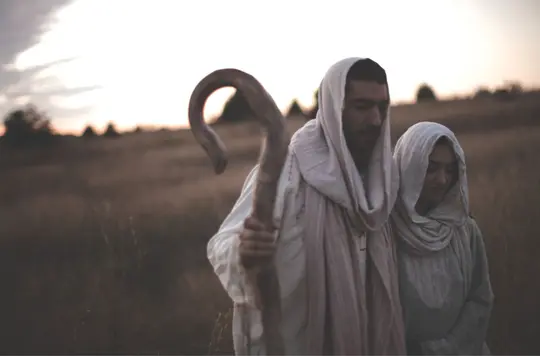
Lieutenant Matthew Stone reminds us that, like Joseph, we have the choice to accept God’s will.

Captain Wan Gi Lee unwraps the reality of the divine love revealed in the Incarnation.
Salvationist suggests some pointers to help share the gospel with other people. A step-by-step guide to help you share your faith with those around you.