
5 February 2026
Mark 12: Love your neighbour
Captain Tony Kakande
Captain Tony Kakande reflects on what matters most.
Key texts
When Jesus is asked to name the greatest commandment, he does not offer something new or obscure. Instead, he draws from Israel’s deepest spiritual roots and brings them into sharp focus. Love for God and love for our neighbour are not optional extras of faith; they are the very centre of what it means to belong to God’s Kingdom. This passage comes at a tense moment in Mark’s Gospel. Jesus is already facing opposition from religious leaders and questions are often asked to trap or discredit him. Yet here, the question is genuine. A teacher of the Law wants to know what truly matters most.
Jesus’ response cuts through complexity and reveals that authentic faith is measured not by religious performance but by a life shaped by love. In a world fractured by division, inequality and exclusion, Jesus’ words challenge us to examine how love is expressed – not only in personal relationships, but also in our communities, churches and social systems. To love our neighbour as ourselves is a radical call that requires empathy, justice, humility and action.
Pause and reflect
- When we think about loving our neighbour, who comes to mind and who is easily overlooked, avoided or forgotten?
- Who benefits most from how things are currently organised and who may struggle to feel seen, heard or valued?
In response to the question posed by one of the teachers of the Law, Jesus begins by quoting the Shema: ‘Hear, O Israel: The Lord our God, the Lord is one.
Love for God, Jesus says, involves the whole person – heart, soul, mind and strength. This is not partial devotion or surface-level faith. It is a call to orient every part of life around God.
Love, here, is more than emotion. It includes loyalty, obedience, reflection and embodied action. Loving God with the mind means engaging critically and thoughtfully with faith, allowing beliefs to shape values and decisions. Loving God with our strength means faith is expressed through how we use our energy, resources and influence.
Pause and reflect
- Which part of loving God do you find most natural? Right now, which part feels most challenging?
- Where might your faith be compartmentalised not integrated?

Without hesitation, Jesus adds a second commandment: ‘Love your neighbour as yourself.’ He does not present it as secondary or optional. Instead, he binds together love for God and love for neighbour so tightly that one cannot exist without the other. In the biblical world, ‘neighbour’ could mean fellow Israelites, but Jesus consistently expands this definition to include those considered foreigners and those on the margins of society. Love of neighbour, then, is not limited by comfort, similarity or convenience.
Moreover, Jesus says we are to love others as ourselves. This assumes that our own needs, dignity and wellbeing matter – and so do the needs and dignity of others. The command challenges both selfishness and indifference. It asks us to imagine how our choices affect those around us, especially those with less power who are consequently overlooked, avoided or forgotten.
Pause and reflect
- In your social or church context, who is considered a ‘neighbour’?
- Who might be treated as an outsider rather than a neighbour?
- How might loving others as yourself reshape how you think about justice and fairness?
The teacher of the Law responds with insight and humility. He recognises that loving God and neighbour is ‘more important than all burnt offerings and sacrifices’ (v33). There are echoes of the message spoken by Israel’s prophets, who repeatedly challenged worship that ignored injustice or compassion. Evidently, this encounter reveals that religious activity, however sincere, can never replace love expressed in relationships.
Pause and reflect
- Where might religious habits distract from loving action?
- How can worship shape us more deeply into people of compassion and justice?
- What practices help connect faith with everyday life?
Worship, prayer and tradition are meant to form us into people who reflect God’s character in the world. When they become detached from love, they lose their purpose. For contemporary readers, this invites honest reflection about how faith is practised today. Church life can become busy, familiar and comfortable, yet still fail to address exclusion, inequality or suffering.
Jesus affirms the teacher’s understanding, saying: ‘You are not far from the Kingdom of God’ (v34). This is both encouraging and challenging. The teacher understands the heart of God’s Law, but understanding alone does not mean the Kingdom has fully taken root. The Kingdom of God is not simply an idea to grasp; it is a way of life to embody. To move from being ‘not far’ to fully participating requires courage, repentance and ongoing transformation. It involves aligning belief with action and allowing love to shape priorities, relationships and structures.
Pause and reflect
- What might it look like to move from understanding to embodied practice?
- Where do you sense a gap between what you know and how you live?
- What step might God be inviting you to take?
Jesus’ teaching reminds us that love is not abstract or sentimental. To love our neighbour as ourselves means noticing those who are often ignored, listening to stories that challenge us, and being willing to change for the sake of others’ flourishing. It is a love that seeks dignity, equity and belonging for all. This commandment is not about moral perfection. Rather, it is about faithful direction – continually turning towards God and neighbour in faith and love.
- Listen to Captain Tony Kakande’s message on Salvationist Radio’s Sunday Worship. Visit salvationist.org.uk/sunday-worship for more information.
Bible study by
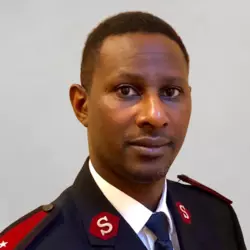
Captain Tony Kakande
Corps Leader, Gateshead
Discover more

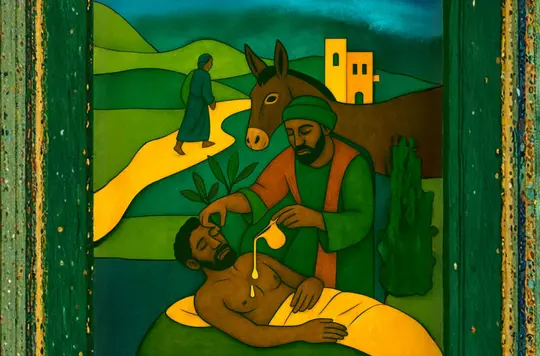
Commissioner Gillian Cotterill encourages us to follow the good Samaritan’s example.

Salvationist unpacks the seek justice and reconciliation mission priority in discussion with Captain John Clifton.