
1 August 2026
What is the environmental impact of AI?
Amy Quinn-Graham (Research and Development) explains her research into the environmental impact of generative AI.
Who commissioned the research?
The Digital team. When the AI Working Group was first set up, the question came up about generative AI from an environmental perspective.
What does the environmental impact look like?
Based on what we are able to measure right now, we can say that generative AI has a considerable environmental footprint because it contributes to increasing carbon emissions and water scarcity. Data is not published by all the relevant companies, so this research is based on ChatGPT-3, which is not the most recent model – the impact will be higher for newer, larger and more complex models. The focus has been mainly on carbon emissions from the use of electricity and water usage.
What are the factors in AI’s environmental impact?
We don’t know if there are differences between different models of generative AI, such as ChatGPT and Claude, but the complexity of a prompt is a factor – a simple prompt has less impact than a complex prompt.
How can you put it in everyday terms?
On average, an AI search query will release 4.32g of CO2 into the atmosphere, the equivalent of turning on a 60W lightbulb for 6 minutes and 12 seconds. A non-AI query generates 0.2g of CO2, the equivalent of a 60W lightbulb being on for 17 seconds. Generating an image or video is more intensive: one image from a basic AI image generator is the equivalent of running a microwave for 6 seconds. Producing a 2-minute, high-quality video with AI is the equivalent of driving a car 108 miles.
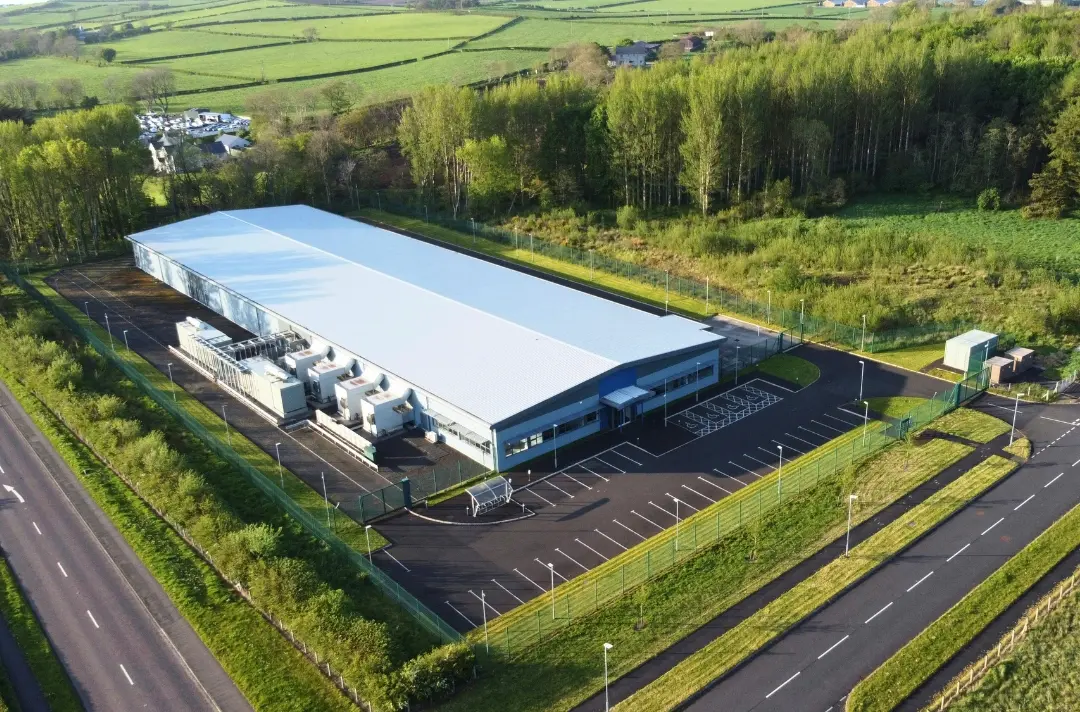
AI also requires data centres – large buildings that house thousands of computers – which take up land and require energy 24/7. Water is also needed to cool the data centres, but the majority of the water used cannot then be reused. That means Chat GPT-3 typically consumes a 500ml bottle of water for a conversation of 10 to 50 medium-sized responses, depending on the time of day and the location of a data centre.
It’s easy to think of AI as something non-physical. Do data centres make its impact more visible?
Yes. The largest data centre exceeds 10,000 square metres. People can feel removed from the data centres when they’re using an app; it’s not something they have to think about. People might think of these centres as being in the middle of nowhere, but towns near the centres are impacted. And the more we use AI, the more data centres will be required.
Why does caring for creation matter in this context?
We only have one planet. God has given us this world and, in Genesis 1:28, responsibility to care for it. That includes humans, which ties into not only our mission priority to care for creation but also to seek justice and reconciliation: data centres are often sitting within poorer communities, while people in the Global South are often the ones hired to sift through potentially harmful content as part of the training and development of AI models. Just as when we talk about wider climate change, the impact disproportionately affects people experiencing poverty.
It is possible that greener AI models could be built, or that AI might help with ways to think about tackling climate change, to innovate or mitigate it. But it is important to be mindful of the impact on the environment in the immediate term.
What is the best response we can take?
Individually, there are things we already do, such as driving our cars, that we know have an impact upon the environment, so this is about being aware of the impact of using generative AI. If you use it, use it intentionally. Generating an image might seem fun, but do you need to? It might help some people to think about it in terms of offsetting, balancing out using AI with not driving somewhere or not eating meat for a day. It’s about being mindful and finding a balance.
Discover more

Moral and Social Issues Council (MASIC) member Captain Mark Scoulding (Stornoway) talks about artificial intelligence.

Captain Mark Scoulding (Watford) talks about the Artificial Intelligence Guardrails developed by the Moral and Social Issues Council.

Major Heather Poxon (THQ) unpacks the care for creation mission priority.

Explore ways you can create an intentional rhythm of rest from digital technology, creating space to be more present with God and others.