15 October 2026
Amelia Flanagan: ‘My Emmerdale character showed modern slavery hidden in plain sight’
Claire Brine
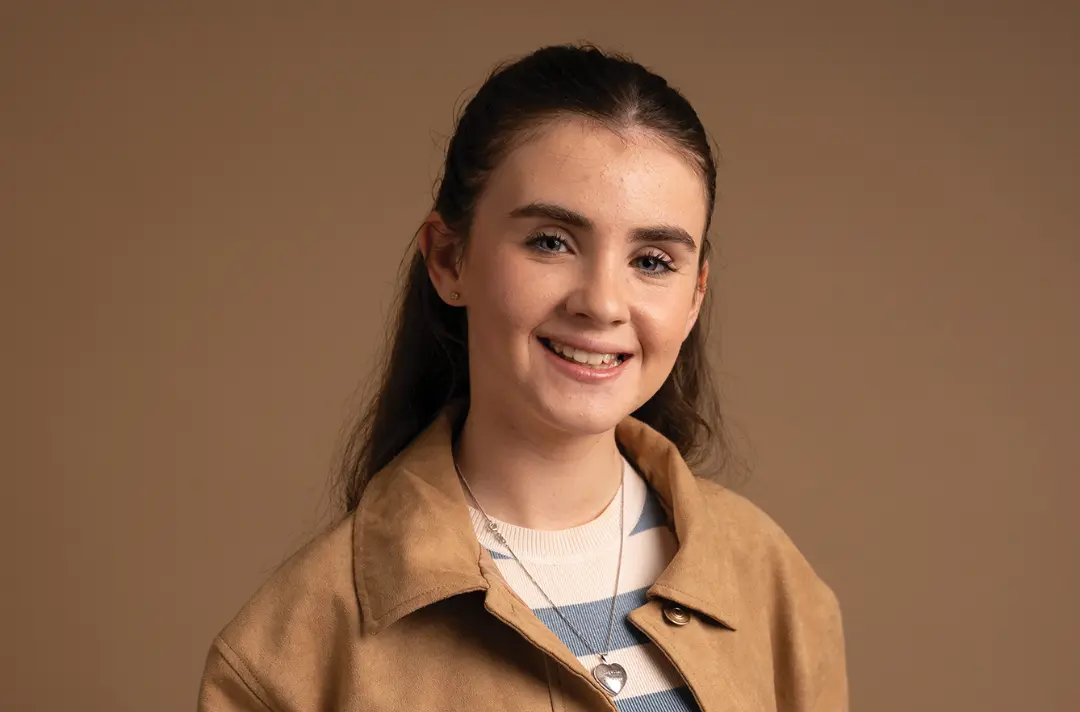
To mark Anti-Slavery Day (Sunday 18 October), soap actress Amelia Flanagan reflects on April’s experiences and why, one year later, her story of control and abuse was worth telling.
Last year The Salvation Army’s anti-trafficking team offered guidance to scriptwriters from ITV1 soap Emmerdale as they created a storyline in which teenager April Windsor was groomed and exploited by traffickers.
When Emmerdale producers outlined their plans for the character of April, explaining that the schoolgirl would be groomed and exploited in a county lines storyline that would reveal the horrors of modern slavery, teenage actress Amelia Flanagan felt the weight of responsibility.
‘What happened to April last year is happening all the time across the country, so I felt both honoured and daunted to be given such a massive storyline,’ says Amelia, who plays the daughter of longstanding character Marlon Dingle. ‘I remember having a meeting with Laura, one of the show’s producers, where we talked about how April had been homeless and met her boyfriend Dylan on the streets, and then Laura explained that it was all going to lead into a county lines drugs storyline. I was excited to be trusted with it and hoped that I could present April’s situation in a true light.
‘I also wanted people watching at home to be able to see what life is really like for young people who are exploited, which is why so much research went into it. That’s why we worked with you guys at The Salvation Army.’
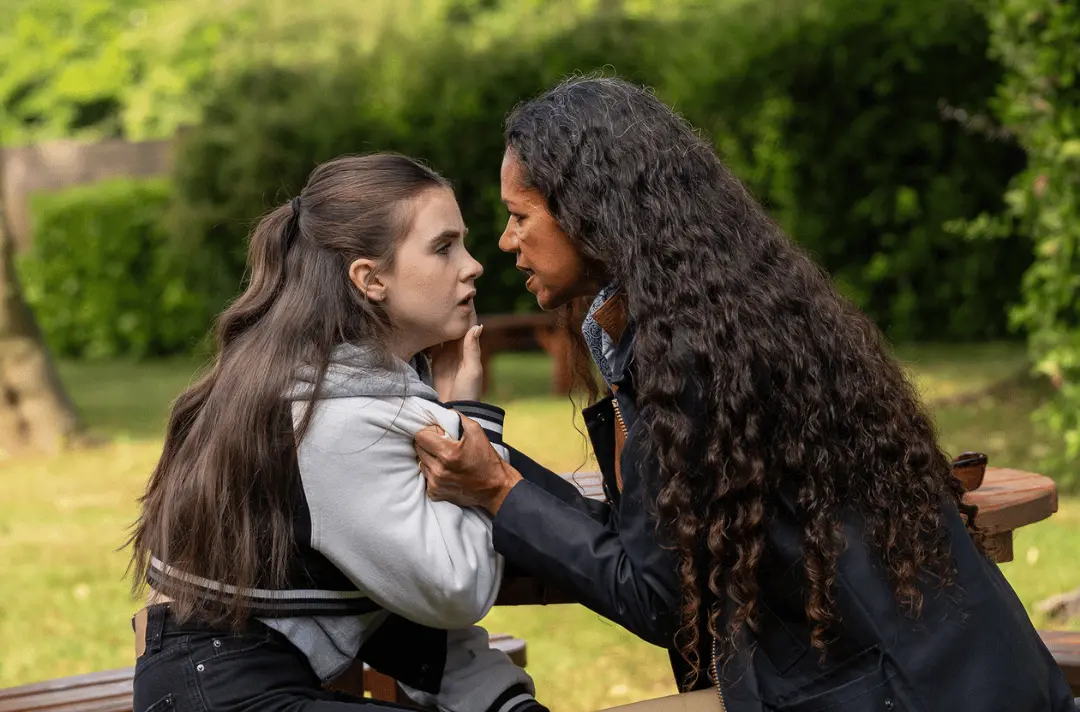
In their efforts to create scenes which realistically depicted the exploitation of April and Dylan – along with their neighbour Bear Wolf – at the hands of mother-and-son traffickers Celia and Ray, Emmerdale’s writers turned to The Salvation Army for help. Since 2011, the church and charity has been contracted by the government to provide specialist support for adult survivors of modern slavery in England and Wales. Such support includes relocating survivors to safe houses; offering access to legal advice, healthcare, counselling and educational opportunities; providing financial assistance; and giving help in obtaining employment and housing.
After members of The Salvation Army’s Anti-Trafficking and Modern Slavery Department attended an online script meeting to discuss how traffickers might groom, exploit and control their victims, the soap’s writers went on to create some of the most harrowing episodes in the programme’s history. Viewers witnessed the helplessness of Dylan as he was forced to carry drugs in order to clear a rising ‘debt’ imposed by Ray and Celia; the horrors faced by Bear as he became trapped in forced labour by day and locked in an attic by night; and the unmitigated terror felt by April as she discovered that she was being sold for sex.
‘I was shocked to learn that exploitation like this is a really common thing,’ Amelia says. ‘And if you’re not caught up in it, the signs of it happening around you are really easy to miss. Modern slavery is hidden in plain sight. We saw that in how April’s story played out.
‘Her family had no idea what was going on because April was groomed in such a way that made her keep everything secret. How she was forced into her situation was eye-opening for me. And I think it’s great that Emmerdale has raised awareness of these issues, because the story helped people my age to understand the signs that they need to look out for. I didn’t have much of a clue beforehand.’
April had been feeling lost in life when she first encountered Ray and Celia in the summer of last year. She had recently run away from home, endured a stint of living on the streets and had given birth to a stillborn baby. Amelia believes that her character’s vulnerability made her an easy target for the traffickers to prey on, especially after they had already groomed Dylan.
‘April got into the drug-running side of things because Dylan, who had no money, saw Ray as a father figure who was helping him,’ Amelia explains. ‘They were both convinced that he was a good guy.
‘I also think that at the age of 16 or 17, you have this feeling of: “I’m an adult and don’t need my parents any more.” That sense of pride played a part in why April fell into her situation.
‘And once she was trapped in it, her dad Marlon and stepmum Rhona didn’t realise – even though they were living under the same roof as her. They just thought she and Dylan were being teenagers who were out spending time with their friends.’
While Ray and Celia controlled April and Dylan, others who lived in the village were oblivious of the horror unfolding in front of them. In their eyes, Ray and Celia were friendly neighbours who were pleasant to be around.
‘We’d film a café scene with about eight characters in it, and the first bit would show people just ordering a coffee, then the cameras would turn to April and Dylan at the moment when Ray and Celia were telling them what their next job would be,’ Amelia explains. ‘Making the conversation look “normal” was one of their tactics. It looked like they had just bumped into April and Dylan to say hello – but really they were controlling them. It’s scary how open it all was.
‘Another scene that sticks out for me was the one where April is dreaming that she and Marlon are together, but then Ray comes in and shoots him. I think it showed the gravity of the situation for April and how responsible she felt as she tried to keep the secret from her family to keep them safe. In April’s head, that dream showed the outcome of what would happen if she shared the truth with anyone.’
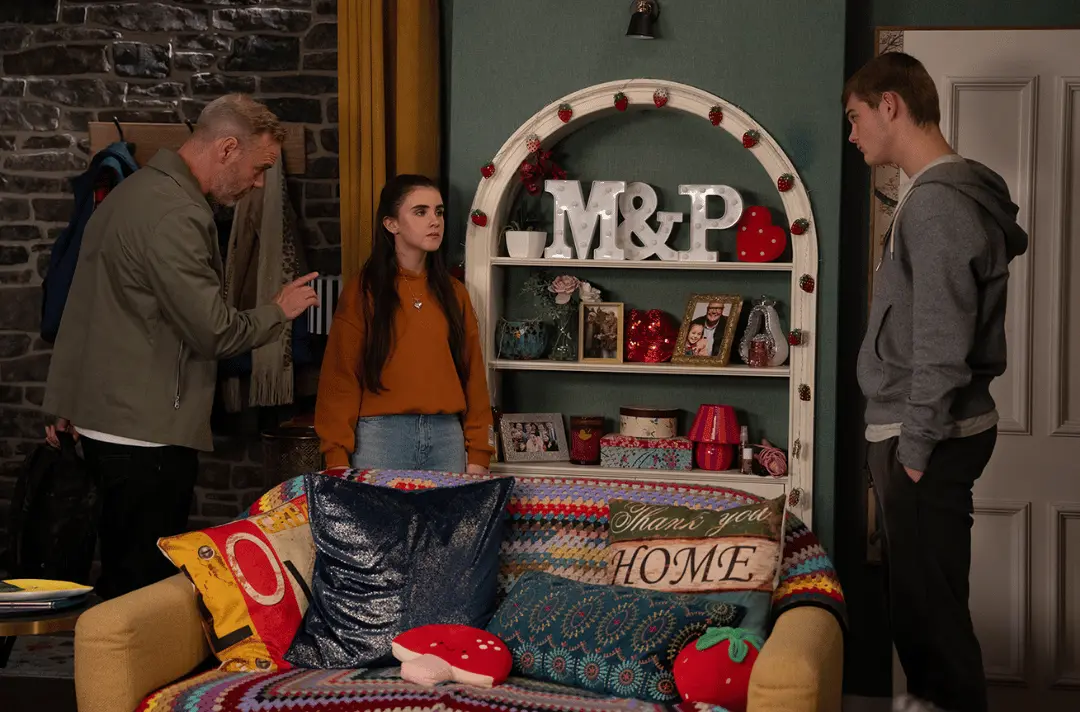
Towards the end of last year, when Marlon and Rhona discovered the abuse that April had suffered for so long, the couple’s hope that their daughter would be free from Ray and Celia’s demands disappeared almost instantly as the traffickers began to threaten the entire family.
‘Celia pinned Rhona up against the wall and was digging her nails into her,’ Amelia remembers. ‘Marlon and Rhona wanted to protect their child but realised that they couldn’t. Instead, they were in on the secret as well and had to keep quiet. They were blackmailed for money. That snowball effect was massive – but it’s because people in slavery get trapped in a cycle. They face a debt that keeps growing, but there’s no way of ever paying it off because it’s an imaginary sum of money.’
Though the family’s suffering looked like it would never come to an end, viewers felt a shred of hope in January when April decided to tell her story to the police. The pivotal moment marked the start of Ray and Celia’s downfall – and brought the first glimpse of freedom for April and Dylan.
But the teenagers’ trauma wasn’t over instantly. Because of the pain inflicted on her parents, April felt guilty for her actions. For a long time, she struggled to see herself as a victim. According to The Salvation Army’s anti-trafficking team, such a response is common among survivors of modern slavery. Amelia can understand why.
‘April felt responsible for what she put her family through,’ she says. ‘If she hadn’t run away from the village, or if she’d turned to her parents sooner, maybe things wouldn’t have ended up in the way they did, so she had this sense of: “I’ve done this to myself.” It was really hard for her to accept that what happened to her and Dylan wasn’t her fault.
‘I think it’s important that Emmerdale has shown how trauma like this can stick with people. It doesn’t disappear overnight. This modern slavery storyline has lasted a year because these characters are changed for ever by what they have been through.’
To stress her point, Amelia reflects on a scene which was broadcast over the summer in which Dylan struggled emotionally after seeing police tape around the village.
‘It showed that his trauma was still sitting with him badly,’ she says. ‘He has struggled to move on. April tried to be the supportive girlfriend and talked about looking into therapy with him.’
While the young couple continue to live with the pains of the past, Amelia believes that April’s story is ultimately one of hope. She hints at positive times ahead.
‘April and Dylan are definitely getting to a better place,’ she says. ‘And I think it’s great for real-life survivors to see that there can be a future beyond slavery.
‘Over the summer, April got her GCSE results – which she sat late after everything that had happened – and she has started to study for her A-levels. There have been talks about her going to university. It’s important to show that, despite suffering a great trauma, there is light at the end of the tunnel. Survivors can go on to live a good life.’
After learning that she had received a nomination in the best young performer category at the Inside Soap awards, Amelia was asked by interviewers to reflect on how she felt April had changed over the past year. She responded that the character had become more mature and resilient. But has the storyline changed Amelia at all?
‘It’s opened my eyes massively to what is going on in the world,’ she tells me. ‘April’s life is very different to mine. I’m very lucky to have a lovely family and a lovely life, but it’s important to realise that not everybody has that.
‘I’ve been honoured to raise awareness about exploitation – and it has been good when people have reached out to tell me that the storyline has helped them see things in a different light. Even my own grandparents have said to me they had never really understood the severity of county lines, grooming and modern slavery before watching it happen.’
To younger viewers in particular who have been educated by scenes they have witnessed on Emmerdale, Amelia has an important message.
‘My advice would be to keep yourself surrounded by those who care and love you,’ she says. ‘Instead of bottling things up – which is the worst thing you could do – talk to people who can help, because there are amazing groups out there to support anyone who is dealing with situations like this.
‘My hope is that, in the years to come, people will look back on this storyline and say: “That was such an important story for Emmerdale to tell.” It might have been sad at times, and we’d all love to live in a world of just sunshine and rainbows. But the reality is: this is happening all over the world – and it’s important that people know about it.’
Written by
Claire Brine
Staff Writer, War Cry
Discover more

A weekly magazine, the War Cry is packed with interviews and features on culture and faith, plus recipes, puzzles and more...
Stand in solidarity with survivors and support the Army’s campaign for Anti-Slavery Day on 18 October.
Our vision is to bring an end to slavery, fight for social justice and respond with compassionate care.