
10 February 2026
The origins of Pancake Day
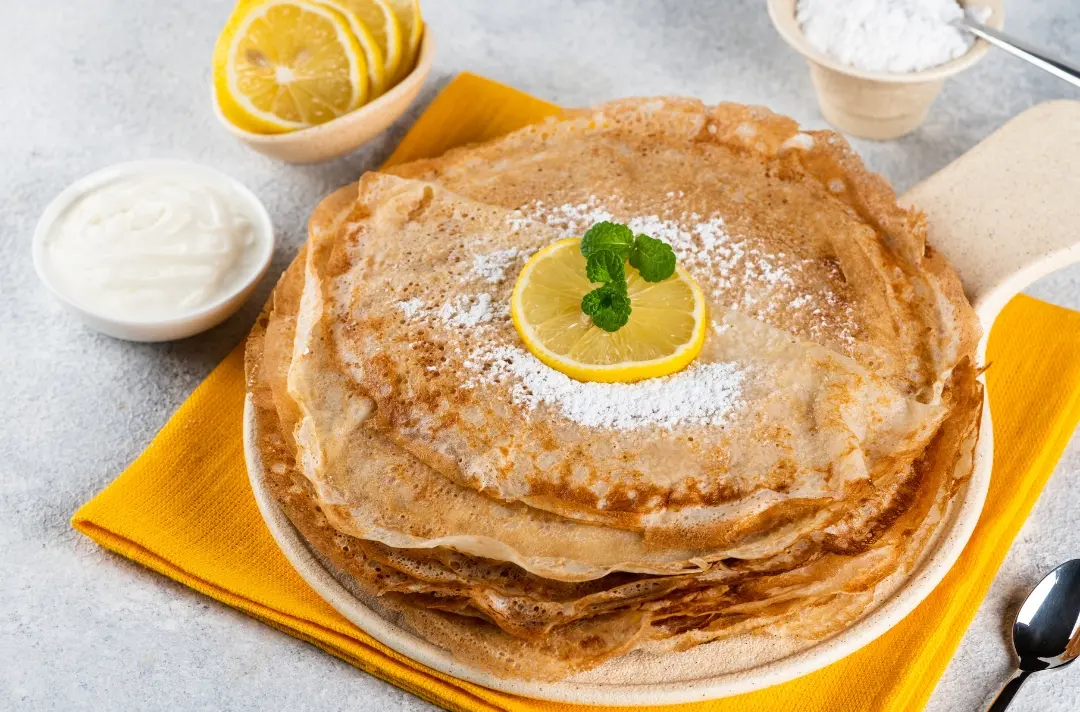
Eating pancakes – and, in some cases, racing with pancakes! – has become a well-loved tradition for many. But how did Pancake Day and Shrove Tuesday merge into what they are today?
When is Pancake Day this year?
Shrove Tuesday, more commonly known as Pancake Day, is a traditional Christian feast that precedes Ash Wednesday to signify the beginning of the period of Lent. The day falls exactly 47 days before Easter Sunday; in 2027, this will be on Tuesday 9 February.
The word ‘shrove’ is the past tense of the word shrive which comes from the Latin word ‘scrībēre’ meaning ‘to obtain absolution for your sins’. In other words, it means to receive forgiveness that sets a person free from spiritual guilt. Shrove Tuesday is named because, historically, this was the day that Christians were to be ‘shriven’ in preparation for Lent, usually through an act called confession. From as early as the 16th century, a ‘shrivening bell’ would ring out from the church to let people know that it was time to confess and prepare for the approaching Lenten season.
Why pancakes?
It was this ‘shrivening’ that most likely marked the beginning of traditions we now associate with Pancake Day. The forty-day period of Lent was a time to fast from certain foods in anticipation of Easter.
In order to participate in this, people needed to use up their remaining eggs, butter and fat. One of the best ways to do this was to make pancakes, and over time, Shrove Tuesday became more closely linked with this food tradition and less with the aim of fasting. What began as a convenience borne out of necessity has, for many, become a date in the calendar to look forward to and enjoy delicious treats.
Pancake Day races
On Pancake Day, many homes and restaurants will see people make pancakes, often pairing them with lemon sugar, chocolate, or fruit. However, in parts of the United Kingdom, you may find another, more unusual sight: a pancake race.
The most famous of these, and the oldest, takes place in the town of Olney, Buckinghamshire. Every year, on Shrove Tuesday, the women of the town line up on the streets and run, with frying pan in hand, to the Church of St Peter and St Paul. It is the custom in Olney that, once the race has ended at the church doors, the Shriving Service takes place to include the winner’s prize presentation.
‘According to tradition, the race was first run in 1445,’ explained David Phillipson, Chair of the Olney Pancake Race Committee in 2019. ‘There’s historical evidence to say that it was run during the War of the Roses. I think there have been various breaks, but just after the Second World War, Canon Collins, who was vicar here at the time, brought the race back to the fore.’
A common origin story goes that a housewife was midway through making one of these pancakes when she heard the church bell calling people to the shriving service and dashed to the church with a frying pan still in her hand.
The significance of Pancake Day
Regardless of the origins of Pancake Day, and beyond the races that are held, Shrove Tuesday continues to hold significant meaning for Christians. It signals the day before Lent, a time to reflect on the life, death and resurrection of Jesus, ultimately anticipating Easter Sunday.
Christians believe that, because of Jesus, all people can be made right with God and can experience life in all its fullness. Paul, one of the very first Christians, teaches: ‘But now in Christ Jesus you who once were far away have been brought near by the blood of Christ.’ (Ephesians 2:13)
Paul’s words remind us that it is through Jesus, and what took place at Easter, that we can draw close to God. That is a reason to celebrate.
Written by

Tim Davis
Discover more
War Cry's Ewan Hall explores the true meaning behind Shrove Tuesday.


Uncover more about Jesus’ life, his birth, ministry, death and resurrection and the impact he had and continues to have on the world.
Explore faith to understand the stories behind Lent and Easter, and to see why this time of year means so much to millions worldwide.