
10 October 2026
How does The Salvation Army work with the United Nations?
George Tanton
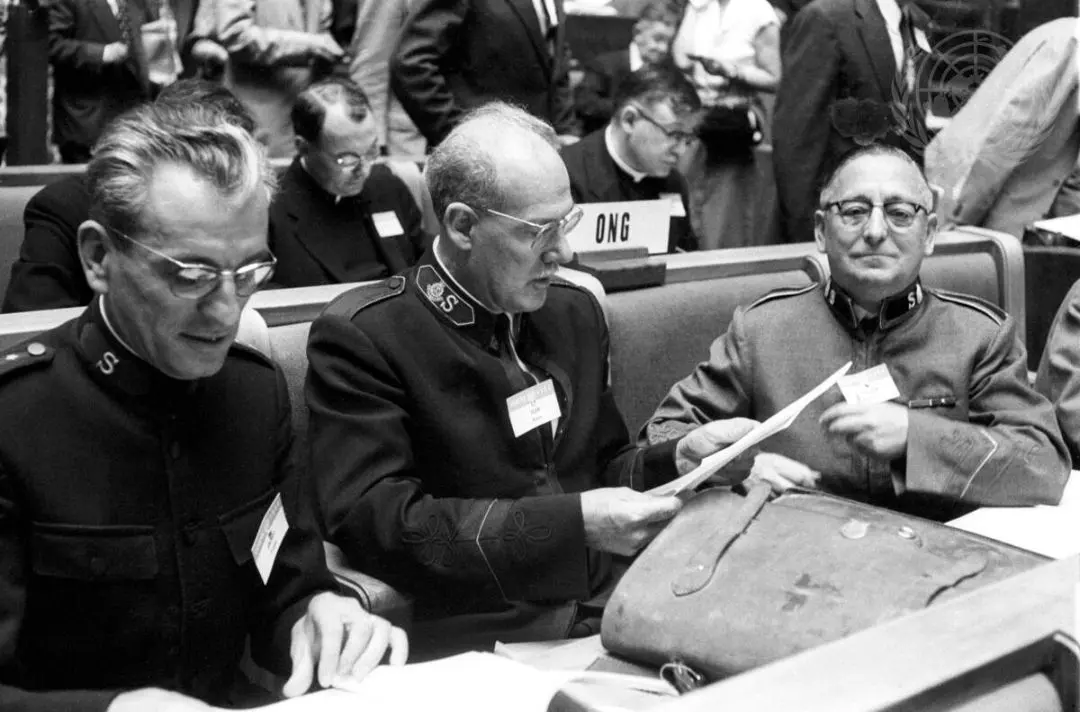
George Tanton explores The Salvation Army’s historical links to the United Nations.
‘The Salvation Army uniform is a familiar sight in the corridors of the United Nations Headquarters,’ said The Salvation Army’s 1966 Year Book. ‘Delegates who know of the Army’s work in their homeland happily recognise Salvation Army officer representatives and seek opportunities for conversation in areas of immediate interest and concern.’
The Army’s relationship with the United Nations (UN) dates back to 1946. In October 1947, it was formally granted ‘consultative status’ on the UN’s Economic and Social Council alongside other non-governmental organisations. Having provided essential humanitarian relief throughout two world wars, the Army’s global strategy naturally aligned with the UN Charter – a framework agreed by the 51 founding member states that strove to unite the international community in saving ‘succeeding generations from the scourge of war’, as well as ‘reaffirm faith in fundamental human rights, in the dignity and worth of the human person, in the equal rights of men and women’ and ‘promote social progress and better standards of life in larger freedom’.
The Social Commission, Commission on Human Rights, Commission on the Status of Women, Commission on Narcotic Drugs, and the Subcommission on Prevention of Discrimination and Protection of Minorities were the principal agencies to which the Army related.
In the post-war world, the Army served on a committee working with the Office of the High Commissioner for Refugees. Notably, it helped coordinate relief to stateless peoples across Europe, and in Hong Kong and the Far East. The Movement also worked with UN agencies following violent revolutions in Hungary, in 1956, and in Cuba, in 1959.
Aside from its experience in helping to rebuild lives and communities devastated by human conflict, the Army was valued by the UN for its expertise in social work, in particular with regard to human trafficking, addiction treatment and crime reduction. This prompted one UN official to remark in the 8 January 1983 issue of the War Cry: ‘We need The Salvation Army to help bridge the gap between us and the man in the street.’
In 2007, General Shaw Clifton wanted to greater develop the Army’s connection with the UN, and established the International Social Justice Commission (ISJC) in New York. Today, the ISJC remains the Army’s key organ and strategic voice at the UN. The Army is committed to supporting the UN’s Sustainable Development Goals, which function as a roadmap to ending economic, social and environmental injustice across the world. They were endorsed by all member states of the UN in September 2015 and include no poverty, zero hunger, quality education, clean water and sanitation, and climate action.
The ISJC participates in the UN Economic and Social Council, which assists the UN’s General Assembly in advancing the Sustainable Development Goals. Representatives participate in commissions, attend meetings, submit written statements, meet government delegations and make oral statements on behalf of the Army during discussions and events.
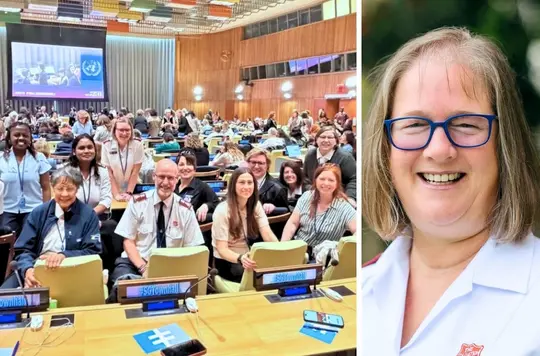
The Army’s UN representatives are, in New York, ISJC directors Lieut-Colonels Ian and Liz Gainsford and Senior UN Representative Major Victoria Edmonds, and, in Nairobi, Senior UN Representative Major Jacob Kinyua and, in Geneva, Senior UN Representative General André Cox (Retired) and Markus Hofer.
Major Victoria explains: ‘More than 80 years later it is just as important now to be at the table of the United Nations. We have a wide reach of people that we can tap into when the UN is asking for input. We can also take back to our territories what is happening on the political table. We need to be at the table and have our voice heard or else we become silent in our advocacy.
‘We can learn from the UN the challenges that are facing the world and how we, as a faith-based organisation, can step in and give that human and spiritual touch to the needs of the world.’
Written by
George Tanton
Editorial Assistant
Discover more
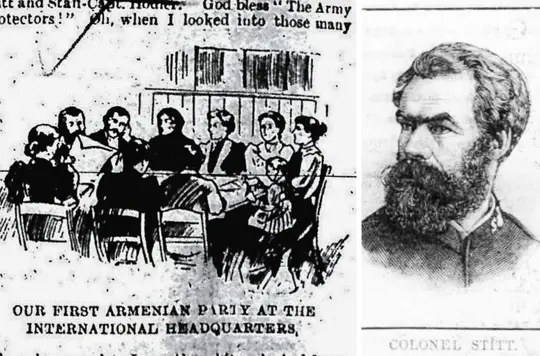
Bound to all mankind
George Tanton explores how The Salvation Army responded to a refugee crisis in the 1890s.
International Development
Connecting Salvationists around the world so that we can learn from and support one another.
International Social Justice Women’s Group: Applications now open!
International Social Justice Commission Director Lieut-Colonel Liz Gainsford invites women to join the International Social Justice Women’s Group.
Territorial Justice and Reconciliation Youth Forum: ‘It’s important that young people have a voice’
Tilly, chair of the Territorial Justice and Reconciliation Youth Forum, introduces its latest chapter.