
20 June 2026
Bound to all mankind
George Tanton
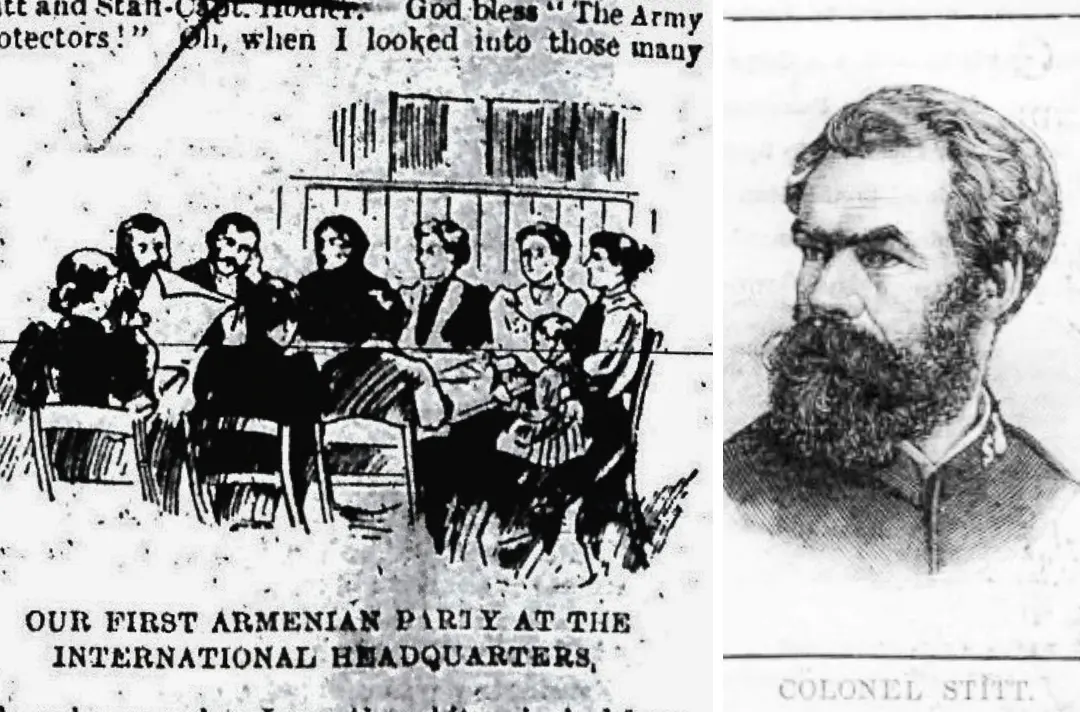
George Tanton explores how The Salvation Army responded to a refugee crisis in the 1890s.
From 1895 to 1896, thousands of Christian Armenians were murdered within the Ottoman Empire. This persecution, referred to as the Hamidian massacres, led to a major refugee crisis in Europe. The reports of the atrocities created a media frenzy in Britain, with many voices calling upon powers in Europe to intervene.
British Prime Minister Robert Gascoyne-Cecil was wary of instigating any military action for fear of triggering a wider European war. Since the 1850s, the Ottoman Empire had prevented Russia from encroaching into British interests in the Mediterranean, and Britain did not want to sever this strategic alliance.
The London Daily Chronicle in September 1896 observed: ‘Church and chapel join in denouncing the terrible massacres that have disgraced Europe. Every London corps of The Salvation Army has condemned the inaction of the government, representing 10,000 Salvationists.’
The Salvation Army was a key player in bringing to light the Armenian crisis. The month before, General William Booth had appointed Sunday 30 August as a ‘day of prayer for divine interposition in the affairs of Armenia’, that God ‘may speedily intervene on behalf of these suffering people, change the hearts of their persecutors and cause their sufferings to cease’. Reported in the London Daily Chronicle, Booth declared: ‘It seems to us that the hour has come for a more united crying to God… Man’s extremity has often proved to be God’s opportunity.’
At Tunbridge Wells Corps, a resolution was passed to petition the government to defend the ‘Christian liberties’ of ‘our brothers and sisters in Armenia’. Present at the meeting was Councillor Ashby Wood. According to the Kent and Sussex Courier, Wood explained that this resolution was being passed by branches of The Salvation Army with the intention of sending telegrams to the prime minister’s office urging him into action. Wood said that the Movement was ‘speaking with a united voice’ in condemning the violence as well as the apathy of the European community.
In France, the port city of Marseilles had become the largest haven in Europe for Armenian refugees since the massacres had begun. Thousands arrived there, awaiting ships to the USA via London. According to the War Cry in October 1896, the Bermondsey Elevator – recently opened by General William Booth – had housed nearly 30 men, while dozens of women and children were being cared for at the Women’s Metropole. Salvationist families were also being encouraged to welcome the refugees into their homes, and the Founders’ youngest daughter, Lucy Booth-Hellberg, adopted an Armenian girl.
Colonel David Stitt, based at International Headquarters, spearheaded efforts to provide temporary accommodation and employment to families and individuals awaiting departure from England.
‘In a quiet, unobstructive way we endeavour to get them work,’ he explained in an 1897 interview with the War Cry. ‘When folks have lost both home and country they must fit in where best they can.’
In November 1896, the Social Gazette reported upon a large ecumenical meeting at Carnegie Hall in New York, called to ‘enlist aid and sympathy’ for Armenian refugees. Representing the Army were Commander Frederick Booth-Tucker and Consul Emma Booth-Tucker.
During her speech, Emma declared: ‘We are Christians... We are not only pledged to one clime or one people, dear as that one country may legitimately be, our Kingdom is founded on the Rock of Ages. The thorns and nails which bound our Lord to the cross, bind us to all mankind. Therefore, wherever beats the heart of suffering humanity, there, in spirit, must be the one who follows Jesus up Calvary’s steep for the world’s salvation.’
The Salvation Army has continued to support refugees around the globe in the decades since, including working with the government to house Belgian refugees in 1914, caring for child refugees fleeing the Spanish Civil War in 1937 and helping to pioneer the Community Sponsorship Programme, supporting vulnerable people fleeing conflict in Syria and Ukraine.
Written by
George Tanton
Editorial Assistant
Discover more

Ben Still speaks to George Tanton about why The Salvation Army supports refugees.
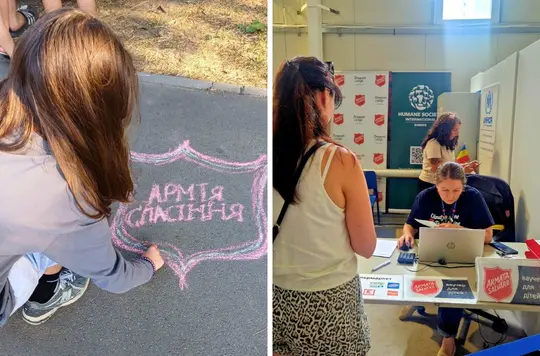
Projects Manager Mihaela Bastea (Romania Division, Eastern Europe Territory) explains how The Salvation Army is supporting Ukrainian refugee families in Romania.

Resources to pray for refugees during gathered worship and mark Refugee Week in a variety of different ways.
Resources to lead prayers for refugees during gathered worship, in a meaningful and transformative way.