16 October 2026
Major Estelle Blake: ‘We can’t fix the past, but we can be present with survivors’
Ewan Hall
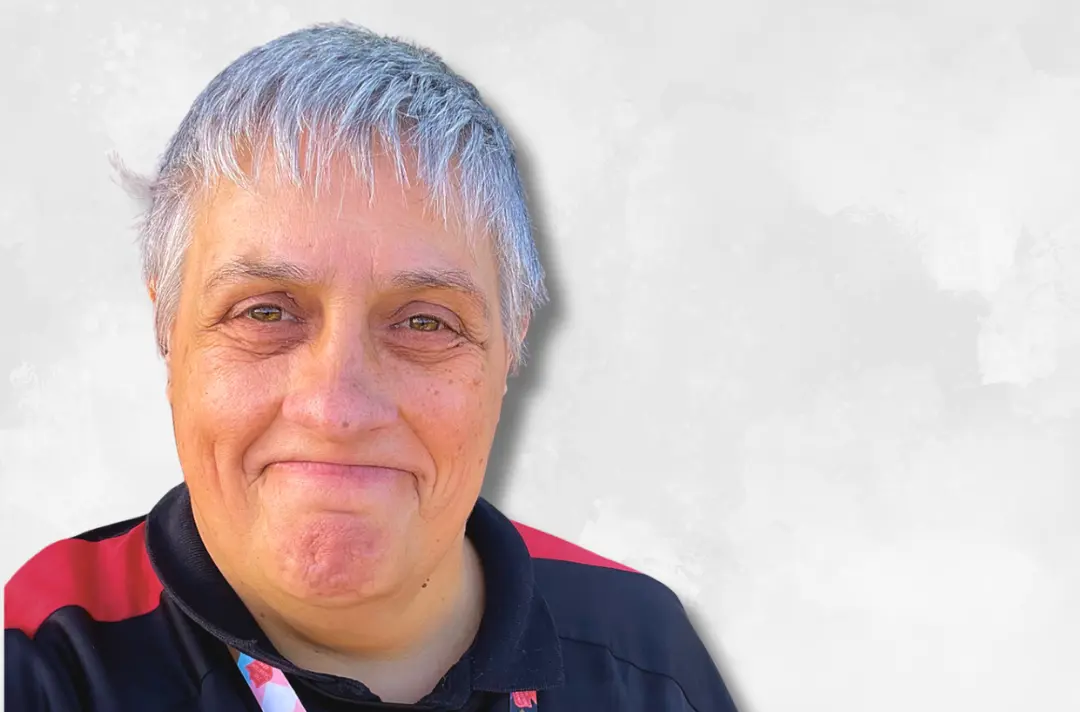
Salvation Army chaplain Major Estelle Blake talks about her work of supporting people who have been the victims of modern slavery.
Many people still picture modern slavery as it appeared centuries ago,’ says Major Estelle Blake. ‘But the reality of slavery today is often far less obvious and far more hidden.’
Estelle sees the reality first-hand in her work as a chaplain in The Salvation Army’s Anti-Trafficking and Modern Slavery Department.
‘Too often people think slavery and trafficking is happening elsewhere, but it is happening on our streets and in our communities. There is a phrase we use that encapsulates everything: “hidden in plain sight”. ’
Modern slavery may be closer to home than many realise. British nationals have consistently featured in the top 5 nationalities – out of 123 – entering support for adult victims in The Salvation Army’s figures for the past six years.
‘The Salvation Army’s involvement in tackling modern slavery goes right back to its earliest days,’ says Estelle. ‘It tried to expose the reality of young girls being sold into exploitation, bringing it to the attention of the Victorian government and wider society. That commitment has remained part of our mission ever since.
‘And 15 years ago, The Salvation Army was awarded the Home Office contract for England and Wales to support victims of modern slavery.’
As a chaplain, Estelle aims to be a shoulder to lean on.
‘We don’t believe people are just physical human beings,’ she says. ‘They have a soul, a spirit and a need for emotional wellbeing, and chaplaincy is there – alongside our staff – to provide survivors with that support. We want survivors to know that they are loved, welcomed and not alone.’
As well as caring for survivors, Estelle offers support to staff.
‘They carry a huge responsibility and often can’t talk about their job to friends and family because of the need to protect victims and places of safety,’ she says. ‘Helping victims is a massive privilege, but it can also be a burden.
‘As a chaplain, I don’t have the power to change someone’s circumstances, but I can offer a listening ear and compassion. Sometimes that involves praying if someone asks, but often it’s simply being present and helping people know that they are valued.’
Estelle also helps to connect survivors with communities and churches – safe spaces where they can volunteer, build relationships and simply be themselves. It is when survivors make such connections that sometimes Estelle and her colleagues most clearly see the impact of their work.
I was recently at a wellbeing and sports day event held for survivors, where more than 100 of them came together for a day of fun, friendship and celebration,’ Estelle remembers. ‘One woman attended for the first time, and the staff member who had been supporting her kept saying: “I’ve never seen this version of her.” The woman was happy, dancing and simply enjoying herself.
‘She had travelled hours just to be there, but for one day she was surrounded by people who understood not only what it meant to be a victim of exploitation, but what it meant to be a survivor.
‘At the end of the event, all participants were given a certificate, and before she went up to receive it, she said that she was going to strut her stuff like she was on a catwalk – and that is exactly what she did. Everyone cheered as she walked up, and her support worker could not believe the transformation.
‘That is why we do what we do. As chaplains, we can’t fix people’s past or take away what they have experienced, but we can be present with them. For me, chaplaincy is about being a representative of Jesus in their situation, and that means showing people love and hope and empowering them to see that they can move forward.’
Witnessing survivors regain confidence and joy can be powerful reminders of why chaplaincy matters, says Estelle.
‘One person can’t change the world, but you can change the world for one person. As chaplains, we represent something bigger than ourselves, and what motivates me is the belief that nothing is impossible for God.
‘I don’t rescue people – that’s the role of the police and other agencies. What I do is walk alongside people who have been brought out of some of the worst moments of their lives. I want to see them move from being victims to survivors and overcomers. But if someone is standing in front of me, they are already a survivor because they’re still here.
‘For me, chaplaincy is not just about seeing the person in front of you as they are today, but recognising who they can become and helping them take the next step towards that future.’
Written by

Ewan Hall
Staff Writer, War Cry
Discover more
Stand in solidarity with survivors and support the Army’s campaign for Anti-Slavery Day on 18 October.
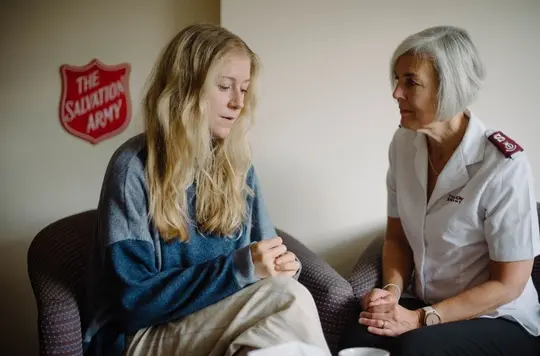
Our vision is to bring an end to slavery, fight for social justice and respond with compassionate care.

A weekly magazine, the War Cry is packed with interviews and features on culture and faith, plus recipes, puzzles and more...