26 September 2026
What does it mean to be rescued by God?
Lieutenant Thomas Morgan
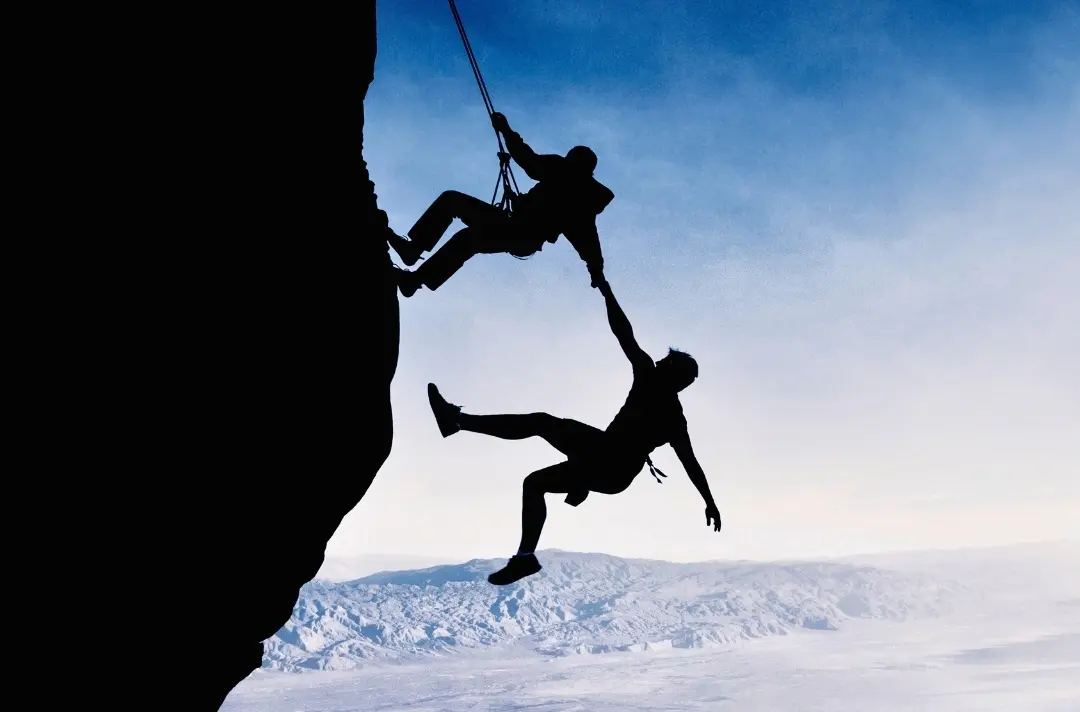
Lieutenant Thomas Morgan reminds us that we are rescued to reach others.
In CS Lewis’s The Voyage of the Dawn Treader, the greedy, unpleasant Eustace Scrubb finds himself transformed into a dragon – a literal manifestation of his own selfish heart. Try as he might, Eustace cannot claw off the thick, suffocating scales on his body. It is only when the great lion Aslan steps in, driving his claws deep to tear away the dragon skin, that Eustace is peeled back down to a human boy.
Colossians 1:13 tells a remarkably similar story. Paul writes that God ‘has rescued us from the dominion of darkness and brought us into the kingdom of the Son he loves’. We do not peel away our own scales, for we cannot save ourselves. In our darkness, God steps in and fiercely rescues us.
Undoubtedly, we would rather be the person extending a strong hand down into the pit than the one sitting in the dark, helpless, and waiting to be pulled out. However, there are times when we all find ourselves in a pit – of hurt, pain or distress – and in such times the darkness leaves us vulnerable. We might be tempted to try and find a way out of the darkness on our own.
Yet Colossians 1:13 leaves no room for self-reliance. Paul uses the word ‘rescued’ because our situation before Christ was, and is, critical. Darkness in this passage isn’t just a bad mood, a minor misstep or a slight upset. The darkness Paul describes is a ‘dominion’, an active authority that holds us captive with an ever-tighter grip.
It is God alone who saves, despite what we might occasionally think. A drowning person cannot perform CPR on themselves, nor can a prisoner forge their own release. Likewise, salvation is an entirely external act of divine grace. Recognising this reality cuts through our spiritual pride. We must continually remember that we are not self-made pilgrims who managed to find our own way into the light. No, we are refugees who were carried across the border and into the Kingdom by a merciful Saviour. Our foundational identity is not ‘hero’, but ‘rescued’.
Once we accept that we are fully dependent on God’s salvation, something profound happens – our rescued state becomes our commission. While it is God alone who saves souls, he invites the saved to participate in his rescue mission.
Just as Christ ‘came to seek and to save the lost’ (Luke 19:10), so should we. Our calling is not historical, but current, for now is always the time of God. Having been brought into the Kingdom of the Son, we are called to step back into dark places – not as superior saviours, but as empathetic witnesses.
In The Voyage of the Dawn Treader, Eustace doesn’t just walk away saved. He returns to the ship transformed and equipped to stand beside his companions and help them on their journey. We, too, are only ready to help untangle the lives of others after we have felt the Rescuer tear away our own scales. Only when we remember the weight of our scales can we sit with others in their darkness without judgement. We must offer the same grace, patience and truth that were extended to us when we were at our lowest.
We cannot truly extend a hand to pull anyone out of the dark until we acknowledge that we, too, were pulled out of such darkness. The gospel turns rescued captives into ambassadors of freedom. Let us remember where we came from, give thanks for the grace that claimed us, and look for those who are still waiting in the dark for a glimpse of Christ’s redeeming light.
Written by
Lieutenant Thomas Morgan
Corps Leader, Bradford Citadel
Discover more

As Knives Out returns to Netflix, Ivan Radford considers what the film has to say about religion, faith and living with compassion.