
6 December 2025
What does The Salvation Army's Public Affairs Unit do?
Ivan Radford
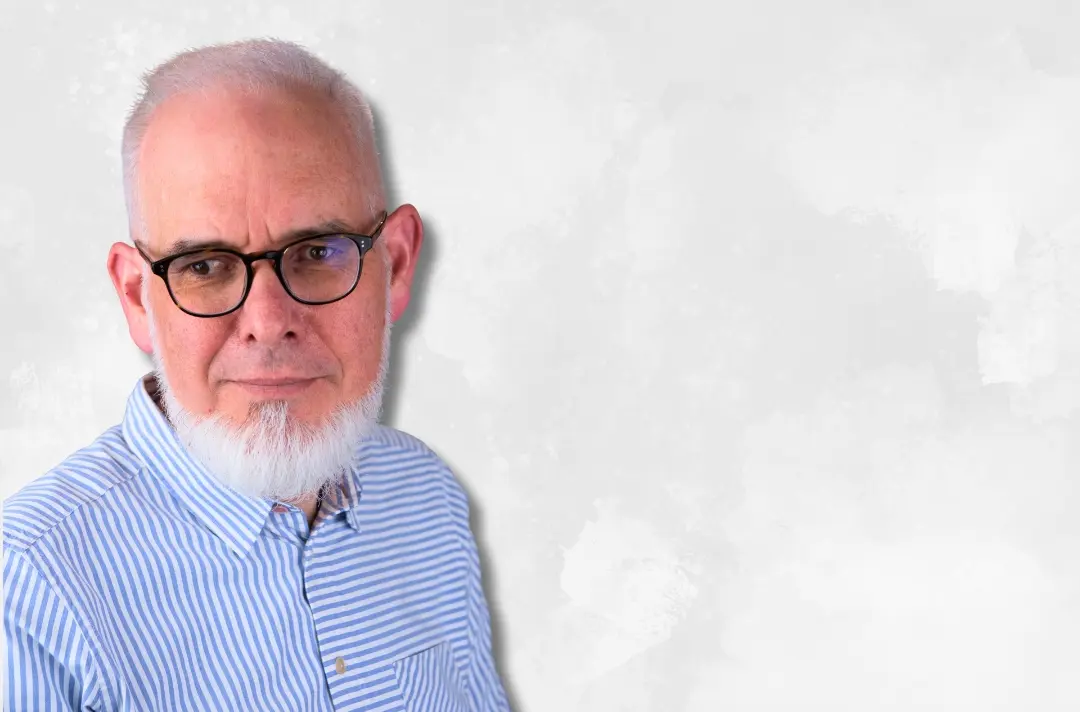
Policy Manager Andrew Connell talks to Ivan Radford about the Public Affairs Unit and seeking justice and reconciliation.
What does the Public Affairs Unit do?
We look outward from the Army as part of its engagement with the world and we look inward towards the Army to help us do that. Some of that is lobbying decision-makers on particular issues in Westminster, Holyrood and in the Senedd. We look at policy, things governments are bringing forward. We make contacts, identify MPs, MSPs, MSs and peers we can work with. We might also be approached by a partner in another sector asking if we’ll sign a letter to a government.
When I joined three and a half years ago, our engagement was focused on modern slavery, homelessness and addictions, and employment and social security. Those are very aligned with our Mission Services. Since we’ve come under the justice and reconciliation umbrella, we’ve started to help local Army expressions engage with national and local issues. If you want to write to your local MP, for example, we know the kind of messages that work.
Why do we engage with issues?
The Salvation Army has always got involved in public affairs. As Christians, I think we have to be both incarnational and eschatological. We have to be concerned with where we are now, with the good of our society and fellow people. Simply not engaging isn’t an option for us. We have a faith based in the knowledge that God came down to be among us – God’s example wasn’t not to engage. We also need to be looking towards God’s Kingdom, the kind of society, world and relationships God wants. When we get involved in public affairs, part of it is responding to need and part of it is looking ahead – those two can’t be untangled.
How do you do that in a way that also recognises things are complicated?
Most people wouldn’t be impressed by us popping up and saying, ‘God wouldn’t like that.’ We don’t tend to do that. Legislation around assisted suicide is a very good example. The Salvation Army has a positional statement opposing assisted suicide and euthanasia, but we recognise that not everybody, even within the Army, would agree on that. The main focus of our engagement has been the potential impact of legalising assisted suicide on vulnerable people. We live in a deeply divided, unfair society – there are people whose choices are constrained by their circumstances and whose lives are already undervalued by society. Speaking out about our concerns for vulnerable people is grounded in our faith, but it takes us to a place where we can find common ground with others. That’s how we try to engage.
Collaboration is reconciliation in action, isn’t it?
Absolutely. If I had to boil down our work to one adjective, I would say relational. Relationships are so important. Sometimes those are practical and short-term. Sometimes those are longer-term, where, even if you disagree, there is trust and respect. That’s something our society has lost a bit, the ability to recognise that, however much we might disagree, we are part of the same society and need to find ways of getting on. When we speak out, we do it with respect and love.
What makes the Army different from other public affairs groups?
Our presence on the ground and our range of Mission Services. We aren’t a single-issue campaigning organisation. Because we serve and work alongside people as well as advocate for them in a variety of areas, we know what we’re talking about.
We make sure that people’s voices are heard as well. As a result of my colleagues’ terrific work, for example, modern slavery survivors are now talking to the safeguarding minister directly. We have statistics from our own services and other research, but hearing people’s voices is important. It’s about human dignity and worth. When you talk to politicians, a human face and story make a difference.
Salvationists are also the kind of people who look around and say, ‘What needs doing?’ Some of that might involve engaging locally, for example, on gambling advertising or air quality. When a corps asks our unit for help, we do what we can. We are also then aware of that situation – the Army’s geographical coverage means all these things can feed into a bigger picture.
Why is the Army being non-partisan important?
The Salvation Army is strictly non-party political. There are legal reasons because we are a registered charity, but it’s about living out reconciliation: we live in a complex, nuanced world and, across all political parties, there are people who genuinely want to make things better. We give credit and are supportive where we can be, and we are critical where we have to be, but in a constructive way. We talk to people from every party and that is right, because nobody has a monopoly on what’s good or not good. Even within the Army, we have different perspectives, but we share a core set of Christian principles. Above all, we are citizens of God’s Kingdom – we’re all fumbling towards the Kingdom.
When does your work end?
We don’t just lobby and move on. After a bill has been passed, as well as monitoring the legislation and its impact, we can hand our concern over to other people and services in the Army who are good at helping people where they are. Because our concern for these issues is ultimately a concern about people, the work goes on.
Written by

Ivan Radford
Managing Editor
Discover more
We speak into areas of public policy to support change for the benefit of some of the most disadvantaged people in our communities.
Salvationist unpacks the seek justice and reconciliation mission priority in discussion with Captain John Clifton.
Major Nick Coke considers how to seek justice in a society longing for reconciliation.
Captain Marion Rouffet highlights the role of the Army’s Public Affairs Unit and the biblical basis for its work.