30 April 2026
John 21: Called to be forgiven
Captain Andrew Manley
Captain Andrew Manley discovers renewal and freedom resulting from Jesus’ call.
Key text
- John 21:15-19
I wonder if you have ever considered that part of God’s calling on your life is to be forgiven.
We often think of calling as action – I am called to forgive others. But this call is more about being and knowing; being able to live out life in all its fullness as a forgiven child of God, knowing you are forgiven.
Pause and reflect
- How do you feel about this very personal, relational thought around your state of forgiveness?
- What does being forgiven mean to you?
In these verses from John’s Gospel – which are set shortly after the Resurrection – we read the account of Jesus and Peter engaging in a forgiveness conversation. Jesus asks Peter the same question three times: ‘Simon … do you love me?’ Jesus had changed Simon’s name to Peter, so note that he chooses to address him as ‘Simon’ in this beach location, where memories of his calling might be stirred
Pause and reflect
- How do you think you might react if you were Peter and Jesus asked you three times if you loved him?

Perhaps a little context might help. If we read back a few chapters to John 18 we see Peter denying that he knows Jesus. This comes after three years of intense teaching, countless miracles and learning about ministry as a disciple of Jesus. However, at the moment of truth, Peter fulfils just what Jesus had predicted. ‘Very truly I tell you, before the cock crows, you will disown me three times’ (John 13:38).
In his book Believe in Me: Sermons on the Apostles’ Creed, James Harnish writes: ‘The forgiveness at work here operates through a distinctive mechanism. Jesus accomplishes something Peter could never do for himself; healing requires forgiveness from the one against whom he sinned.
Notably, Jesus takes the initiative to engage Peter and entrusts him with pastoral responsibility – he doesn’t merely absolve Peter and move on. Instead, Jesus forgives by restoring Peter’s future, essentially saying, “Here’s your calling back again, fresh and clean and new”.’
Pause and reflect
- Have you experienced a time when you found it difficult to see what the future might hold? How did that feel?
- How did you deal with that time?
I wonder what would have come about if Jesus had said to Peter: ‘See, I told you would deny me three times.’
Believing we deserve consequences, simply because of the context we find ourselves in can cause us to think we are not worthy of God’s love or forgiveness. Satan – the ‘father of lies’ (see John 8:44) – will do his best to convince us this is true.
Pause and reflect
- Have you felt you are too unworthy to be forgiven?
- Do you think there is anything God won’t forgive?
The restoration of Peter by Jesus carries profound implications. To be forgiven means receiving an open future.
While the past isn’t erased, forgiveness liberates us from being imprisoned by that past and it enables fulfilment of God’s calling. As Michael Farran’s hymn ‘Yet Not I, But Through Christ in Me’ so aptly puts it: 'To this I hold, my sin has been defeated / Jesus now and ever is my plea / Oh the chains are released, I can sing: I am free! / Yet not I, but through Christ in me.'
Pause and reflect
- Are there traces of unforgiveness in your life that hang around you like chains?
Because Jesus loves Peter into new possibilities and forgives him, Peter gains freedom to live out and show Christ’s love concretely. Knowing and experiencing this forgiveness makes it possible for Peter to live in freedom and to develop in new ways in his calling.
It is as though, at the moment of accepting we are truly forgiven, the chains drop off. Then, we can once again move forward knowing we are free to live out the life God truly intends for us – forgiven and free!
Pause and reflect
- Why might you sometimes find it hard to forgive yourself?
- What steps will you take to receive a new, restored and liberated future?
Consider what Peter went on to become because of Jesus’ liberating forgiveness. Jesus commissioned Peter: ‘Feed my lambs… Take care of my sheep… Feed my sheep’ (vv15–17). Peter is not to worry about what Jesus is calling anyone else to do; his focus is directed to Jesus’ personal call to him (see John 21:20–22).
Peter becomes a significant leader in the early Church. In Acts chapters 1 to 5 and 10 to 12, we trace how his ministry evolves as he fulfils his calling.
I find encouragement in the words of theologian Robin Steinke when she writes about Peter’s forgiveness conversation: ‘Forgiveness isn’t sentimental restoration – empowerment for renewed mission. Encounters with Jesus make possible the way to forgiveness and new beginnings, opening the way to new possibilities for serving others and seeking the common good.’
Pause and reflect
Lord of true forgiveness, as I reflect on my life – its highs and lows, its achievements and pitfalls – I recognise there are times I have said things, done things and lived out values that do not align with your Kingdom.
For these moments and times, I truly seek your forgiveness. I recognise there’s nothing I can do in my own strength. Instead, I call on the Holy Spirit to transform my life. I believe that I’m called to be a forgiven, cherished and loved child of God.
Help me today to accept and live out this truth, receiving a new, open and restored future in you.
Bible study by

Captain Andrew Manley
Corps Leader, Kirkcaldy
Discover more
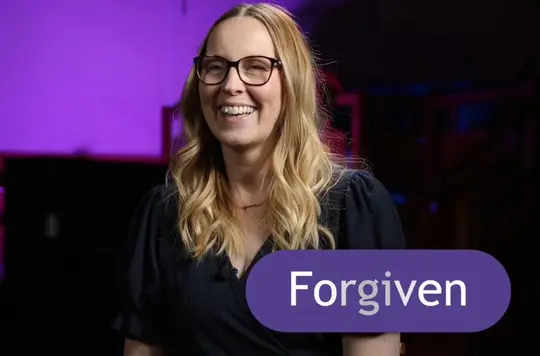
As part of the Called to Be video series, Suzanne Rose (Kettering) speaks about how she is called to be forgiven.

Major Philip Garnham suggests we need to listen closely to God’s call.

Major Liv Raegevik-Slinn encourages us to have unwavering trust in the Lord.