
19 June 2026
Serving others with compassion
George Tanton

Ben Still speaks to George Tanton about why The Salvation Army supports refugees.
In the past decade, The Salvation Army in the UK and Ireland Territory has supported a considerable number of refugees fleeing conflict in Ukraine and the Middle East. By coming alongside these people, The Salvation Army continues its mission priority of serving others without discrimination.
Ben Still, the territory’s refugee response manager, considers how the Army’s support for refugees has evolved in the past few years.
‘Across the territory, corps were meeting dozens of families, if not hundreds of people, from Ukraine,’ explains Ben. ‘What that looked like in regard to practical support included providing food and clothing, making sure they had access to English language classes and setting them up with universal credit.’
‘As time has gone on, the Ukrainian community has become more integrated into UK society,’ Ben continues. ‘The expressions of support have changed. The Army now supports their psychological welfare, setting up community hubs where Ukrainians can meet together. There’s been the opportunity for group counselling with Ukrainian counsellors, which has been really helpful.’
‘Another element of support that has emerged in the past couple of years is provision around Ukrainian cultural understanding, particularly with Ukrainian children,’ he continues. ‘A lot of the children have now spent quite a number of years in the UK and, for many of them, Britain has become their most significant experience of growth and development. They have been taught in British schools and have learnt English as their first language. This means that many of them will not necessarily speak Ukrainian as their primary language and won’t have the same cultural understanding of their family’s culture, language and traditions as they might otherwise have had. Some corps now host Ukrainian language classes where the refugee community can teach their children about their culture.’
A hard truth of the war in Ukraine is that thousands of men of fighting age have either volunteered or been conscripted into the nation’s armed forces. The Salvation Army has supported large numbers of displaced women, children and older people seeking help.
‘For many Ukrainian children, they have been away from their fathers for a long time,’ observes Ben. ‘Obviously that puts strain on family relationships. Some children have grown up without even knowing their father.’
Looking back at the territory’s work supporting refugees over the past decade, Ben reflects upon the unity and collaboration displayed by the departments and expressions of the Army: ‘In terms of the support for refugees in the UK, that is done by all elements of The Salvation Army. Homelessness Services has a refugee resettlement team. Employment Plus supports refugees through their work at corps level. And the Anti-Human Trafficking and Modern Slavery Unit supports refugees and people through the asylum process who have been trafficked to the UK. On a local level, corps are supporting refugees through food banks, welcome hubs, conversation cafés, or just by giving a genuine warm welcome to someone who’s experienced years of fear and uncertainty.’
Serving suffering humanity, including supporting refugees, is very much part of the Army’s heritage. Deuteronomy 10:18 says: ‘He defends the cause of the fatherless and the widow, and loves the foreigner residing among you, giving them food and clothing.’
‘Jesus himself was a refugee as an infant,’ Ben declares. ‘Throughout his life, he demonstrated radical welcome, teaching compassion for the stranger.
‘In 2 Corinthians 5:19 we read that God has “committed to us the message of reconciliation”. Our acts of community-led welcome become an act of reconciliation in our communities. As strangers become friends, misunderstanding gives way to empathy, and fear melts away.’
Ben emphasises that the territory’s support for refugees is not a new incentive: ‘It’s been part of our history. It stems from The Salvation Army’s reason for existing, which was always to be a Christian Movement that served the poor and marginalised in a very practical way. Today, we continue to welcome the stranger.’
Interview by

George Tanton
Editorial Assistant
Discover more
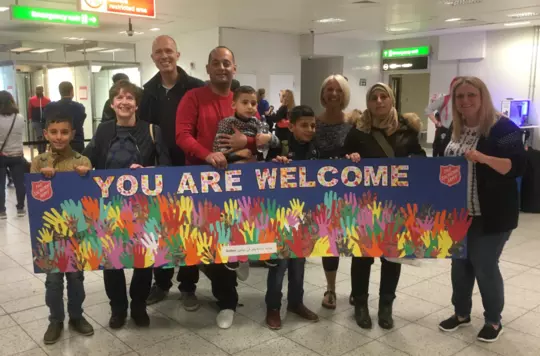
Supporting and resourcing local expressions of The Salvation Army to help people seeking sanctuary.
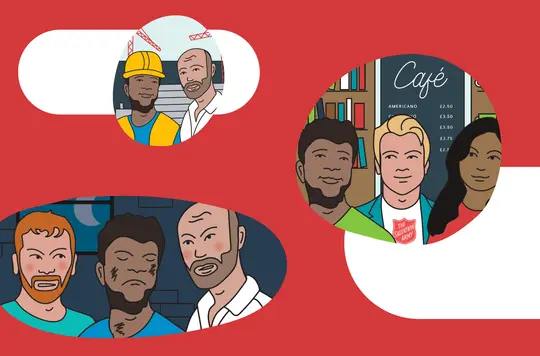
Helping people learn English, stay safe and know where to get help.
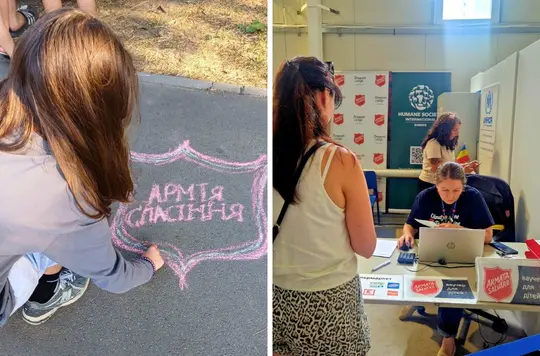
Projects Manager Mihaela Bastea (Romania Division, Eastern Europe Territory) explains how The Salvation Army is supporting Ukrainian refugee families in Romania.
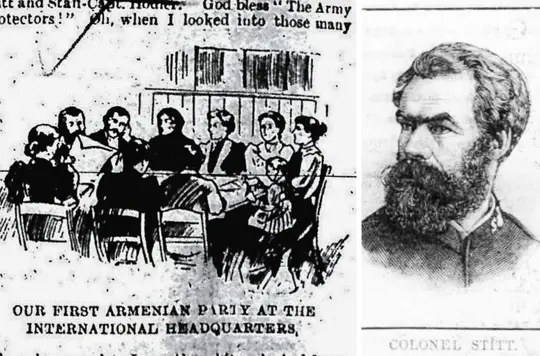
George Tanton explores how The Salvation Army responded to a refugee crisis in the 1890s.