
13 June 2026
Intercultural mission in action

Some of the territory’s intercultural mission officers reflect on their ministry and experiences so far.
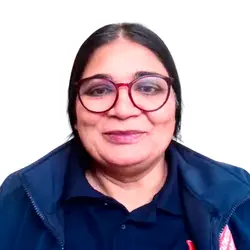
Major Nasreen Dawson
Blackburn
I have been privileged to have this opportunity to share intercultural mission in my corps and in my division. When God gave us the Great Commission, he didn’t tell us to stick in one church or one nation – it’s for the world.
As I'm Asian, I like to meet South Asian people. At times, I used to feel like maybe I wasn’t giving enough time to my own church. But, as an intercultural mission officer, I have been given the freedom to go and meet them, and I have joined a South Asian group in Blackburn. They meet together and I’ve shared a word of God and said a prayer with them in Urdu. I want to make that intercultural mission normal in our churches.
I’ve been introduced to a friendship-first course, which I’m going to look at using around the division. Sometimes, we’re afraid and don’t want to speak to other cultures. But, when we meet Christians, there are lots of ways we worship the same Lord.
Since I’ve had this appointment, I’ve been really blessed and feel it has given me freedom to speak to other people, other nations and make it normalised in the Church. At the end of the day, we’re all worshipping the same Lord, and he loves each one of us the same.
I’m also aiming to say to everybody – especially here in England – that it’s not always wrong to speak to people of other faiths. Until we get to know them, we don’t know how they’re going to respond. Sometimes, you assume. I’m from Pakistan. People think I’m Muslim because, in Pakistan, most people are Muslim. You have to talk to people to find out what faith they have. Just say hello to people, just start talking about football or the weather, and then get into faith!
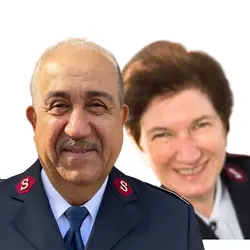
Lieut-Colonels Edgar and Sara Chagas
Croydon Citadel
Croydon has more than 390,000 residents and is made up of a diverse mix of ethnic groups. More than 100 languages are spoken and 14.5 per cent of people have a language other than English recorded as their main language.
We daily receive people from all over the world in our premises, and our Sunday congregation is made up of people from more than 20 different countries. As much as we appreciate all this, we suspected it was not unique! So at the recent Mission Conference we invited some of the people who participated in one of the workshops to make a list of countries people in their corps come from. They came up with 50 countries – from Mexico to Iraq, Ukraine to South Africa, Albania to Nepal! We hope that the diversity we see in our communities will continue to be well represented within The Salvation Army in this territory.
An intercultural melting pot where cultures interact, influence and transform each other is hard work. There is no set recipe; it is slow, often uncomfortable, mutually inconvenient and every corps is unique.
There are many lessons to be learnt, but let us share some we have encountered:
First, you need to be determined to get the melting pot going with continuous investment and focus. It has to be intentional.
Second, the melting pot is the culture of the Kingdom of God, not necessarily the culture of our society.
Third, it is a lifestyle – not something we do because it is politically correct or do on a Sunday and forget about it the rest of the week. It is relationship-orientated not programme-orientated. It is dependent on a willingness to be open and to make oneself vulnerable and available to learn from the other. In Brazil we have a saying: ‘If you want to get to know someone, you need to sit down with them and eat a kilo of salt!’
The diverse society we live in gives us a unique opportunity to be bold. As representatives of God’s Kingdom here on Earth, as those he has chosen to work with at this time in history, we can step out in faith, knowing he is with us, and embrace the people he is giving us to be part of The Salvation Army for such a time as this.
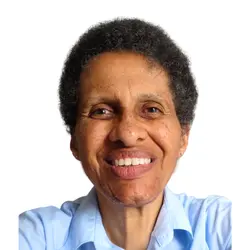
Major Marjory Parrott
Ripley
Being a lifelong Salvationist, but also of mixed heritage, brought up in the white culture of The Salvation Army of the late 60s to early 80s, my initial passion was to reach out to other Salvationists who are of mixed heritage – because we belong to both or more of our birth cultures in part, but none of them fully, and that can be a challenging path to walk, as we try to discover the blessings and navigate the pitfalls. However, nothing came of this.
I also thought that I might be useful for divisions as a resource, a safe space or even as one to come alongside and encourage, but that hasn’t really happened either. In part, I think that has been because Salvation Army expressions have been getting on with trying to be multicultural or making the journey to being intercultural under their own steam. My role has been more letting people know of resources and courses than meeting with people at a local level, although I have had the opportunity to have conversations!
When it comes to what intercultural mission looks like in my area, we are still at the stage of being welcoming. Everyone is welcomed into the fellowship, but naturally people go where there are others who look like them, speak their language and are of the same age group, so we have welcomed people of other nationalities, but they have not stayed. Messy Church is slightly more successful in this regard, because children come with their school friends – although some already attend other churches.
So my role has largely been to model what it means to be intercultural and to affirm those who are on the journey!
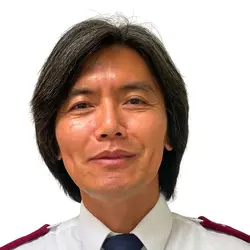
Captain Wan Gi Lee
St Albans
At the heart of our corps mission are three key words: intercultural, intergenerational and inclusive. These reflect a missional model Jesus demonstrated throughout his ministry, which is beautifully echoed in Galatians 3:26–28.
Finding ways to promote and put these values into practice is both a joy and a challenge. It is a joy because we get to witness the beauty of God’s Kingdom through our identity as an all-nations church in Christ. It is also a challenge because discipleship requires us to identify, encourage and equip people to join in the mission. If mission truly is for us all in Christ, then we all have a part to play.
As I have prayed about this challenge, God has given me a simple idea: driving from the back seat. In many areas of our intercultural mission, we can create space for others to take the lead. For example, our monthly Bible study at St Albans is led by Ronald, a Hong Kong immigrant. He has a deep passion for God’s word and the knowledge and gifts to lead others in it. The Bible study, followed by lunch together, continues to flourish. Another example is our monthly Ukrainian fellowship. Manuela, one of our members from Germany, has been coordinating this ministry by bringing together individuals and groups to support people facing difficult circumstances. Through her leadership, people have found friendship, practical help and a sense of community.
These are just a couple of examples of our intercultural mission in action. My joy – and my challenge – to all of us is this: in prayer, give people the opportunity to drive. As we make space for others to lead, God will continue to show us the way forward.
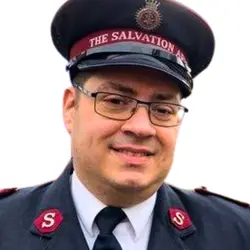
Captain Adrian Allen
Stotfold
Over the past 12 months, changing roles to become the territorial intercultural mission officer coordinator has been a whirlwind and baptism of fire. At times it has been overwhelming, often wondering why I was asked to step into this role. However, it has allowed me to interact in ways I could not have done before.
It has been a privilege to be present at occasions where diversity is celebrated, including an international celebration in Glasgow, an ecumenical intercultural conference in Manchester and watching the Africa Praise Fellowship Zimbabwe timbrel brigade during their Easter campaign in Warwick! I often find myself in places where I see glimpses of the Kingdom, where people worship God in many languages, styles and positions. For me intercultural worship is a place where we can be truly free to be ourselves, made uniquely in the image and likeness of God.
In this coordinator role, I find myself in many different meetings hearing many different topics that affect the wider Army. I have been amazed at the number of people wanting to see how their spheres of influence can become increasingly intercultural. When I look to Galatians 3, I am reminded that we are all children of God. I strive to ensure that everyone has a seat at the table, regardless of background, nationality, gender or social status, realising there is a strength and richness in diversity, especially when we are, clothed through faith, all united in Christ.
I am fortunate to have such wonderful and gifted members of the intercultural team to work with. They are a gift for the territory to use, so if you need any support regarding intercultural mission, please contact us, and we will ensure the right member of the team can support you where possible!
Discover more
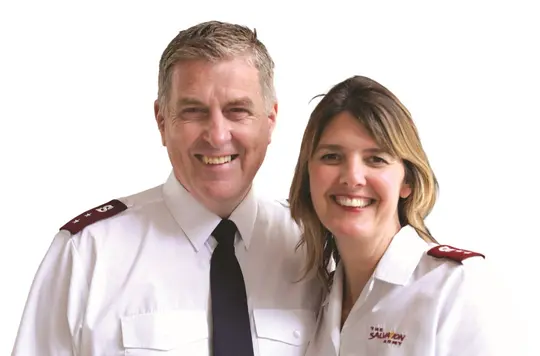
Intercultural Mission Conference guest speakers Majors Heidie and Richard Bradbury (THQ) talk about their experiences.
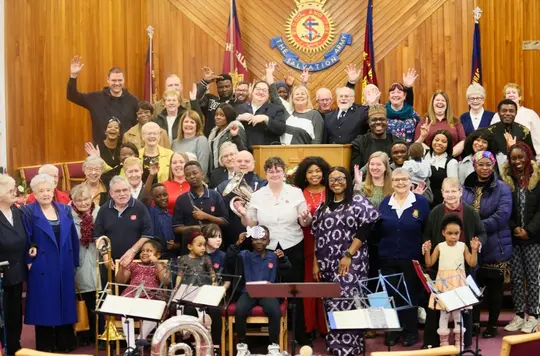
Salvationist hears from some of the corps who are embracing diversity, inclusion and intercultural ministry.
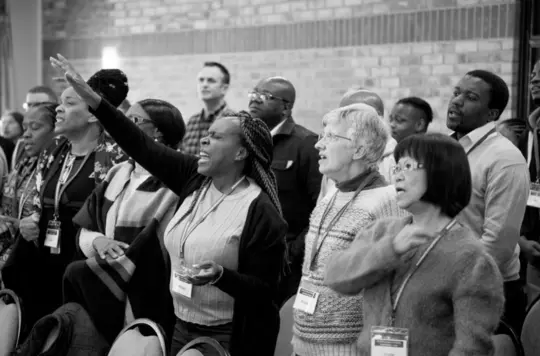
Journeying together, respecting each other's cultures, and starting to tangibly see God's Kingdom now, right before our eyes.
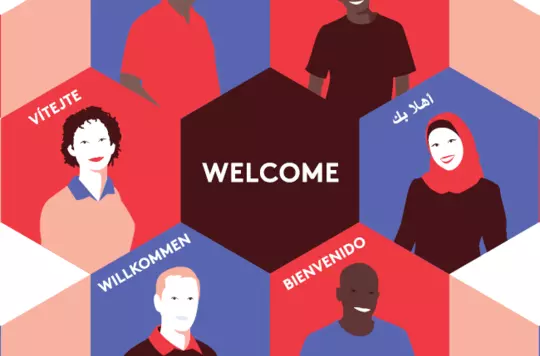
A collection of posters and flyers translated in a number of languages that can be used in your corps or centre.