
14 November 2026
Loneliness and isolation: A friendship recession
Andy Wileman
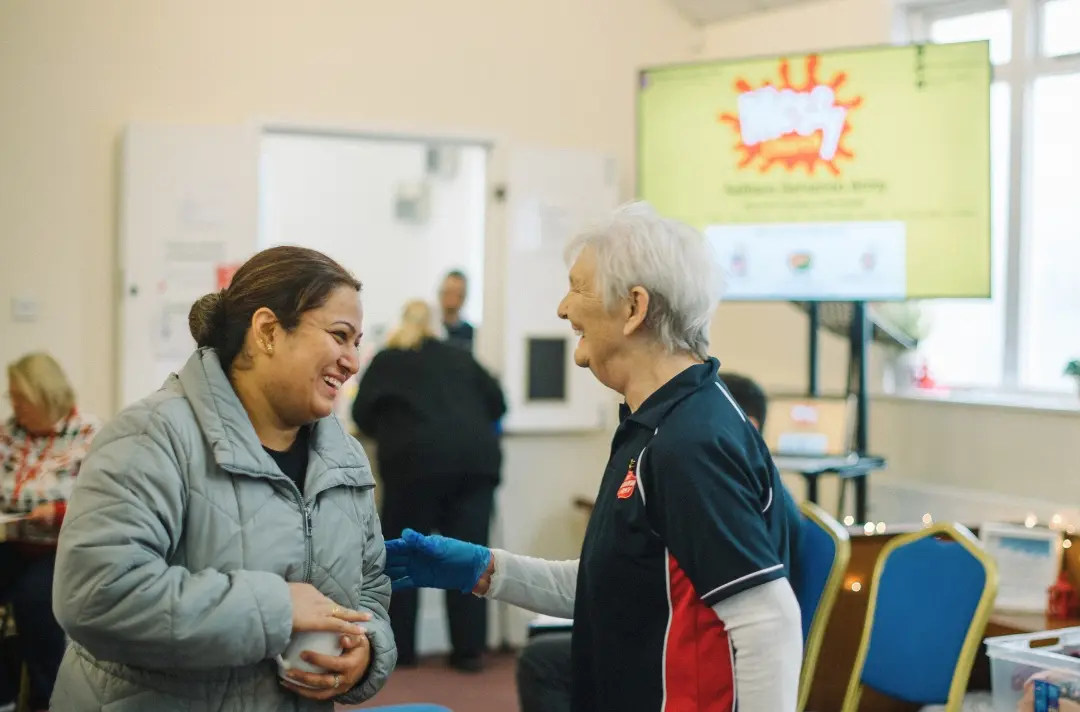
Andy Wileman reflects on the importance of friendship in an age of loneliness.
Behind the headlines of today’s society lies a much quieter story: the story of people longing to belong. People looking for connection. People wondering whether anyone really knows them, notices them or cares. For all our advances in technology, human flourishing still depends upon something wonderfully ordinary: friendship.
Repeatedly, I find myself returning to the same simple conclusion: loneliness is not just a social health issue. It is a deeply human issue. Perhaps even more than that, it is one of the profound spiritual and pastoral challenges of our time.
Loneliness: Behind the statistics
The statistics tell a concerning story. Nearly one in six people in the UK say they have no close friends. Young adults report some of the highest levels of loneliness, while studies suggest that men are finding it increasingly difficult to sustain deep friendships. In England alone, millions of people describe themselves as lonely ‘sometimes’ or ‘often’.
Behind every statistic, however, is a person. A widow eating dinner alone for the fifth night in a row. A young man scrolling endlessly through social media but feeling deeply disconnected. A parent carrying worries they feel unable to share. An older person whose social circle has gradually disappeared through bereavement, illness or changing circumstances.
Loneliness rarely announces itself loudly. More often, it sits quietly in the corner of our lives. Invisible to others. Difficult to admit. Easy to hide. We are living in an age where we are more connected and yet, in many ways, lonelier than ever.
I describe it as a friendship recession. Not because people no longer value friendship. Quite the opposite. Deep down, we all know how precious friendship really is. We know the richness that comes from having someone who understands us, stands beside us and remains present through life’s ups and downs. The challenge is that friendship increasingly requires intentional effort.
Investing in friendships
A few years ago, I came across the story of writer Max Dickins. When he decided to propose to his girlfriend, he made an uncomfortable discovery. He could not think of anyone to ask to be his best man. He recognised that he had devoted considerable energy to building his career, but very little to building his friendships.
Friendship, he realised, requires investment. Perhaps that sounds obvious, but many of us assume friendships somehow maintain themselves. We imagine that because someone has always been there, they always will be. Yet meaningful relationships need time, attention and care.
Someone has to make the phone call. Someone has to send the message. Someone has to suggest meeting for coffee. Someone has to go first.
The writer of Proverbs tells us that ‘there is a friend who sticks closer than a brother’ (Proverbs 18:24). Elsewhere we read that ‘a friend loves at all times’ (Proverbs 17:17). Those words feel both ancient and incredibly relevant. They challenge a culture that can often confuse popularity with friendship. Today, we can accumulate hundreds of contacts and followers while lacking a single person we could call in a crisis. The wisdom of Proverbs reminds us that the value of friendship is quality not quantity.
We all know the difference. There are friends who celebrate our successes but disappear during our struggles. Friends who enjoy the highlights reel but are absent when life becomes complicated. Then there are those rare and wonderful people who stay. The friend who visits when illness comes. The friend who calls after bereavement. Those friendships are priceless because they reflect something of the heart of God. God has never been a fair-weather friend.
Creating places of belonging
Throughout Scripture we meet a God who remains faithful through failure, disappointment, doubt and pain. A God who does not walk away when life becomes messy. And perhaps that is why Jesus spoke so naturally about friendship. He welcomed people who were often excluded. He shared meals with unlikely people. He crossed social boundaries. He created places of belonging.
Most remarkably, Jesus offered friendship not based upon someone’s status, success or popularity, but simply because they were loved. That message feels especially important today.
People are not only looking for services that help them. They are looking for friendship. They are not simply seeking activities. They are seeking belonging.
Of course, practical support matters enormously. Food banks matter. Community programmes matter. Social activities matter. But often what changes lives is not simply what we provide; it is how people feel when they arrive. Do they feel seen? Do they feel welcomed? Do they feel they belong?
The more I reflect on the challenge of loneliness, the more convinced I become that The Salvation Army’s response cannot solely be found in strategies, projects or campaigns.
In a lonely world, our most powerful ministry may not be what we do, but how we show up. At their best, our corps and centres are communities of friendship, places where a stranger is welcomed by name, where a conversation turns into a connection, and where neighbours become friends. In a world that can often feel fragmented and isolating, we can create spaces where people feel seen, valued and that they truly belong. Every cup of tea, listening ear and invitation extended is a small but powerful act of hope.
Friendship is not an optional extra to our mission; it sits at its very heart. It reflects the love of God and reminds us of a truth that so many people need to hear today: none of us were created to face life alone.
- Andrew Wileman is the Mission Service lead on loneliness.
Written by

Andy Wileman
Assistant Director, Older People’s Ministries
Discover more

Andrew Wileman speaks to George Tanton about the Army’s No One Alone project.

Lyn Woods finds out how corps and centres are tackling loneliness and isolation in their communities.

Older People's Ministries takes a closer look at Loneliness and Isolation.
