
19 August 2026
Ludwig: The value of a fresh perspective
Ivan Radford
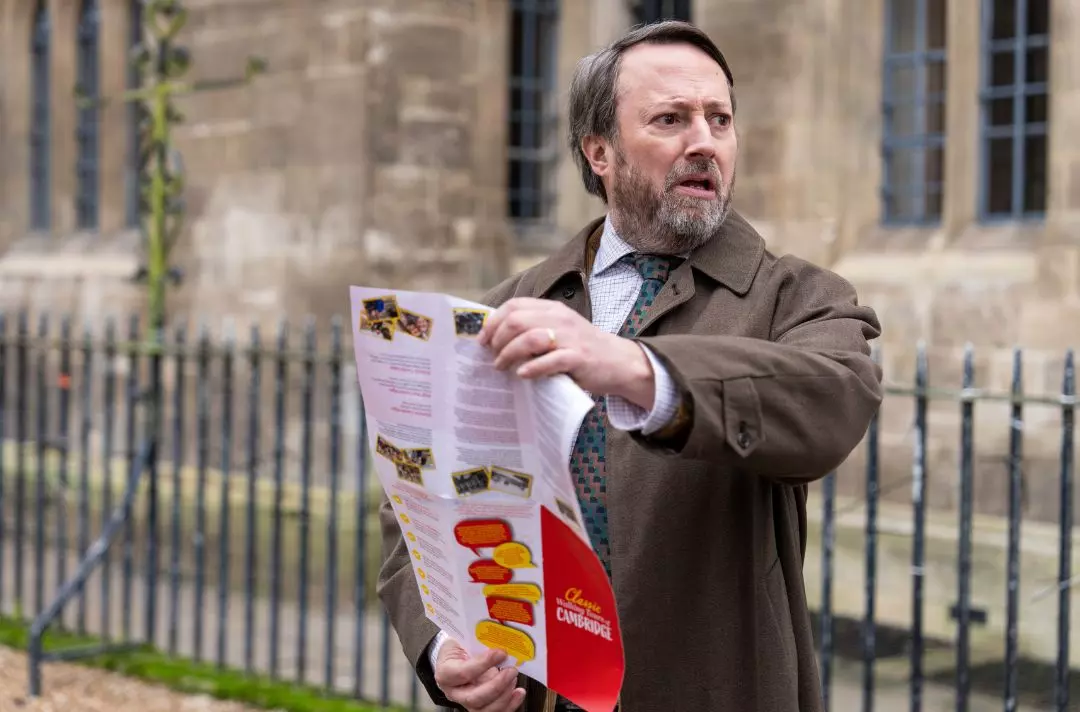
As Ludwig returns to BBC One, Ivan Radford celebrates the unique ways our minds work.
‘I think I need to pace about. Can I pace about?’ asks John Taylor, as he tries to unravel a crime scene in Ludwig. If John doesn’t sound like your average police officer, that’s because he isn’t: he’s a puzzle-setter, known as Ludwig, who has unwittingly ended up in the shoes of his missing identical twin brother, who’s a detective. The shocking revelation? It turns out John’s quite good at solving murders.
What makes Ludwig different
John tackles each case by using logic and puzzle techniques to deduce the solution. This entertainingly implausible premise had millions of viewers following Ludwig in 2024, when the first series premiered.
The second series finds Ludwig formally working with the police as a crime scene consultant. Part of the show's appeal lies in the idea that any one of us might be able to use logic to crack a fiendish puzzle. Who doesn’t love playing armchair detective in the hope that they can deduce the answer to an impossible riddle themselves?
Ludwig reminds us, though, that we can’t do everything on our own. The police benefit from John’s unusual take on each case, and he also grows from the relationships that he builds – and rebuilds – with his colleagues and family.
Valuing other people’s perspectives
‘Two can accomplish more than twice as much as one,’ we read in Ecclesiastes 4:9 (The Living Bible). Why? Partly because we each see things differently. One of the most uplifting passages in the Bible tells us that we are ‘fearfully and wonderfully made’ (Psalm 139:14). We are each created in God’s image – right down to the last molecule of our being, we are unique and loved.
That means nobody’s brain is wired quite like yours – it is fundamentally impossible for you to think or imagine in exactly the same way as someone else. Whether you are creative or logical, your precise neurological chemistry is a one-off. It is only by journeying together, listening to each other and valuing one another’s perspectives and experiences, that we can each grow in our understanding and compassion.
As Christians, it is only together in our diversity that we, as the united Church, can reflect God’s image to the world. ‘Welcome with open arms fellow believers who don’t see things the way you do,’ advises Romans 14:1 (The Message).
Of course, that doesn’t mean that we hold the answers to life’s mysteries ourselves: we live in a world of disinformation, conspiracy theories, greed, ambition and pride. Whether it’s political elections or moral debates, trying to piece together God’s plan without God in the picture only ends in the wrong answer – and spoils the whole puzzle for everyone else around the table.
In a community of believers, this mutual welcoming and nurturing of each other only works if we strive to ‘have the same mindset as Christ Jesus’ (Philippians 2:5), through ‘God’s Spirit and our spirits in open communion’ (1 Corinthians 2:16 The Message). And this is only possible thanks to the Holy Spirit, who works to reconcile us to each other and to God – and is as beyond our understanding as he is lovingly familiar.
Reflect and respond
- Reflect on The Message’s paragraph translation of 1 Corinthians 2. Is your life a response to your own mental calculations or God’s Spirit?
- Read Romans 12. How open are you to the ongoing renewal of your mind?
- How do you live out God’s love in your working with others?
Written by

Ivan Radford
Managing Editor
Latest viewpoints
-
The Celebrity Traitors: What does being faithful look like?
As The Celebrity Traitors returns to our screens, Dan Bate considers what it means to be 100 per cent faithful.
-
Single Friendly Church Week: How welcoming is your church?
At the start of Single Friendly Church Week (27 September – 4 October), Major Andrea Cooper reflects on singleness and how we value people.
-
70 Up: How have you changed as you have grown up?
As 70 Up concludes on ITV, Ivan Radford reflects on growing older.
-

Pray for Nepal and Tibet
After the catastrophic avalanche and flooding, we pray for all the people impacted.
-
Wildfires: Living out hope in the face of despair
In the light of recent wildfires, Major Lynne Shaw considers how we can respond by caring for creation.
-

Back to school: A lesson worth learning
Senior Deputy Head Andrew Mair reflects on the start of the new school year.
-

Is this an end to rough sleeping for good?
Jez Bushnell considers Andy Burnham’s first major promise as prime minister and the government’s commitment to tackling homelessness.
-
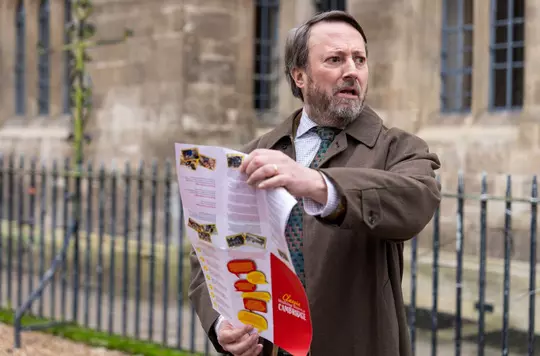
Ludwig: The value of a fresh perspective
As Ludwig returns to BBC One, Ivan Radford celebrates the unique ways our minds work.
-

Spider-Man: Brand New Day: Renewed spark
As Spider-Man: Brand New Day swings past superhero fatigue, Sam Bishton asks what renews your energy and passion.
-
The Odyssey: The importance of welcoming strangers
With Christopher Nolan's The Odyssey out now, Captain Chris Button reflects on the importance of hospitality.
-
Toy Story 5: Making time for connection
As Toy Story 5 plays on our screens, Naomi Blowers encourages us not to be distracted from being present with God.
-
The Piano: Playing with purpose
As Channel 4’s music series draws crowds at train stations, Ivan Radford celebrates the power of hearing why people play.