
1 September 2026
Wildfires: Living out hope in the face of despair
Major Lynne Shaw
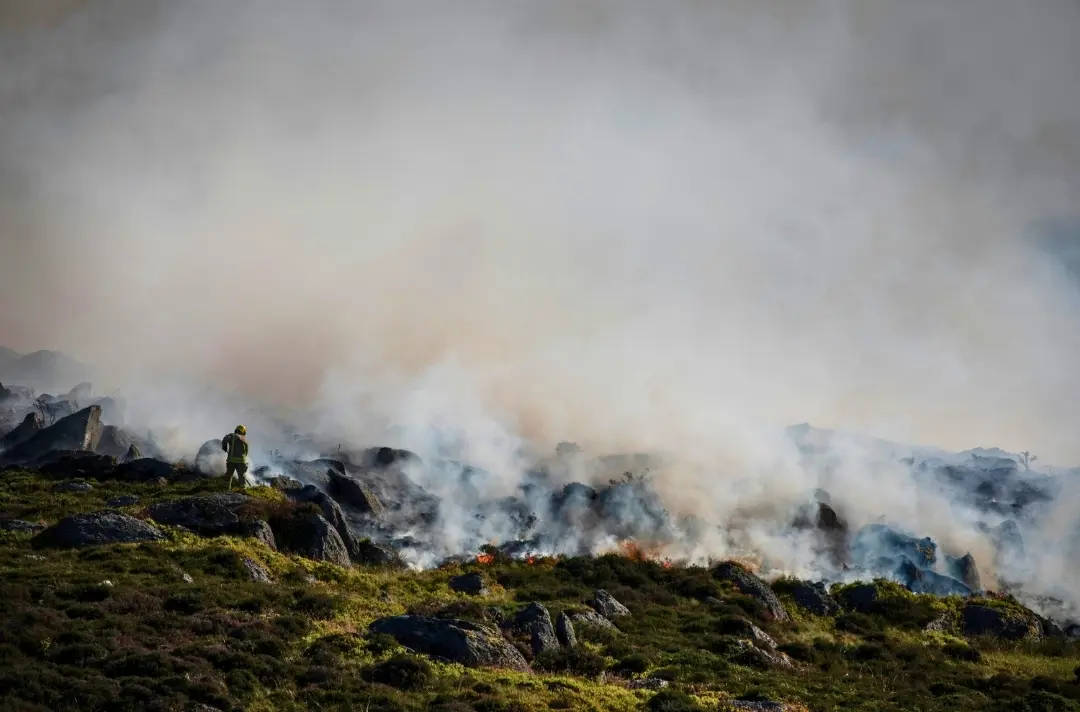
In the light of recent wildfires, Major Lynne Shaw considers how we can respond by caring for creation.
Recently, the Hampshire and Isle of Wight Fire and Rescue Instagram page was sharing how firefighters from across the country were involved in fighting wildfires in the New Forest. Those on site worked hard day and night and through the heat to contain a vehicle fire on the A31 that set ablaze a large chunk of open scrubland and wooded areas.
It’s hard to know what to do about environmental catastrophes like this, even for those who live near enough to be directly affected. As God’s people, what is our task? And why should it matter to us?
Territorial Environmental Officer Major Heather Poxon has pointed out that, if we love God, then it ought to follow that we love what and who God loves. People are impacted by wildfires. More broadly, people are affected by pollution, pesticides, poor global farming practices and every decision that puts money over humanity, the land we inhabit and the food and water we consume. As the family of God, our day-to-day decisions should be putting people over money, and creation over convenience.
We bear God’s image and we are God’s ambassadors (see 2 Corinthians 5:20). We carry a message of reconciliation, restoration and hope. Therefore, it makes sense that this spills over into how we live every day: from obeying rules about engine idling, to going low or no waste; from choosing ethically sourced chocolate to being careful about what we throw down our sinks; from considering our water usage to using products that are harvested with as minimal impact as possible.
In Proverbs 3:9, God calls us to be good stewards and to honour God with what we have. Psalm 24:1 and 2 remind us: ‘The Earth is the Lord’s, and everything in it, the world, and all who live in it; for he founded it.’ This is our mandate to care, to remove the blinkers from our eyes, and to concern ourselves with the impact our living has on this planet. Wisdom is to plant a tree knowing you will not sit under its shade, to recognise that it’s our children and their children who will inherit what we’re doing today.
This might feel onerous. We might believe it’s the privilege of those who can afford organic and Fairtrade products. We might look at what others are doing and think: ‘Why should I bother if they’re not?’ But, when I look to Jesus, I see a different attitude. He gave up everything but love, and I’m convicted to do the same. There are no half-measures with God. If I’m to be God’s ambassador in this world, then – to the best of my ability and capacity – what I do needs to be done with the same integrity, generosity, kindness and open-hearted love.
While I may despair at species extinction, drought and fires, and the endless pollution of our waterways and seas, God calls me to radical hope lived out in faithful loving care. For me, creation care is not optional; it’s a mandate of God.
Reflect and respond
- Consider Psalm 50:10 and 11 and Colossians 1:15–17. How do these verses help you understand your part in caring for the planet and its resources?
- What one change could you make today that would move you towards honouring God and creation in your corner of the world?
- Can your corps or centre create cool spaces to care for people during hot weather, as well as warm spaces to care for people during cold weather?
- Pray this prayer: Creator God, I clothe myself with humility and choose, with your help, to be a repairer, a recycler and a faithful steward of all you’ve given me.
- Pray for the people affected by the devastating flooding in Nepal and Tibet.
Written by

Major Lynne Shaw
Editorial Assistant, Publishing Department
Latest viewpoints
-

Will AI wipe out humanity?
Ivan Radford considers from a Christian perspective what questions we should be asking about artificial intelligence, and why accountability matters.
-
Where can you see God doing a new thing?
As we celebrate Harvest, Major Sarah Butler invites us to notice where God is at work.
-

The Celebrity Traitors: What does being faithful look like?
As The Celebrity Traitors returns to our screens, Dan Bate considers what it means to be 100 per cent faithful.
-
Single Friendly Church Week: How welcoming is your church?
At the start of Single Friendly Church Week (27 September – 4 October), Major Andrea Cooper reflects on singleness and how we value people.
-

70 Up: How have you changed as you have grown up?
As 70 Up concludes on ITV, Ivan Radford reflects on growing older.
-

Pray for Nepal and Tibet
After the catastrophic avalanche and flooding, we pray for all the people impacted.
-
Wildfires: Living out hope in the face of despair
In the light of recent wildfires, Major Lynne Shaw considers how we can respond by caring for creation.
-

Back to school: A lesson worth learning
Senior Deputy Head Andrew Mair reflects on the start of the new school year.
-

Is this an end to rough sleeping for good?
Jez Bushnell considers Andy Burnham’s first major promise as prime minister and the government’s commitment to tackling homelessness.
-
Ludwig: The value of a fresh perspective
As Ludwig returns to BBC One, Ivan Radford celebrates the unique ways our minds work.
-

Spider-Man: Brand New Day: Renewed spark
As Spider-Man: Brand New Day swings past superhero fatigue, Sam Bishton asks what renews your energy and passion.
-

The Odyssey: The importance of welcoming strangers
With Christopher Nolan's The Odyssey out now, Captain Chris Button reflects on the importance of hospitality.