
7 November 2026
‘This was where we had to be’: Rebuilding hope in Bosnia and Kosovo
George Tanton
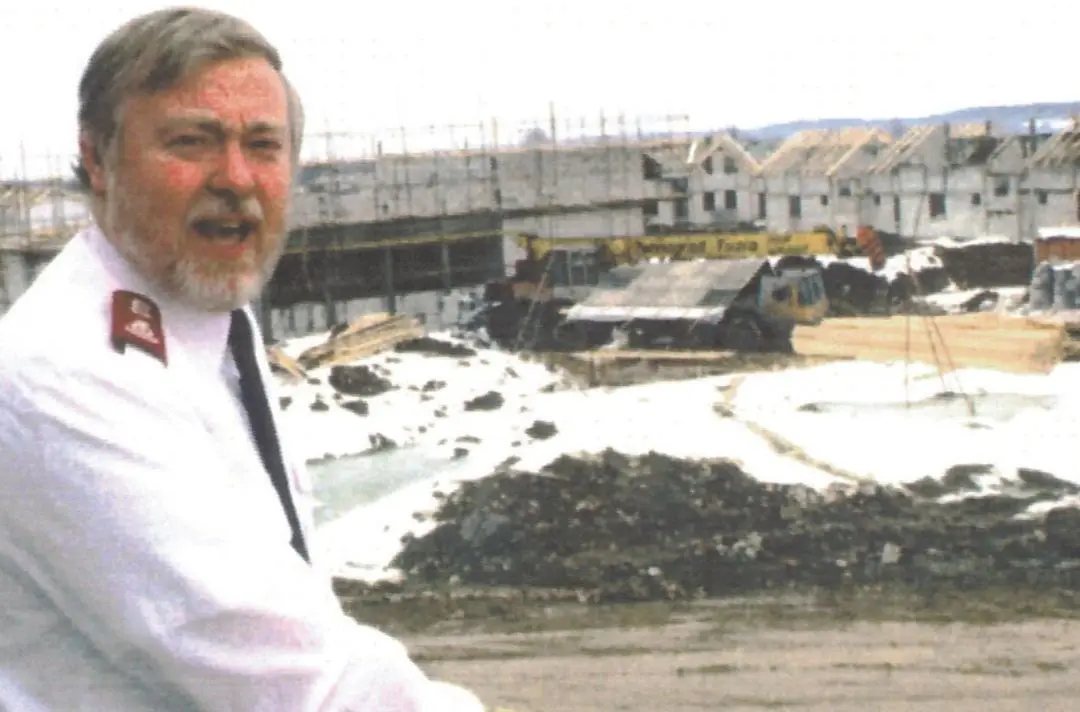
George Tanton explores the work of The Salvation Army following the break-up of Yugoslavia.
Frequently described as the deadliest armed conflict in Europe since the end of the Second World War, the break-up of Yugoslavia in the 1980s and 1990s instigated a series of conflicts across the Balkans. According to the International Centre for Transitional Justice, more than 140,000 people were killed, and almost 4 million were displaced.
The Salvation Army’s work in former Yugoslavia began in 1995, assisting the United Nations-led humanitarian operations in Bosnia and Kosovo. Major Roland Sewell (now lieut-colonel), the then coordinator for the Emergency and Refugee Services at International Headquarters (IHQ), visited northern Bosnia in February 1996.
‘It was a bitter Balkan winter and the white ice and snow contrasted starkly with the blackness of hundreds of burnt-out buildings,’ he wrote in a booklet for IHQ’s Emergency and Refugee Services. ‘I stood alongside grown men who were shivering with cold and desperation, warm tears cutting through the icy stubble of their unshaven cheeks. Returning for the first time from exile, they stared unbelievably at the ruins of their homes and livelihoods. Some expressed their sense of hopelessness with bitter cries and dropped their shoulders in despair. I too felt it, thinking then that this was a much bigger job than The Salvation Army could ever hope to undertake... But somehow I felt a conviction that this was where we had to be.’
Upon returning to London, he received the news that an anonymous donation had been given to establish a relief programme in Bosnia.
‘God made available to us all that was needed,’ he reflected.
Further money was raised by the international Salvation Army, the German Association for Technical Cooperation and the Lutheran World Federation. This sum was used to fund resettlement and feeding programmes across Bosnia.
In the small town of Šipovo, two blocks of flats, each comprising three storeys, had been badly damaged by shelling and fire-damage. With help from the Army, these buildings were reroofed, enabling 71 residents to return to their homes. In the villages of Stojići and Batići, the Army assisted in reopening badly damaged secondary schools and, from April to August 1996, Salvationists provided 197,800 meals to civilians. The Army was also involved in helping to regenerate the local economy, establishing small income-generating initiatives such as chicken farms and general stores.
In 1999, the Army provided aid to Kosovan refugees in Albania, who were crossing the border to escape the fighting between the Yugoslavian military and separatist militias. Crucial to the success of the operation was both the Army’s internationalism and its partnership with humanitarian aid organisations. In cooperation with the Red Cross, 45,000 blankets and 25 tonnes of clothing were sent from the Army’s emergency centre at Lista airport in Norway to Kosovo and Albania.
In the UK, Salvationists mobilised to do their part. Mobile field canteens, donated by the Red Shield Centres at Catterick and Tidworth, were driven to refugee camps in Albania by John Hope (Kidderminster) and Anthony Foster, who worked at the Tidworth centre. The Army in Leeds, in cooperation with social services and the council, assisting in the reception of 161 Kosovan refugees at two unused retirement homes.
Cadet Tim McPherson, who was a member of the Army’s aid team supporting Kosovan refugees, later said: ‘I will be for ever changed by what I experienced here… I have been truly blessed by what I have seen God do through the lives of ordinary Salvationists … from all over the world and from every spectrum of life.’
As Roland observed: ‘There is always hope when we respond to God’s lead.’
Written by
George Tanton
Editorial Assistant
Discover more
George Tanton explores how The Salvation Army responded to a refugee crisis in the 1890s.

Lieut-Colonel Geoff Blurton talks to George Tanton about serving with the Red Shield Services during the Gulf War.

George Tanton finds out how pilgrimages of remembrance brought solace after the First and Second World Wars.
George Tanton explores The Salvation Army’s historical links to the United Nations.