
21 March 2026
Salvationist magazine: We want everyone to be part of our story!
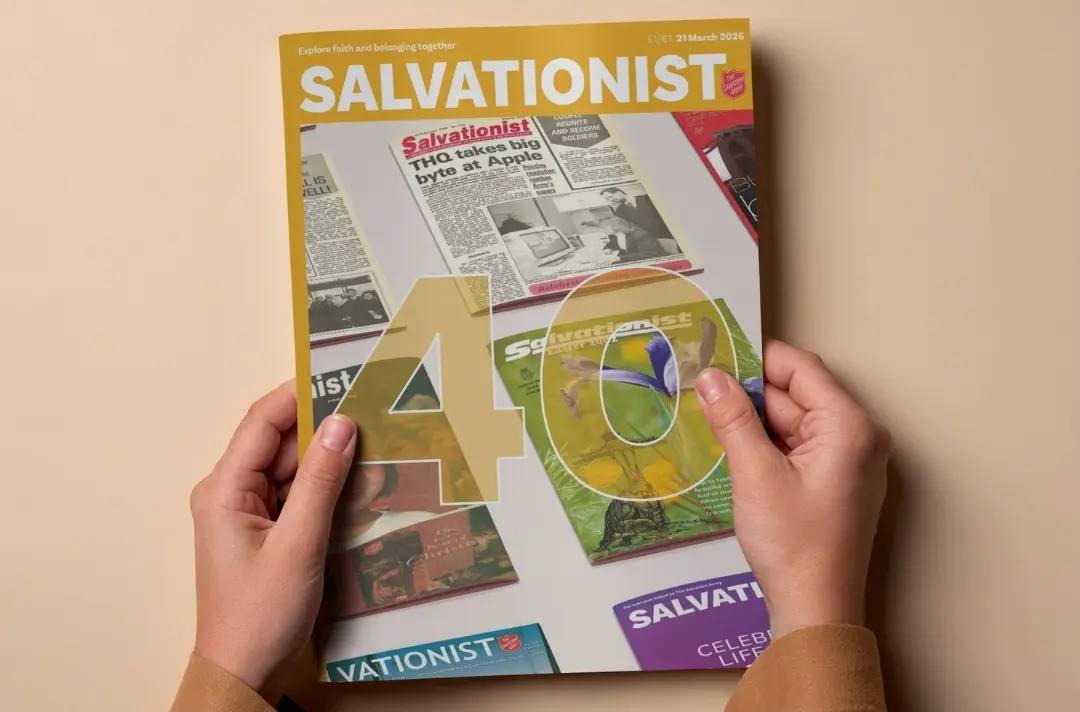
As Salvationist turns 40, Editor Major Julian Watchorn and Managing Editor Ivan Radford talk about the ministry and mission of the magazine.
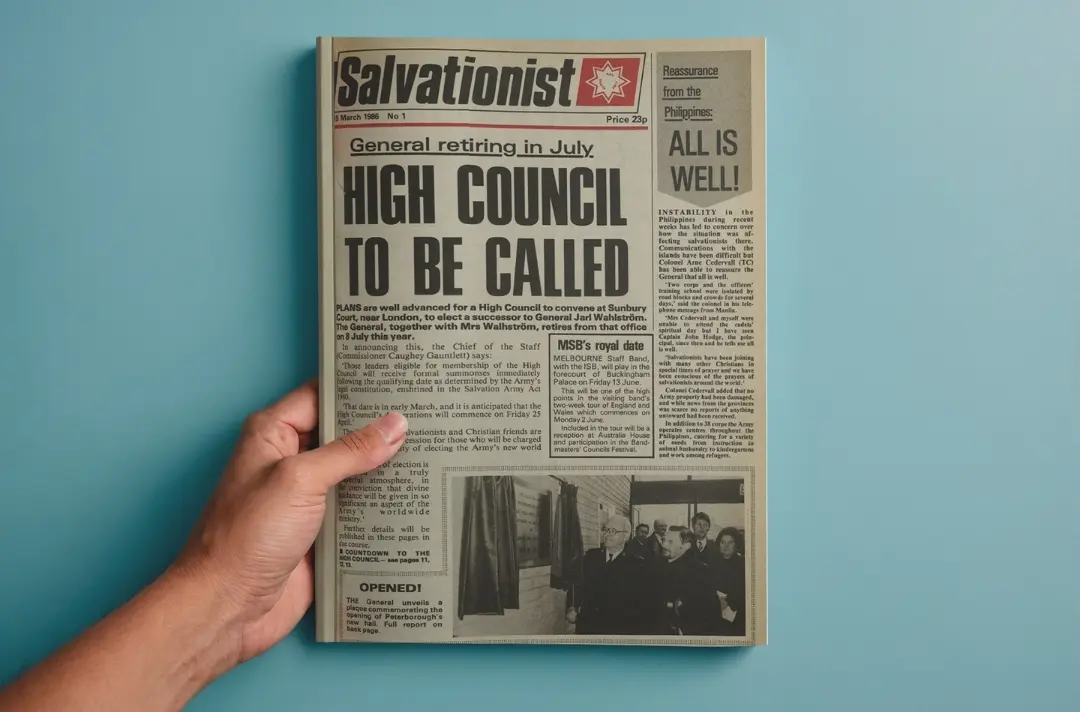
On 15 March 1986, the first issue of Salvationist was printed at Campfield Press.
The magazine followed on from two other publications, The Musician and the War Cry. At the time, War Cry carried Army news and articles of interest to Salvationists, served as an international paper and was sold to the general public. The Musician, launched in 1938, focused on band members and songsters. In March 1986, General Jarl Wahlström explained that ‘as an effective tool of evangelism the War Cry will in future address itself more specifically than hitherto to readers outside the ranks of the Army’, while Salvationist would replace The Musician and ‘highlight the fact that our musicians are first and foremost Salvationists’.
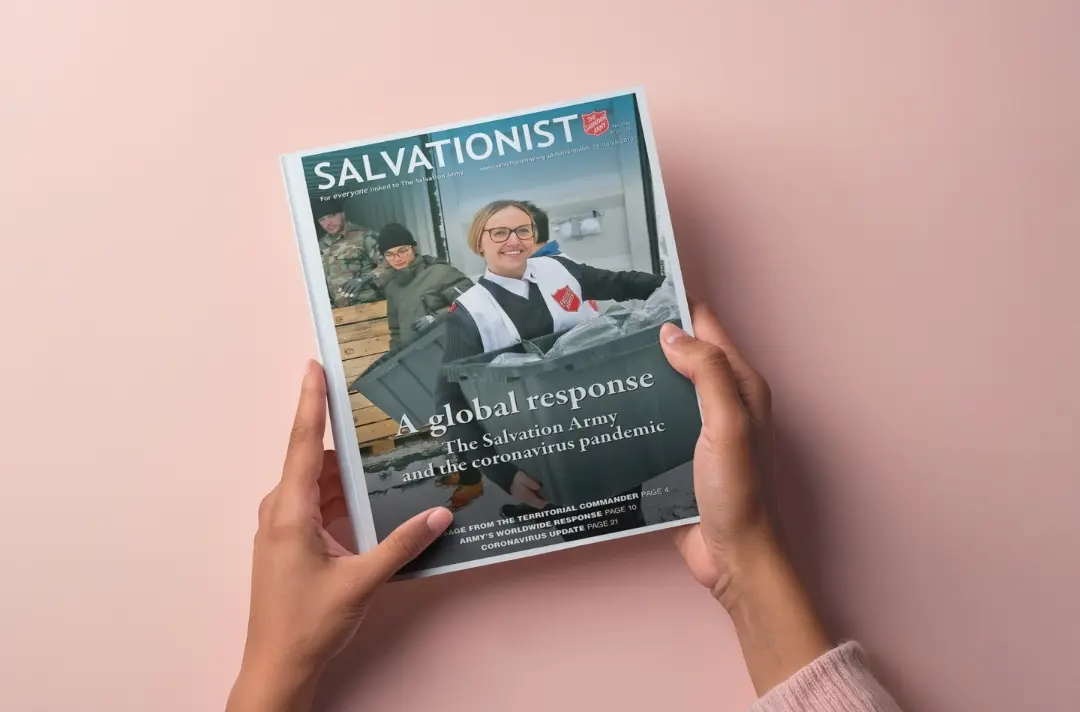
In the early years, pages were taken to Campfield Press each week on the train. In the 1990s, the team switched to desktop publishing and, even during the Covid-19 pandemic, the publication continued to be put together weekly. Over the decades, the weekly publication has become less of a newspaper and more of a magazine, but it continues to inform, encourage and nurture everyone linked to The Salvation Army.
In 2022, it was joined by the website salvationist.org.uk and, in February 2023, Salvationist Radio, an online radio station that grew out of Fortress Radio.
Today, across multiple media platforms, Salvationist remains a place for people to explore faith and belonging together – in print, online and on-air.
Forty years on, why do you think Salvationist has endured?
Julian Looking back at the history of Salvationist and its former incarnation, The Musician, it’s always evolved to what the needs are at the time. I think Salvationist in its current form does that: it’s a place where anyone connected to The Salvation Army can find information but, more than that, it’s about taking people on a journey – their own spiritual journeys as well as our journey as The Salvation Army.
Ivan A while ago we changed the tagline from ‘for everyone linked to The Salvation Army’ to ‘explore faith and belonging together’. It’s easy to feel like you belong on a local level, but it can sometimes be hard to remember we all belong to something bigger. Not just across the country or territory, but a worldwide Movement.
Julian I enjoy the opportunity to make people aware of the fantastic things happening in the Army. I don’t underestimate that privilege – I’m grateful for it. I love seeing people being creative about the way they engage with their communities, not being bound by the way we used to do things.
Ivan From week to week, we’re seeing a shift in people’s mindset, from going to church to being the church.
What’s a highlight of Salvationist for you?
Julian New commitments! It fills me with joy because it reassures me that God is at work and people are making formal commitments to be followers of Jesus within the Army.
Ivan We’ve published an average of more than one adult new commitment a day this past year, which is remarkable! I think the testimonies are my favourite thing. When we started that weekly space, we didn’t even know whether we’d have one a week, but they keep coming! It’s opened us up to such a wide range of voices and experiences, and testimonies are such a key part of our heritage as an Army. I also love that there’s no such thing as a ‘normal’ testimony – each week, the Creator of the universe is doing something in someone’s life and that never ceases to amaze me. I think people can be tempted to think their own testimony isn’t special, but everyone in the Army has something to share about their experience of God that is unique. We all have good news to share. That doesn’t require big words or grand statements – just you in your own words.
Julian I think that’s an important challenge to people. We’re called to tell people what God’s doing in our lives, wherever we are and whatever circumstance we’re in.
We want to be in relationship with people because that’s what community is. And that’s what magazines have always been about: community.
What have you learnt in your time on Salvationist?
Julian That anything is possible, even if you don’t expect it. And that change isn’t always a bad thing. We’ve learnt to trust that God’s got things far beyond what we can see.
Ivan I’ve learnt it’s not about me or us, the Salvationist team, but about God and us as his Army. So it feels a little odd to be talking about ourselves in this way!
What’s something people might not know about Salvationist?
Julian That it’s soaked in prayer, that we pray about what we ought to write.
Ivan I think people think we know things when actually we don’t. We don’t know what we don’t know, and there’s a lot that we don’t know! For example, we don’t know what’s going on where people are unless they tell us. We don’t know – or necessarily care – how big or small a corps is. The thing I’d want people to know most of all is that we want to hear from them, whether that’s via a corps leader or someone authorised to send us reports, and get to know them – we want to be in relationship with them because that’s what community is. And that’s what magazines have always been about: community.
How has Salvationist changed in 40 years?
Julian I think Salvationist has always met the needs of its day, so it has evolved as the Army and society have evolved. Today, that includes a digital presence: Salvationist is not just a magazine. That gives us great opportunities to connect with people.
Ivan This year is also the fourth anniversary of salvationist.org.uk! The magazine, and the written content we produce, are also published digitally – it’s part of a wider multi-platform multimedia offering.
Julian The beauty of that is people can engage with something that can bring them closer to God wherever they are.
How central is the mission priority of nurturing disciples of Jesus to Salvationist?
Julian We seek to live out and engage with all the mission priorities, but certainly that one resonates most with our work.
Ivan I think that really helps us a lot, being intentional in that nurturing of disciples – including ourselves! In theory, anything can be published, but we try to start with the essence, with the why. That’s led us to having weekly focuses or themes in each issue to be as impactful as possible, which makes the publication a more long-term resource. It’s also led us to having a topical space in each issue, to remind us that discipleship involves the whole of our lives during the week, not just on Sundays.
Perhaps there has traditionally been a thought that we are simply the mouthpiece for the Army’s leadership. But we see it as a two-way conversation.
Ivan Another part of our process people might not know about is that we follow a territorial style guide, which is periodically reviewed, with any changes signed off by Cabinet. It’s not about changing wording for the sake of it.
Julian No, it’s a helpful process of reflection. Style guides are about recognising how we can be consistent in the language that we use.
What’s the most challenging part of working on Salvationist?
Julian There are occasions when people write something and we have to decide if this is the right issue, or perhaps they’ve written more material than we have room for. The challenge is continuing to be sensitive to the Holy Spirit, to ask, as we all should, whether we’re doing the right thing.
Ivan It’s being prayerful and discerning about the right time to focus on a topic. If we receive something we can’t use now, my hope is that answer is ‘not now’, rather than ‘never’. It’s a fun balancing act, needing to organise a weekly publication to a schedule while also surrendering the timing to God! It’s entirely counterintuitive, and yet we’ve never not made a press deadline! Every week feels like a leap of faith in some way – and every week, something exists that didn’t exist seven days before!
Julian It’s incredible how God always provides what we need.
Ivan Otherwise, I think another challenge is perception. There are people who perhaps think they know what Salvationist is, but haven’t looked at a copy recently – and they might be surprised! I would encourage anyone who reads it to share it with someone else. Because we can see a story unfolding of God doing something exciting in the UK and Ireland Territory and we want everyone else to see that and to be part of it.
Julian I didn’t read Salvationist as often as I could have before I was appointed to this role – I’m sure I’m not alone there! In hindsight, that was my loss.
Ivan Growing up, personally, I didn’t think that Salvationist was for me. My passion is wanting to make it a magazine for everyone in the Army – a place where you can see yourself in it and be represented in it. And we have a growing range of ways for people to be heard, whether it’s sharing a poem, a letter or something creative in our Artists’ Corner.
What’s next?
Julian We’ve put ourselves in a place where we are open to the Holy Spirit, and we want to continue to be relevant and to engage people in our shared journey, because it’s a joyful one.
Ivan For me, what’s next is staying intentional and remaining open and curious. In the past couple of years, we have been in contact with roughly 60 per cent of corps in the territory in some form. That’s amazing, but there’s a whole other 40 per cent we want to get to know and see how God is moving in their lives.
- Get in touch with the Salvationist team at salvationist@salvationarmy.org.uk.
- Read articles from the latest issue and online copies of past issues at salvationist.org.uk/magazine.
- Get a printed copy of Salvationist through your door each week by speaking to your corps leader or subscribing at sps-shop.com.
Discover more

Online Content Editor Bethany Gibson (Publishing Department) talks about church, faith, evangelism and technology.
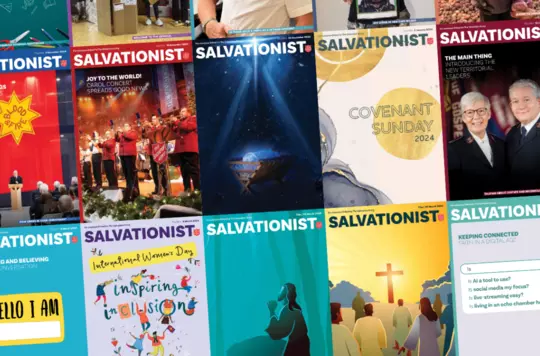
Salvationist is a weekly magazine for church members and friends of The Salvation Army.
The audio version of Salvationist magazine, read by Lieut-Colonel Rob Garrad.
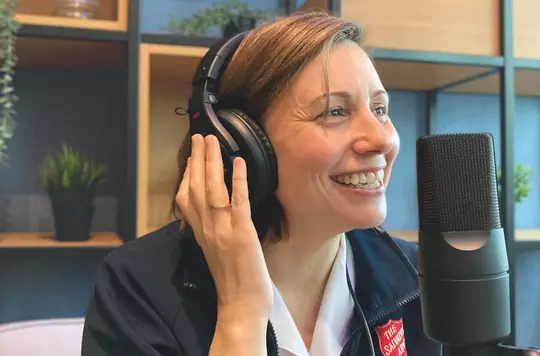
An online radio station for anyone who wants to explore faith with The Salvation Army.