21 November 2026
Territorial Justice and Reconciliation Youth Forum: Reflecting on the first year
Amalie and Dara reflect on being members of the Territorial Justice and Reconciliation Youth Forum.
‘Everyone deserves to be heard’
Amalie (Regent Hall)
I have thoroughly enjoyed being part of the Territorial Justice and Reconciliation Youth Forum. I am someone who passionately believes that everyone deserves to have a voice and be heard.
Isaiah 1:17 tells us: ‘Learn to do right; seek justice. Defend the oppressed. Take up the cause of the fatherless; plead the case of the widow.’ I understand this as a call to take every opportunity to speak up for others, particularly those whose voices might otherwise go unheard. For me, justice is not just about recognising when something is wrong; it is about having the courage to do something about it.
As my family and friends will confirm, I enjoy talking! I have therefore relished the many opportunities the forum has given me to share my views, listen to others and encourage important conversations. From communicating with Salvationists across the territory at Together 26 in July to attending a Moral and Social Issues Council meeting and representing the voice of young people, I have valued every opportunity to contribute.
I believe justice is particularly important from a young person’s perspective because we are growing up in a world where inequality, discrimination, poverty and injustice remain real challenges. We see things differently, ask questions and bring fresh perspectives. However, being given a voice also comes with a responsibility to listen – to learn and understand experiences beyond our own.
Justice looks like standing up for what is right, showing compassion and recognising that we do not have all the answers. Proverbs 31:8 and 9 challenge us to speak up for those who cannot speak for themselves and defend the rights of those in need.
Ultimately, biblical justice is about more than treating everyone equally. It is about making sure that people who are vulnerable, overlooked or unheard are protected, valued and treated fairly. Through the forum, I hope I can continue to use my voice, encourage others to use theirs and help make justice something we don’t just talk about, but actively put into practice.
‘We are not just the Church’s future, we are part of its present’
Dara (Staines)
When I first heard about the Territorial Justice and Reconciliation Youth Forum, I was excited by the opportunity to be part of a space where young people could talk openly about issues affecting our communities. But, as the first year of the forum has gone on, I have realised that justice and reconciliation are about much more than having conversations. They require us to listen, learn, reflect and, ultimately, act.
One Bible passage that has stayed with me is Micah 6:8: ‘What does the Lord require of you? To act justly and to love mercy and to walk humbly with your God.’ I love how simple yet challenging this is. Justice is not something reserved for organisations, politicians or other people with positions of influence; it is something God calls each of us to pursue.
Being part of the forum has reminded me that everyone has a story, and sometimes the first step towards reconciliation is simply being willing to listen. We may not always understand another person’s experiences, but we can choose to listen with humility and not make assumptions. I have also learnt that reconciliation does not mean ignoring difficult conversations. Sometimes, reconciliation requires us to acknowledge that something is wrong, have uncomfortable conversations and be willing to change. As young people, we have an important role to play in this. We are not just the future of the Church; we are part of its present.
For me, justice and reconciliation are ultimately about reflecting God’s heart. Jesus consistently noticed people who were overlooked, stood alongside those who were marginalised and challenged systems and attitudes that prevented people from experiencing dignity and belonging.
I am grateful for the opportunity to learn alongside other young people who care about making a difference. I hope we continue to move beyond asking what’s wrong and begin asking: ‘What can I do?’
Perhaps justice begins there – with one person willing to see, listen, care and act.
Discover more
Tilly, chair of the Territorial Justice and Reconciliation Youth Forum, introduces its latest chapter.

Empowering young people to improve the future by disturbing the present.
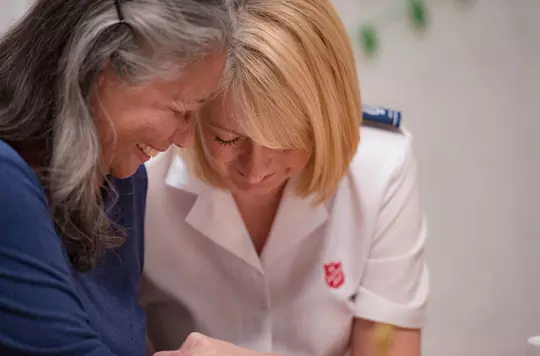
Salvationist unpacks the seek justice and reconciliation mission priority in discussion with Captain John Clifton.