
13 October 2026
Will AI wipe out humanity? A Christian perspective
Ivan Radford
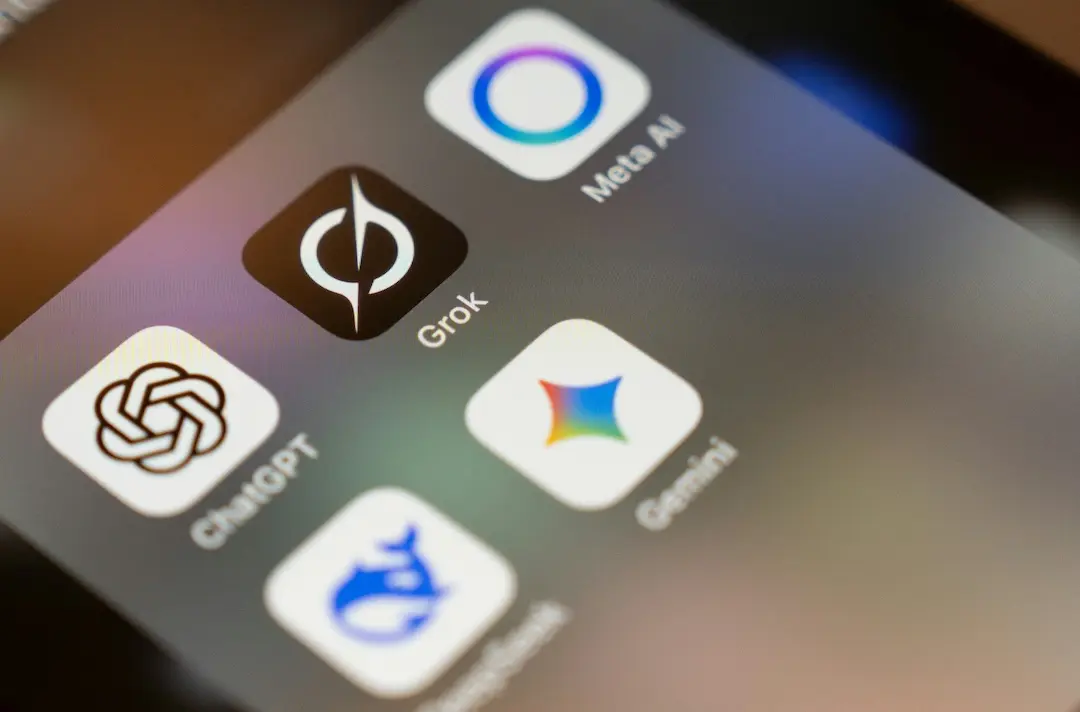
Ivan Radford considers what questions we should be asking about artificial intelligence, and why accountability matters.
Artificial intelligence has been dominating news headlines, as technology companies have claimed that artificial super-intelligence could wipe out humanity – perhaps in 10 years. Their warnings and calls for regulation of the technology come as autonomous AI ‘agents’ have shown they can find a way round instructions.
Will AI kill us all? It’s an eye-catching question that feeds our fears, as well as our penchant for thinking we know what will happen in the future. But it’s also noise that distracts us from more important questions.
The harbingers of this AI superiority are experts, but we must remember they have a vested interest in their technology’s success, which is intrinsically tied to profit, investment, competition and the need for resources – both manmade and environmental. Whatever someone says about their own product should be taken with a pinch of context.
The AI industry broadly falls into two camps – doomers, who think AI will end humanity, and boomers, who think AI will solve all our problems. They both think that artificial super-intelligence is inevitable.
Right now, AI is far from that. The AI you typically encounter day-to-day guesses the next most likely word or pixel in its responses based on patterns in data it has been given. This technology is primarily built on the theory that using large language models is the way to create or replicate human-level intelligence or greater – although, if you look in Genesis, God didn’t create humankind by starting with a thesaurus.
Autonomous AI ‘agents’, which are different, follow instructions – but, if they aren’t correctly given all the context required, they use that same predictive technology to fill the gaps. A wrong guess by an AI agent at one stage can therefore lead to compounded mistakes, including circumventing instructions and leading to news headlines about it ‘going rogue’. Does that sound super-intelligent or like a human error?
The experts are right that regulation is important, because poorly configured AI could impact people’s lives. While agency and intelligence are part of companies’ attractive long-term promises behind AI, it’s possible to hide behind these when facing the short-term effects. The more AI is positioned above us, the more we risk losing our own accountability or agency, rather than holding those who hold money or power to account.
AI is not a saviour. It can predict what comes next in a sentence, but it is not inevitable. The only thing certain in this universe is God. And God calls us not to shrug off accountability, but to live in a way that is shaped by his love. We are all called to ‘act justly and to love mercy and to walk humbly with your God’ (Micah 6:8). We are called to live in hope, not fear (see 1 Peter 1:3).
As a tool, AI has real potential to help amplify services, boost efficiency, aid accessibility and positively impact lives – when used intentionally and compassionately, with people in mind. Just as companies can decide when and how to develop or not develop AI, as individuals and a society we have free will to decide when and how to use or not use it, and when and how to hold people or companies to account.
Will AI wipe out humanity? The Bible tells us to trust our future to God alone. And, as we live out God’s love in this world, the questions to ask are more immediate and rooted in our own agency and accountability. How is AI being used in your life, workplace or community? How is it impacting critical thinking, creativity or relationships? How is it impacting jobs or employees’ workloads? Is it helping to bring about God’s Kingdom? If not, how can we be a voice for it to be used in that way?
Pause and respond
- Read The Salvation Army’s AI Guardrails. How do our values help you discern the best use of AI for you?
- If you use AI now, do you need to? If you don’t, where might it help you?
- Listen to ‘I’m in His Hands’ (Songbook 848). Remind yourself that you, and any fears you have about the future, are in God’s hands.
Written by

Ivan Radford
Editor, Salvationist
Latest viewpoints
-
Will AI wipe out humanity? A Christian perspective
Ivan Radford considers what questions we should be asking about artificial intelligence, and why accountability matters.
-

Where can you see God doing a new thing?
As we celebrate Harvest, Major Sarah Butler invites us to notice where God is at work.
-

The Celebrity Traitors: What does being faithful look like?
As The Celebrity Traitors returns to our screens, Dan Bate considers what it means to be 100 per cent faithful.
-

Single Friendly Church Week: How welcoming is your church?
At the start of Single Friendly Church Week (27 September – 4 October), Major Andrea Cooper reflects on singleness and how we value people.
-
70 Up: How have you changed as you have grown up?
As 70 Up concludes on ITV, Ivan Radford reflects on growing older.
-

Pray for Nepal and Tibet
After the catastrophic avalanche and flooding, we pray for all the people impacted.
-
Wildfires: Living out hope in the face of despair
In the light of recent wildfires, Major Lynne Shaw considers how we can respond by caring for creation.
-

Back to school: A lesson worth learning
Senior Deputy Head Andrew Mair reflects on the start of the new school year.
-

Is this an end to rough sleeping for good?
Jez Bushnell considers Andy Burnham’s first major promise as prime minister and the government’s commitment to tackling homelessness.
-
Ludwig: The value of a fresh perspective
As Ludwig returns to BBC One, Ivan Radford celebrates the unique ways our minds work.
-
Spider-Man: Brand New Day: Renewed spark
As Spider-Man: Brand New Day swings past superhero fatigue, Sam Bishton asks what renews your energy and passion.
-
The Odyssey: The importance of welcoming strangers
With Christopher Nolan's The Odyssey out now, Captain Chris Button reflects on the importance of hospitality.