
4 July 2026
Aston 614: Art, music and community
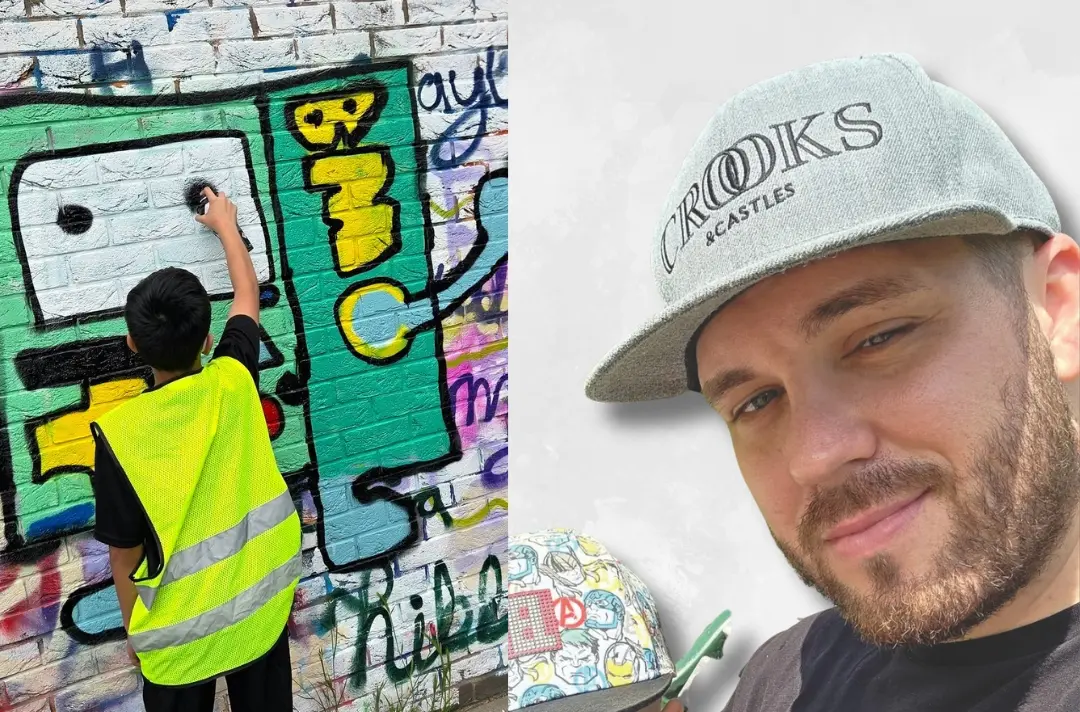
As Aston 614 hosts a graffiti space in Brindleyplace for Together 26, Youth Worker Karac Boldick talks about art, music and community.
You’ve been at Aston 614 for 13 years. Why do you do what you do?
I always wanted to work with young people, to mentor those who have been in gangs. It’s about helping people who’ve been dealt a bad hand and reacted to it in a negative way because they haven’t been shown an alternative way of dealing with those issues.
I went to university and I read about William Booth and The Salvation Army as part of an applied theology course. I thought, ‘This is what it’s about, really.’ I also read about Latin American liberation theology, which is about applying the Bible and belief in God to liberate and help people who are oppressed.
Afterwards I had a really terrible job for six months. Then I saw the job advert with The Salvation Army and I went for it; it’s exactly what I wanted to do! It’s like you’re in a position where you’ve got a good footing and you can help people up, you know.
How does Aston 614 live that out?
There’s a certain energy that’s been created over the years. It’s like a sense of homeliness, so that people feel, ‘This is a safe place where I can express myself, that there’s not going to be any judgement. If I’ve had a bad day at school or college or my job, I know this is a place to decompress and leave in the evening feeling better.’ It’s about family too.
What part do art and music play?
Although there may not be systemic liberation in someone’s situation, there is still the possibility of personal liberation in expressing yourself through art and music. Graffiti is an example. You have kids in New York or Philadelphia whose houses are burning down and crime is everywhere and picking up a spray can or a marker is a way of getting something out. It’s a way of saying, ‘I’m here and I exist!’
So I like to incorporate a lot of art and music in what we do, because it’s not just a great engagement tool, but it also gives young people – who may have been thrown aside by society – a way of expressing themselves.
You’re hosting a graffiti area at Together 26 on Saturday afternoon. What can you tell us about it?
We’ve been asked to do some A1-size art boards for prayer tagging. It will be like a prayer wall. People will be encouraged to tag someone they would like prayer for, or themselves, or a topic or something like that.
We’ve also got loads of magazines at the centre that we’ve collected over the years that we’re going to use for a collage board – people will be encouraged to make a couple of collage pieces using Salvationist, Kids Alive! and War Cry.
The aim is to express different kinds of graffiti, in a safe and legal way, including stencils. I will have some stencils and we’ll be getting people to draw their own, cut them out and spray them on. It will all help focus on the themes of Together 26.
I always see art as a way of expressing personal and community ideas and values. It’s a way to express how you feel about your faith and your community. I think that’s really positive. I see the value of faith in people and communities – I work with and I’m friends with people where I think, ‘That’s what it should look like.’
Discover more
Salvationists from across the UK and Ireland Territory celebrate others for the influence they have had on their spiritual journeys.
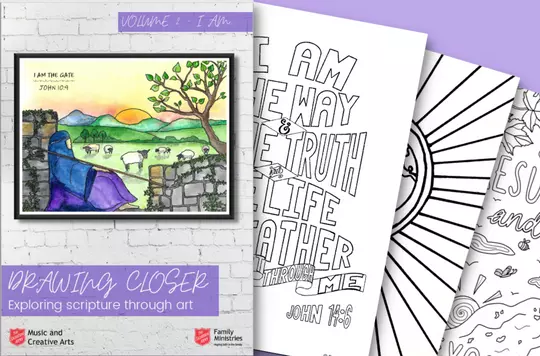
An art resource that helps people explore the 'I Am' statements creatively using colouring sheets