
8 August 2026
Intercultural leadership: Reflecting the Kingdom of God
Captain Adrian Allen
Territorial Intercultural Mission Officer Coordinator Captain Adrian Allen explores what leading with an intercultural heart looks like.
The phrase ‘you can’t be what you can’t see’ is widely attributed to Marian Wright Edelman, an American children’s rights activist. It highlights that people need visible role models to believe in their own potential – particularly regarding career goals and overcoming societal limitations – and emphasises how a lack of representation can make it harder for people to visualise themselves going down certain paths.
In the Church, intercultural leadership is the intentional practice of integrating multiple cultural voices into the highest levels of decision-making and worship. Unlike a multicultural approach, where different groups just coexist, intercultural leadership empowers diverse cultures to lead together. It requires a mutual exchange, where no single culture dominates the liturgy, budget or strategy.
Churches with intercultural leadership are better equipped to engage communities locally and globally, because diversity is not a barrier to overcome but a rich resource that fosters creativity and resilience. Diverse leadership teams use wider pools of cultural wisdom and expressions. And, when a church reflects the community it’s in, it is often a sign to anyone outside the church that they will be truly welcome and valued.
The motivation to engage with other cultures is called cultural intelligence. This is about building knowledge of cultural variation and developing the ability to adapt behaviour appropriately. Having cultural intelligence empowers leaders to move beyond good intentions or one-size-fits-all methods, enabling them to navigate unfamiliar cultural norms and build trust in ways that ensure all members feel valued. Someone with cultural intelligence suspends personal judgements to understand and motivate people across social and cultural groups.
A crucial part of all this is intentional mentorship, which helps bridge cultural divides and develop cultural competence. Mentorship can also be two-way and help leaders understand new perspectives. Through purposeful cross-cultural relationships, leaders can foster genuine unity, reconcile differences and produce humility while also creating a sense of trust and belonging.
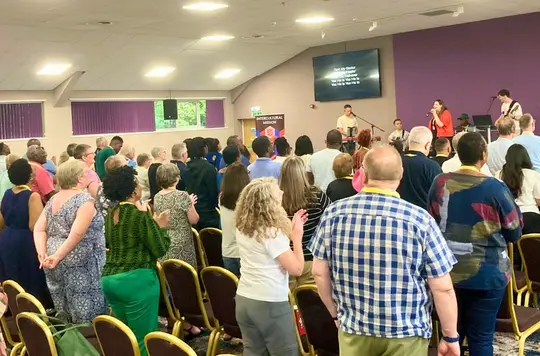
Diversifying worship is also vital, because it can transform a congregation from a collection of cultures into a unified, integrated community that reflects the Kingdom of God – the biblical vision of people ‘from every nation, tribe, people and language’ (Revelation 7:9) worshipping together. It moves worship beyond the preferences of a dominant culture, fostering genuine inclusion, breaking down social barriers, and allowing all members to see themselves represented in the church’s life.
Of course, intercultural leadership has its challenges. A power imbalance might see a dominant culture resist sharing decision-making authority – even while enjoying the idea of diversity. Unconscious biases can skew judgements. Different cultures can have varying values around hierarchy, time management or individual and group responsibility. Misunderstandings can also arise from communication gaps and barriers, including differences in non-verbal language – such as gestures and eye contact – and feedback styles.
Overcoming these requires continuous self-reflection and education. This involves engaging in the deliberate process of decentring, shifting away from one’s own cultural perspective as the primary lens for interpreting the world, because no single culture monopolises the understanding of God – everyone has something to bring to the table.
When they lead with an intercultural heart, leaders acknowledge and repair old wounds, share power, and cultivate deep, trust-based relationships. They seek to adapt their leadership and communication styles for different contexts, embrace empathy and listen to understand rather than respond, aiming to create a space where people feel safe to share. They are intentional in reaching people, so they do not become lost in the background.
As the communities we are in become more diverse, cultural intelligence is essential for churches to become theological mosaics, rich tapestries of interwoven threads; it’s not enough to simply welcome visitors without creating lasting belonging. And, when we do show unity in diversity, it proves the power of the gospel to transcend natural human boundaries and reminds us that we are united not by shared ethnicity or background, but by grace.
- Based on a presentation given by Captain Adrian at Exploring Leadership Day 2026. For more information, email the intercultural mission team at intercultural.mission@salvationarmy.org.uk.
Written by
Captain Adrian Allen
Corps Leader, Stotfold
Discover more
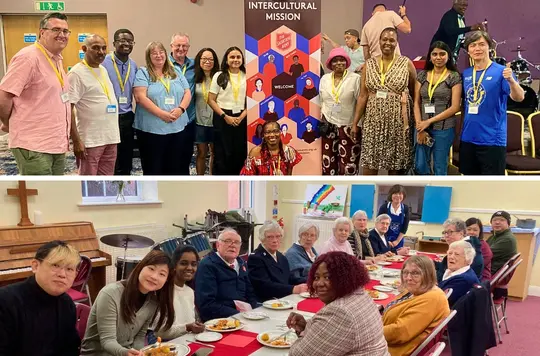
Some of the territory’s intercultural mission officers reflect on their ministry and experiences so far.
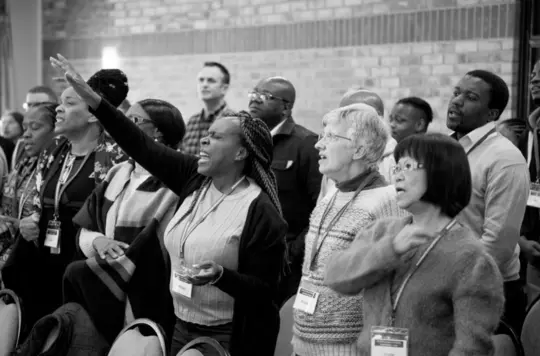
Journeying together, respecting each other's cultures, and starting to tangibly see God's Kingdom now, right before our eyes.
John Baraza Namunyu invites us to go deeper in intercultural worship.

Explore who God has called you to be and opportunities for leadership and service within The Salvation Army.