
2 May 2026
Why The Salvation Army needs more chaplains
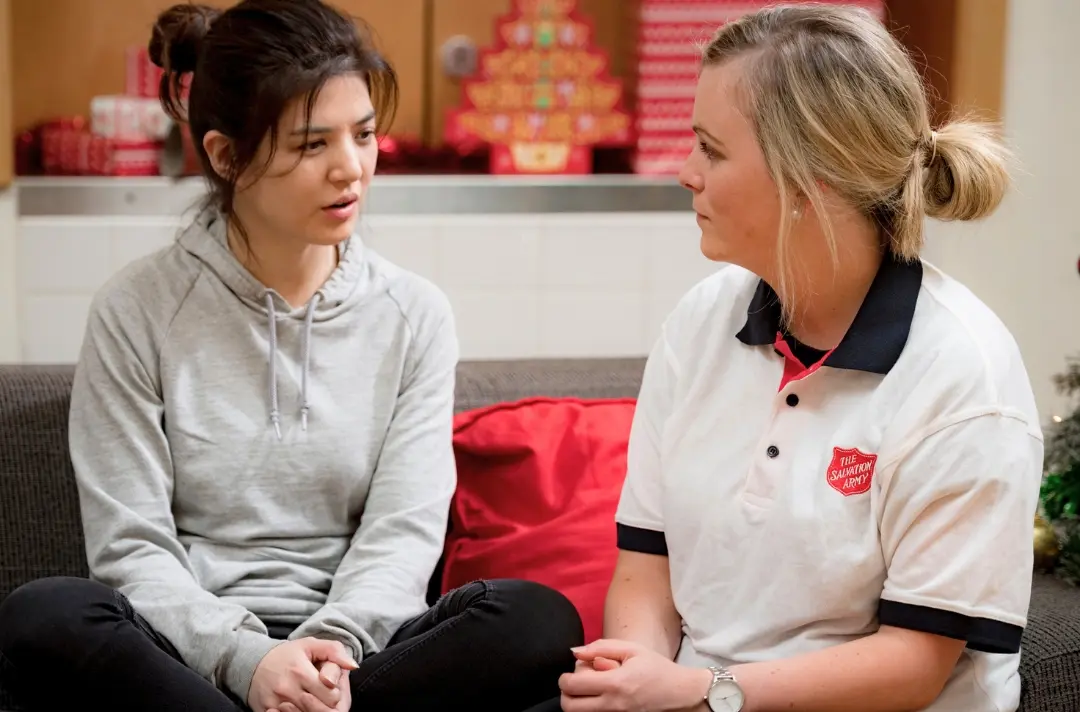
Director of Chaplaincy Major Keith Burr (THQ) talks to Salvationist about chaplaincy in The Salvation Army.
What is a chaplain?
A chaplain is someone sent by the Church to work within a community outside the Church for the sole benefit of that community. They’re an embodiment of Jesus’ presence outside the Church.
Chaplaincy has been described as a presence ministry – it’s less about doing stuff, it’s about being present with people where they are. You are exposed, and who you are – your character and values – becomes even more important. Someone in their time of need won’t remember what you said or did, they just remember that you were there. That’s the job of a chaplain.
What is the state of chaplaincy within The Salvation Army at the moment?
As many scenarios as you can think of, you’ll find we’ve got a chaplain there!
Two years ago, we delivered chaplaincy through every division and every department in different ways. A huge review recommended the formation of the Chaplaincy Department. This has now been running for 18 months. The idea of the department is to bring together all those forms of chaplaincy.
Currently, the department directly line manages 80 chaplains. But if you were to ask how many we have in the territory, we’ve got no idea! We have so many chaplains doing such a vast array of ministry. What we do know is that the Chaplaincy Department directly manages all chaplains within services managed by Territorial Headquarters – such as Homelessness Services and Anti-Trafficking and Modern Slavery. We also have a relationship with some outside bodies who use Army chaplains, and we support and encourage chaplains within the divisions.
There are still so many chaplains we don’t know about, and we want to help divisions support them, give them resources, make sure they get to the Chaplaincy Conference, those sorts of things
How has introducing the Chaplaincy Department helped?
Before the department, there wasn’t a clear understanding about the relationship between the sending body and the receiving body. So, for example, think about a chaplain in the police service. How they behave there is held by the receiving body, the police have their own code of practice. But who they are, and their theological understanding, is down to the Army. Today, we don’t make Homelessness Services chaplains anymore; we make quality chaplains for Homelessness Services. There’s a distinction.
There’s currently a need for more chaplains within The Salvation Army. Why is that?
Homelessness Services made a statement that, because chaplaincy is central to their delivery, if they cannot provide a chaplain, they won’t provide a service. That means it’s incumbent on us to provide them with chaplains. Increasingly, where we don’t have church leaders available for chaplaincy, we are having to recruit.
What does recruiting chaplains look like in The Salvation Army?
Chaplaincy is now understood differently. It’s become a profession in its own right. Once upon a time, if you were a minister you could do chaplaincy. That’s not true anymore; there’s been a professionalisation, with standards and all those sorts of things. Our recruitment process is the employed spiritual leader process.
The job advert goes out as a spiritual leader role and includes enhanced interviews and psychometric testing. It’s a normal recruitment process, but with some extra steps. It takes a lot longer to process than a regular job application. For some, it’s taken up to six months.
Of our 80 chaplains, 53 are officers, 4 are territorial envoys and 18 are employed spiritual leaders. Of those 18, only one is a Salvationist. We’ve got a couple from the Church of Nigeria and a couple from independent churches. They’ve signed up to represent the values and doctrines of the Army while working in the centre and, whatever their personal views may be, they’re happy to do so. We were initially cautious but, actually, they’ve proven very successful. It’s brought incredible richness to our services.
We’re also happy for people to put themselves forward for chaplaincy. There are so many levels you can engage with – as a local volunteer, through our new local officer role, in your division. We’ve got a multitude of entry points now. If someone’s interested, we’d love them to get in contact with us.
What makes a good chaplain?
Someone who is courageous enough to stand with a person where they’re at, just for the benefit of the person. It means putting down ideas about whether the person will go to church – although that is a happy consequence. Evangelists – as commendable as they are – don’t often make good chaplains. Rightfully, their purpose is to bring people to Christ and to build the Church. For the chaplain, that’s their heart’s desire, but not their primary purpose. While we don’t try to convert people, we do talk about Jesus all the time. In fact, most people are quite happy to talk about Jesus; it’s the Church they’ve got a problem with! We hear lots of transformation stories about people getting saved.
What skills does a chaplain need?
They need to have very good listening skills. They need to have a clear understanding of themselves, so they know what they’re bringing. They need to be confident about what God has done in their life.
How would you encourage someone considering chaplaincy?
Reach out! Statistically, someone of no faith is more likely to bump into a chaplain than any other spiritual leader. If you feel you’ve got a heart for it, speak to someone. The absolute privilege of just being with people in their times of rejoicing and need is the most beautiful thing in the world!
Discover more
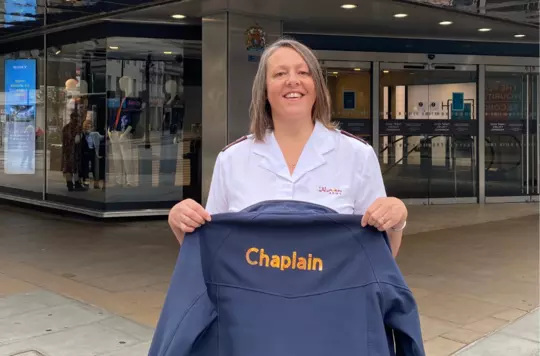
Providing an ongoing resource and reference point for all Salvationists that deliver any form of chaplaincy on behalf of The Salvation Army.
Gather and learn with other Salvation Army chaplains ministering in different contexts across the territory.
Warren Evans talks to Rob about how he came to be CEO of Sports Chaplaincy UK, plus producer Big Sam's Olympic quiz.
Jill Grinsted (Raynes Park) talks about her journey to become an employed spiritual leader.