
9 May 2026
Acts 2: Called to be a leader
Major Ian Loxley
Major Ian Loxley reminds us to let truth confront us and grace reshape us.
Key text
- Acts 2:37–42
Our study passage captures one of the most pivotal moments in the early Church: the response to Peter’s Spirit-filled sermon on the day of Pentecost. These verses form a bridge between the resurrection and ascension of Jesus, and the birth of a new community shaped by the gospel. At the heart of the passage is a divine calling: God summons people not simply to believe certain truths, but to become something new. These verses reveal what believers are called to be as individuals and as a community.
Pause and reflect
- Can you identify what God is calling you to be?
- As you read the study passage, listen out for some clarification of this calling.
The phrase ‘cut to the heart’ (v37) suggests that the Holy Spirit was actively working in the listeners’ consciences. Peter’s message about Jesus’ death and resurrection didn’t merely inform them – it transformed them internally. The calling begins with openness.
Openness to God is not a passive experience; it is a deep internal stirring that awakens spiritual hunger. In any generation, God calls people to be receptive – willing to let truth confront and grace reshape.
Pause and reflect
- How are you ensuring that your heart is open to hearing God’s voice?
- Are you prepared to obey him unconditionally?
Conviction leads to a question about how to respond. Rather than turning away in guilt or defensiveness, the people turned towards God’s messengers. This demonstrates that the Holy Spirit is at work. It also shows that there is humility; there is a recognition that transformation requires guidance. Part of our calling is to be people who ask, listen and surrender to God’s wisdom.

The early believers didn’t assume they could navigate faith alone; they sought godly direction. We are probably used to this learning process being referred to as discipleship.
Pause and reflect
- The Church is still called to be a learning community – people seeking God’s next steps with teachable hearts. Are you prepared to listen to and learn from people within your fellowship?
Peter’s instruction to ‘repent and be baptised’ (v38) outlines a key identity of believers as people who respond. Repentance means turning from sin towards God. Baptism, whether by water or – in the context of this chapter – a baptism of the Holy Spirit, marks a new beginning with a new identity, a ‘new creation’ (2 Corinthians 5:17).
Pause and reflect
- Repentance is a reorientation of life requiring a change of focus and direction. Do you need to commit to establishing a new approach to life or a new direction of travel?
A baptism of the Holy Spirit is a baptism for ministry and mission. Baptism by water is usually a public declaration of a new identity. Are you being called to ‘go public’ about the renewal God has initiated in your life by engaging in ministry and mission?
Sometimes we receive a gift that is purely for ourselves. However, the promise referred to in verse 39 is for ‘you and your children and for all who are far off’.
Peter widens his appeal beyond the personal and beyond the immediate crowd. The calling of God is inclusive, expansive and rooted in God’s desire to save all people. It extends across family lines and it bridges cultural, ethnic and geographical divides.
Pause and reflect
- The apostles couldn’t help but announce God’s salvation to the world – sometimes by word and often by deed. As someone called to be a recipient of this promise, how are you going to proclaim it within your family and in your wider context?
When Peter spoke, calling his listeners to ‘save yourselves from this corrupt generation’ (v40), he was highlighting the moral and spiritual climate of the world. The calling of God invites people to be countercultural, moving away from the generally accepted norms and patterns of the prevailing culture into a new way of being, where life is shaped by holiness and reflects God’s attributes.
Salvation is more than an experience for an individual, it is an invitation into a countercultural community. The corrosive influences around us must be resisted, and a radically different lifestyle adopted. This call to be a new and distinctive people was costly for the early believers, yet it was the only reasonable response they could make to the love and grace they experienced from God.
Pause and reflect
- What do you need to be and do to ensure that you and your Christian community are living in a way that is both pleasing and honouring to God, whatever the cost?
‘They devoted themselves to the apostles’ teaching and to fellowship, to the breaking of bread and to prayer’ (v42). This verse summarizes four foundational commitments of the first Christian community and emphasises that their calling wasn’t simply personal, it was deeply communal.
They were called to be learners. By placing themselves under the apostles’ teaching, discipleship was fundamental and truth anchored their lives.
They were called to be family. Fellowship (koinōnia) is shared life, not occasional socialising. They built relationships marked by generosity, unity and mutual care.
They were called to be worshippers. The breaking of bread included both shared meals and the Lord’s Supper, where worship was central and not peripheral.
They were called to be intercessors. Prayer shaped their daily rhythms, decisions and dependence on God.
The early believers were called to be a community devoted to spiritual growth, meaningful relationships, worship and prayer. What part can you play to ensure that the Christian community you belong to models the template given in verse 42?
Bible study by
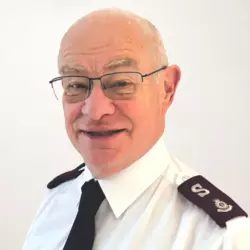
Major Ian Loxley
Discover more
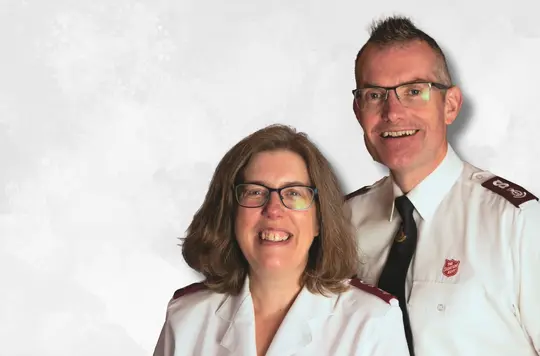
Territorial Candidates Directors Majors Catherine and Jonny Smith discuss calling, vocation and the prayer initiative 9:38.
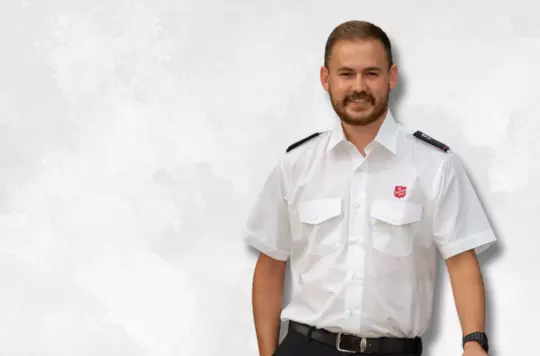

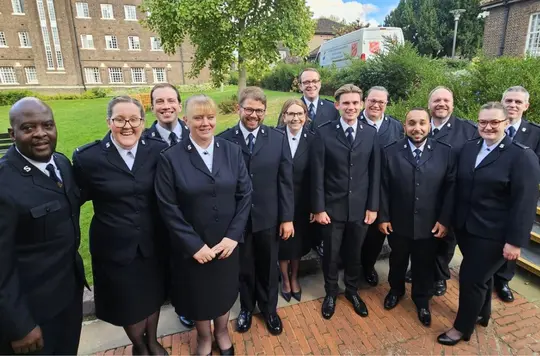
Major Wendy Stanbury, Cadet Edmond Balog and Cadet Tim Watch share their experiences of officer training at William Booth College with Salvationist.