
4 September 2026
Creation Sunday: He's got the whole world in his hands

Salvationist introduces Creation Sunday (6 September) and how it reveals caring for creation as an act of worship.
Creation Sunday, the first Sunday in September, is an invitation to commemorate God’s divine act of Creation, to celebrate him and offer our gratitude for the beauty of his handiwork.
‘Other churches already mark the Season of Creation from 1 September to 4 October,’ says Territorial Environmental Officer Major Heather Poxon. ‘This is not about worshipping creation itself, but about worshipping God, the Creator.’
The Salvation Army has partnered other Free Church traditions to create a hub of Creation Sunday worship resources. As part of this, General Lyndon Buckingham has recorded a video, saying: ‘This represents a positive opportunity to joyfully enact a celebration of the second doctrine of The Salvation Army, wherein God is recognised as the Creator, Preserver, and Governor of all things. And in that context, we give thanks for creation and join with the Creator as coworkers in his ongoing work of redeeming the entire created order… As a global army of salvation, we recognise that the world God loves and for which Jesus died includes all that has been created and is held together in him.’
One of the UK and Ireland Territory’s five mission priorities is to care for creation, rooted in the fact that God ‘took the man and put him in the Garden of Eden to work it and take care of it’ (Genesis 2:15). While we tend to focus on our role as stewards of God’s creation, Creation Sunday helps us to see this responsibility as part of our response to God and worship of him.
We are reminded that we are part of God’s creation, not separate from it. Rather than being discouraged by a problem that can seem bigger than any one individual, we can find hope in the knowledge that we are part of something bigger; we are co-workers with Christ in his reconciliation of all creation to himself.
‘The state of the environment is not good,’ explains Heather. ‘The climate crisis, the heatwaves, the wildfires, food shortages, drought, all these awful things are issues that have already impacted people in other countries around the world, but are now starting to impact us. Society is now wanting to act, and we are called to seek justice and reconciliation and serve others without discrimination, but our mission – including caring for creation – originates from something deeper: we love God, so we love what he loves.’
The Territory has already set bold targets to reach net-zero carbon emissions by 2040.
'We know that our carbon emissions contribute to this blanket of heat around the planet,' says Heather, 'and we are making progress with our strategy.'
Actions being taken include a sustainable travel policy and measures to make the Army’s properties more environmentally friendly. The Army’s fleet is also transitioning to electric vehicles.
‘Our aim is to eventually have an all-electric fleet,’ says Fleet Operations Manager Louise Haigh. ‘It has been a slow transition, partly due to people’s anxieties about vehicle range and also charging infrastructure. For example, some people want to switch, but where they live there is nowhere to charge the vehicle overnight. This is why we have started introducing plug-in hybrid electric vehicles: they can cover an average of 70 miles on electric power, but for longer journeys they can run on petrol if needed. We have also introduced an online course to show drivers the basics of driving electric vehicles, including charging and techniques to drive economically.’
Across the territory, there are 108 corps registered with Eco Church or Eco-Congregation schemes, with 33 bronze and 12 silver awards between them. There are 305 environmental champions, who advocate for and engage with caring for creation where they are. The care for creation educational course available on iLearn has also been completed by more than 320 people.
At corps and centres, there is an increasing focus on the use of outside spaces for ministry, particularly in Lifehouses. Because we are part of God’s creation, it is natural that caring for creation also has a positive impact on people’s lives – a looked-after green space, for example, benefits everyone in the community.
‘God’s creation has always been there waiting for us to spend time with it,’ observes Heather. ‘Research by the University of Stirling, for example, shows that spending time in green spaces has benefits for people’s wellbeing and health – that shouldn’t come as a surprise!’
As we understand caring for creation as an act of worship, we realise we are not called to save the whole planet ourselves, but to join God in making the world a better place for everyone and everything living in it, even in tiny, local ways. We recognise God’s rightful place as Creator and Provider, joining nature to proclaim him as sovereign over all creatures great and small.
‘We perhaps forget the song we sing as children: “He’s got the whole world in his hands”,’ reflects Heather. ‘God still holds it all in his hands. We can trust that God will show us how best to care for his creation where we are.’
- Explore how you can focus on caring for creation during worship with resources at salvationist.org.uk/resources/care-creation.
Discover more
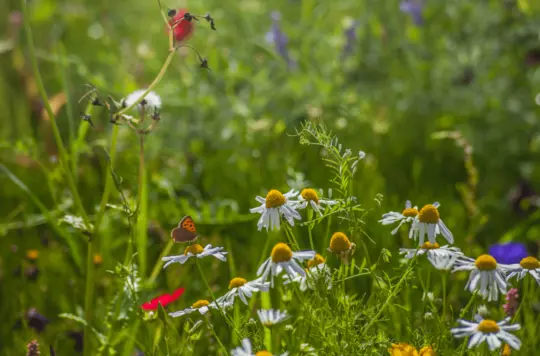
Major Heather Poxon (THQ) unpacks the care for creation mission priority.
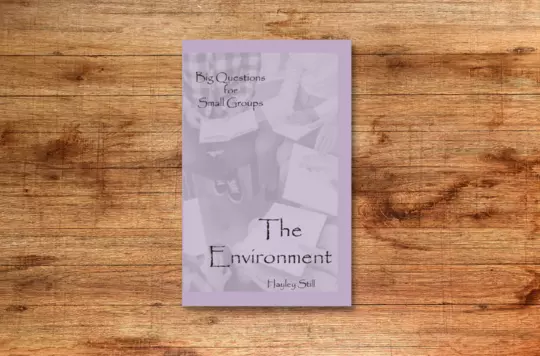
Hayley Still explores the biblical basis for caring about the environment and the role of the Church.
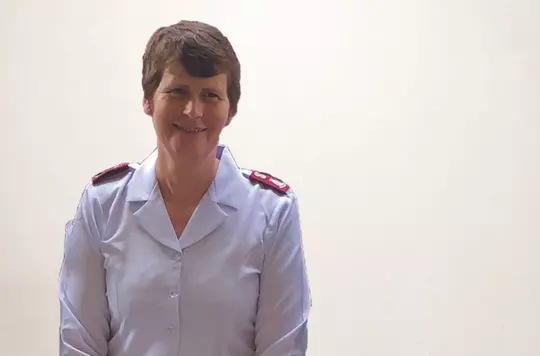
Territorial Environmental Officer Major Heather Poxon talks to George Tanton about going greener in our day-to-day lives.
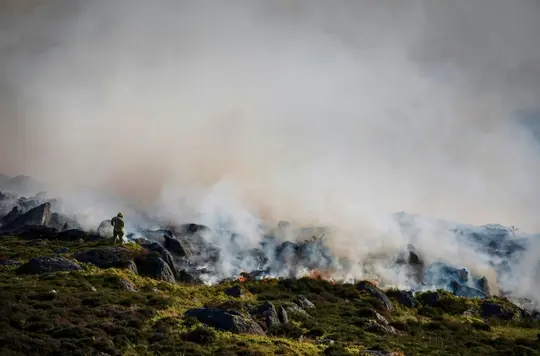
In the light of recent wildfires, Major Lynne Shaw considers how we can respond by caring for creation.