
18 April 2026
Matthew 16: Called to be purposeful
Major Tracey Palmer
Major Tracey Palmer discovers a life-changing declaration.
Key texts
- Matthew 16:13-20
Names are powerful. They can shape lives by building people up or destroying them. In our study passage, great names and titles are spoken, not in the abstract but in ways that recognise who Jesus is. Jesus renames Simon – Peter, the rock. We also recognise our calling to a purposeful life built on our faith in Jesus.
Pause and reflect
- Have you ever had a burning in your bones when it comes to answering a question, and you can’t help but answer it, even though that answer will turn your life upside down?
Simon, in answering Jesus’ question, became Peter, the rock – a disciple who, in his relationship to Jesus, would have new purpose in his life. To explore this, we consider: the significance of the location, Peter’s recognition of who Jesus is, and the ‘rock’ on which the Church is built.
Why did Jesus bring his disciples to Caesarea Philippi? This city, a two-day walk north of Galilee, was formerly known as Paneas, named after Pan, the Greek god of nature. The name change to Caesarea Philippi was in honour of the Romans’ rule. These names speak of allegiances old and new. The disciples and Jesus are surrounded by temples of worship to pagan gods and to the cult of emperor.
Here, Jesus asks: ‘Who do people say the Son of Man is?’ (v13). Maybe the disciples’ answers are easy because they are the names others give – Elijah, Jeremiah or one of the prophets (see v14).
The place is significant because it holds so much choice, but also danger. The answers the disciples give will determine their future; their purpose will be defined as they respond to Jesus’ call to ‘take up their cross and follow me’ (Matthew 16:24).
Pause and reflect
- In our lives, what is the significance of places?
- What are you surrounded by?
Jesus poses a deeper question: ‘Who do you say I am?’ (v15). I imagine a silence as no one dares give an answer. Then, impulsive, passionate Simon speaks from his heart. Surrounded by edifices of other belief systems, he says the words that change his life: ‘You are the Messiah, the Son of the living God’ (v16).

To live a purposeful life means to be committed to following Jesus above all other calls. By faith, Simon sees the aweinspiring reality of Jesus, who is not like anyone else – he is ‘the Christ’ (v16 Revised Standard Version). Jesus is the prophet, priest and king who brings in the new age.
Simon – now Peter – gets it right in naming Jesus, yet his journey of discipleship shows that recognition is not enough. Peter has to learn what Messiahship means according to Jesus’ definition of it, not his own interpretation. Naming Jesus ‘Messiah’ is a first step; following is another, much harder journey.
In the Gospels, we see Peter as a follower of Jesus. He is brave, impulsive, purposeful, frightened, confused and wavering. Peter’s failure, however, is never the end of his purpose. Peter who denies Jesus in the courtyard (see Matthew 26:69–75) is the same Peter who meets Jesus on the beach and reaffirms his love (see John 21:4–17), and also preaches passionately at Pentecost (see Acts 2:14–40). Peter, the rock, is formed over time and only in proximity to Jesus and by the transforming power of the Holy Spirit.
Pause and reflect
- In what ways are you purposeful in living out your confession of faith?
- Do you see failure as part of your discipleship journey?
‘You are Peter, and on this rock I will build my church’ (v18). There is controversy over what this means. Is the Church built on the man Peter and his successors? Or is the Church built on Peter’s confession of faith? Different parts of the Church give different answers. If we take confessional faith as a rock, then there is an invitation for all believers to be included as living stones in this Church, which is built on wholelife faith, naming Jesus as the Messiah, following him and living with his purposes foremost.
In Matthew for Everyone, Tom Wright describes it like this: ‘A new community through whom the living God will put the world to rights, bringing heaven and earth into their new states of justice and peace. Peter with his declaration of faith will be the starting point of this new community.’
Pause and reflect
- How are the foundations of your faith?
- What is the link between being purposeful and speaking out?
Jesus calls us to unwavering faith in him and a resolute commitment to join him in putting the world to rights.
When others might have remained silent, words of faith burst from Simon Peter. His life’s course is set by recognising who Jesus is: the long-awaited Messiah, the Saviour. Sometimes, there are things that need to be said out loud – in saying them, faith is confirmed and action follows.
Peter is not alone in being renamed as a result of a deep spiritual encounter with God. In Genesis 17:3–5, Abram is renamed Abraham as God enters into a covenant with him and promises he will be the ‘father of many nations’ (v5). Jacob is renamed Israel, ‘because you have struggled with God and with humans and have overcome’ (Genesis 32:28).
Like Simon Peter, sometimes living out our calling to a purposeful life involves cost and sacrifice. We are called to the same path of discipleship with all its possibility and promise.
- This Bible study is part of a series building up to Candidates Sunday, looking at the story of Peter. For more information, visit tsa.link/candidates-sunday-2026.
Bible study by
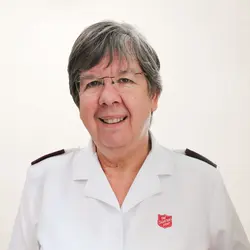
Tracey Palmer
Divisional Leader, South East Division
Discover more

Abi Miller reminds us that discipling others begins with following Jesus ourselves.

Lieut-Colonel Jayne Roberts considers how we can nurture believers.

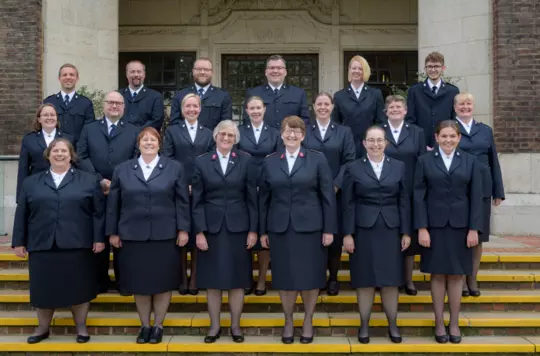
Here to serve and support all those in the territory who are exploring God's calling.