30 March 2026
Why do we have Easter eggs and where did they come from?
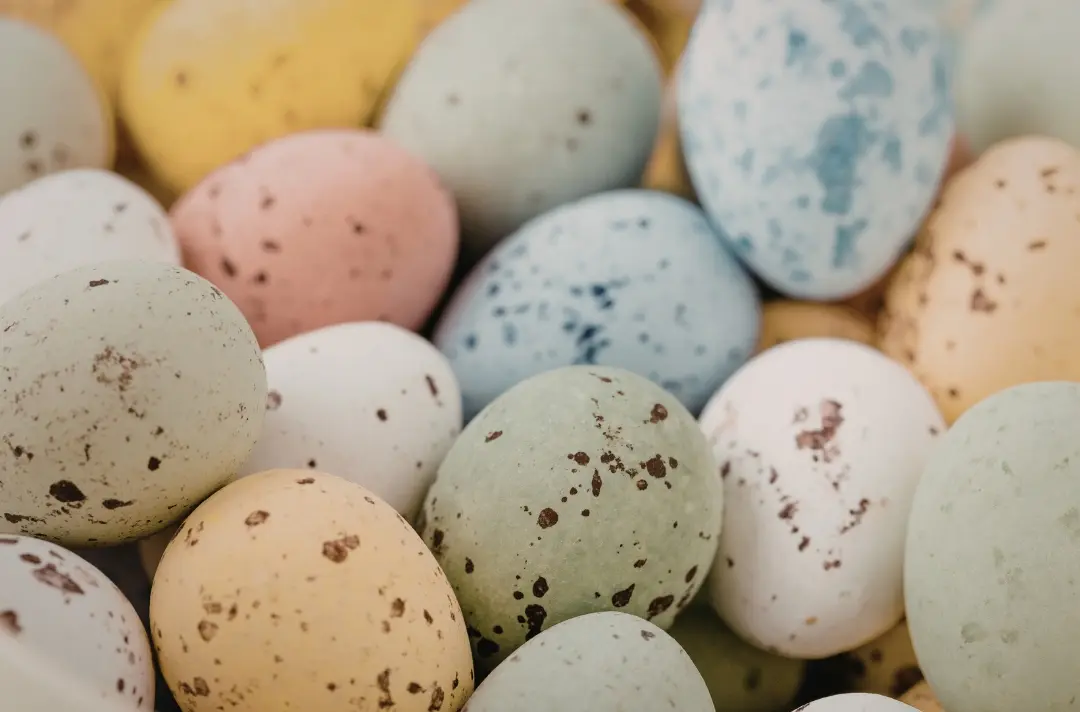
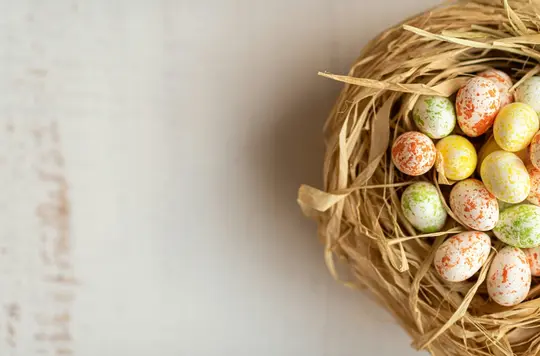
In 2026 Easter will happen on 5 April, and on that day millions of people will be unwrapping oval chocolate treats. Some people will be scouring gardens for hidden eggs, while others will be preparing to roll eggs down hillsides. But where does the Easter egg tradition come from?
Eggs play a part in many Easter traditions, and Dr Michael Carter of English Heritage has been looking back to see how society has liked its eggs at this time of year.
Easter eggs in medieval times
In setting out what is known from medieval times about the association of eggs with the most important weekend in the Church’s calendar, Michael points to the period of fasting that traditionally preceded Easter.
‘In Lent, you could not eat any fats, and that included eggs,’ he says. ‘Eggs were one of the few sources of readily available protein for the poor – more accessible than meat – and so it must have been a great physical and emotional release to be able to eat them again when your Lenten abstinence ended and you could celebrate Easter.’
But people were doing more than simply eating eggs. Michael says that there is evidence dating back to the 13th century of the custom of giving decorated eggs at Easter.
The giving and receiving of eggs
‘King Edward I purchased 450 coloured and gilded eggs to distribute to his courtiers,’ he explains.
Not all eggs were golden, but ‘the practice of giving decorated eggs continued and was widespread by the 19th century’. These decorated gifts were known as ‘peace eggs’ or ‘pace eggs’ – both names probably coming from ‘pascha’, the Latin word for ‘Easter’.
From the Middle Ages onwards, Michael says, ‘eggs were also collected and distributed as alms to the poor at Eastertide’.
Customs grew up around such practices.
‘The giving and the collecting of eggs continued into the 17th century and beyond and were surrounded by rituals and songs, which is what you see with all begging customs,’ he says. ‘These ceremonies for collecting foodstuffs at calendar festivals are basically a form of licensed begging – it’s a way of alleviating poverty so that it isn’t considered as just routine begging. The ceremonies make it palatable and acceptable. But they also affirm the social bonds – everyone has a place either as a giver of charity or a recipient of charity.’
‘It’s a bit of fun as well. We have evidence from 18th-century Lancashire of the collecting of eggs being accompanied by dancing and verse.’
‘Groups of people known as “egg pacers” are recorded from the early modern period, and they would go door to door to collect for charity. They would be wearing costumes and they would cavort and chase people. It was a way of letting off some steam. Easter was the first big calendar festival since Christmas and Plough Monday, and – with the lighter days – it offered a chance for communal activities again.’
Easter egg rolling
The lighter days and potentially warmer weather may also have encouraged the development of Easter games such as egg rolling, in which communities gather to roll eggs down hillsides and see which travels the furthest without breaking.
The tradition seems to have spread during the 1800s – though today it is not nearly as widespread as another feature of Easter that entered the historical record during the 19th century.
The history of the modern Easter egg
‘Fry’s began selling chocolate eggs in 1873, using dark chocolate,’ says Michael. ‘Milk chocolate later became the most popular type, after it was introduced by Cadbury in 1897. But it wasn’t until the mid-20th century that chocolate eggs were being mass-produced and assumed the role of being a ubiquitous symbol of Easter consumption.’
The date for Fry’s first chocolate egg can be pinned down. Other aspects of the history of Easter are more difficult to unscramble.
The possible origins of Easter
Even the origins of the word ‘Easter’ are unclear. It is sometimes said that it derives from Ēastre, the name of a goddess associated in pre-Christian times with spring. But scholars are far from convinced by that interpretation of the evidence, which is based on the writings of one historian who lived in Anglo-Saxon times.
‘Our source for that explanation is Bede, and nobody else,’ says Michael. ‘So it’s far from certain.’
The symbolism of the Easter egg
Also less than clear is the development of the symbolism that is sometimes attached to eggs at Easter. Today people may say that eggs represent the new life promised by Jesus’ resurrection, or that their shape symbolises the stone rolled in front of his tomb.
Michael is uncertain how old such associations are.
‘Calendar festivals are constantly evolving, and new things get brought in,’ he says. ‘And one of the great things about Christian iconography and theology is that you can give a new meaning to anything.’
But he is sure about the effects on British history and culture of the almost 2,000-year-old story of the events commemorated at Easter.
‘Some people may say that Christianity at Christmas or Easter is borrowing from this or that, and they want to discount it all. Or because the stories are so familiar they can become numb to them and they don’t think about their significance. But these stories really have shaped not just our beliefs but our society as well.’
Written by

Philip Halcrow
Deputy Editor, War Cry
Easy-to-read articles about faith
Read our War Cry magazine-

Education Sunday: 'Education is so much more than exams'
Ahead of Education Sunday (13 September), headteacher Jonathan Sands speaks to War Cry's Ewan Hall about the joys and challenges of preparing young people for life.
-
Toys face technical glitch
With Toy Story 5 now in cinemas, Emily Bright reflects on the film’s message of friendship and support - and points us towards the one friend who will never let us down.
-

What fatherhood has taught me
As Father’s Day approaches this Sunday (21 June), TV adventurer Bear Grylls writes about his personal experiences as a son and a dad.
-

Cup-tied: The world is caught up in football fever!
With the World Cup just around the corner, Ewan Hall reflects on how the drive of athletes mirrors our own challenges — and how God steps in to give the strength we lack.
-

Stop Food Waste Day: 'It's OK to get help at a food bank'
Major Carole Donaldson (Penrith) shares how surplus food is used to nourish people, both physically and spiritually.
-
Why do we have Easter eggs and where did they come from?
Discover the origins of Easter eggs and learn about how the tradition started, why we have them and what they symbolise.
-
Why does Easter change every year?
Philip Halcrow talks to historian Dr Michael Carter about why the timing of Easter changes each year.
-

What is Mother’s Day? Exploring its history and meaning
As we approach Mother's Day learn more about the day, what it is and what it means.
-
The love of God on Valentine's Day
As Valentine’s Day comes round again, we are reminded that love comes in many forms.
-
The Traitors: ‘Claudia is very witty and an absolute delight’
Former Traitors contestant the Rev Lisa Coupland recalls the camaraderie in the castle and reflects on how her faith brought her comfort.
-
‘We provide a soundtrack to Christmas’
Paul Sharman shares why playing carols matters so much – and how a band’s presence brings hope.
-

Why do we celebrate Christmas?
Discover why Christians celebrate Christmas, the history of the season and the hope and light that the birth of Jesus brings into the world.
Discover more
Why do we celebrate Easter, and what is the true meaning behind this time of year?
Philip Halcrow talks to historian Dr Michael Carter about why the timing of Easter changes each year.
Explore faith to understand the stories behind Lent and Easter, and to see why this time of year means so much to millions worldwide.